
Oven and hob: 10 short answers
Built-in oven, pyrolytic or catalytic cleaning, steam, small kitchen, fan oven, induction or ceramic hob and installation by an electrician.
- Effortless cleaning: Pyrolysis
- Even cooking: fan-assisted
- Hob: induction, the fastest and most efficient
- Induction installation: by a qualified electrician
Short answer: A multifunction fan oven with pyrolysis, 65 to 71 litres, energy class A or better. Add steam if you cook a lot. See oven buying guide.
Each question has a detailed answer here, then a short answer in the FAQ at the bottom of the page. They are written by the Nimestore team in Temploux (Namur), based on what our customers ask us.
The answers in detail
Which built-in oven to choose in 2026?
When choosing a built-in oven, start with the recess dimensions, power supply, cooking consistency, useful functions and cleaning.
Pyrolytic or catalytic oven: which to choose?
Pyrolysis heats up intensely to burn off residue, whereas catalysis uses absorbent coated surfaces on certain parts; maintenance requirements and costs differ.
Is a steam oven worth the extra cost?
Steam can be useful for bread, vegetables and certain dishes, but combi-steam ovens don't all have the same modes or water tanks.
Which built-in oven for a small kitchen?
In a small kitchen, check width, height, depth, recess ventilation and door clearance; the advertised dimensions are not enough.
What's the difference between fan-assisted and conventional cooking?
Fan-assisted cooking circulates hot air for more even results in some uses, whereas conventional convection uses the heating elements without a fan; adjust temperature and shelf positions to the recipe.
Which induction hob to choose?
For an induction hob, check the number of zones, power ratings, controls, ventilation and, above all, that your electrical supply is compatible.
Induction or ceramic: what are the differences?
Induction heats a ferromagnetic pan directly; radiant ceramic heats an element beneath the surface. Induction generally offers faster response and better control.
Which oven uses the least energy?
Oven consumption depends on the recipe, preheating and cooking mode; compare standardised data where the energy label applies.
How do I choose the dimensions of a built-in oven?
Choosing built-in oven dimensions means measuring the recess in three dimensions and respecting the ventilation clearances in the manufacturer's manual.
Do you need an electrician to install an induction hob?
An induction hob must be connected to a suitable circuit; have the phases, power and protection checked by a qualified professional if necessary.
What to check before you buy
Built-in cooking appliances come with constraints on recess, ventilation, power and electrical protection. The manufacturer's specifications and the RGIE (Belgian electrical regulations) take precedence. For any circuit modification, call a qualified installer.
To find out more
- Choosing your built-in oven well: pyrolytic, steam, air fry and housing
- Induction, ceramic or gas hob: which one should you choose?
- Cooker hoods, cookers and range cookers: choosing them well
- Range cookers: the guide to choosing the heart of your kitchen
Official sources
- European Commission : energy label for ovens
- European Commission : product rules for hobs
- European EPREL database : energy label and official product fiche for each model
Don't see your question here? Visit the shop at Route de Saussin 62 in Temploux (Wednesday to Friday 10am-6pm, Saturday 10am-4pm), or call 02 393 04 02.
Updated on 5 November 2026. Prices, stock and services: the product page on the day of your order is the reference.
Frequently asked questions
Which built-in oven to choose in 2026?
An oven multifunction fan oven, pyrolysis, 65 to 71 litres, energy class A or better. Add steam if you cook a lot. See oven buying guide.
Pyrolytic or catalytic oven: which to choose?
The Pyrolysis heats to around 500 °C and reduces soiling to ash: the whole oven is clean. The catalytic cleans the walls during cooking, less effectively; it costs less.
Is a steam oven worth the extra cost?
Yes if you cook often: bread, fish, vegetables and reheating are noticeably better. A 'partial steam' oven (with added steam) is a good compromise.
Which built-in oven for a small kitchen?
An oven compact model 45 cm high, often a combi-microwave, or a standard 60 cm oven under a hob.
What's the difference between fan-assisted and conventional cooking?
The fan-assisted uses a fan: even heat, cooking on several levels, quick preheating. The conventional convection (top and bottom heat) heats from above and below: ideal for certain pastries and slow-cooked dishes.
Which induction hob to choose?
A 60 cm induction hob with 4 zones, one of them flexible ('flex' zone), booster and timer. Check the total power and your electrical installation. See induction, ceramic or gas hob.
Induction or ceramic: what are the differences?
Theinduction heats the pan directly: faster, more efficient, the hob stays cool. The Ceramic heats the surface, works with all pans and costs less.
Which oven uses the least energy?
An A+ fan oven. Avoid preheating when it isn't necessary and use residual heat at the end of cooking.
How do I choose the dimensions of a built-in oven?
Standard recess is 56 to 56.8 cm wide, 55 cm deep and 60 cm high (45 cm for a compact). Measure the recess, not the old oven.
Do you need an electrician to install an induction hob?
It is strongly recommended: an induction hob often requires a dedicated high-power circuit, and the installation must comply with the Belgian RGIE. In Belgium, Nimestore offers delivery with optional installation, indicated on the product page.
Come and see the appliances in person
At our Temploux shop, we open the doors and compare drums and finishes. Or ask our expert sales adviser online, right now.
Read next
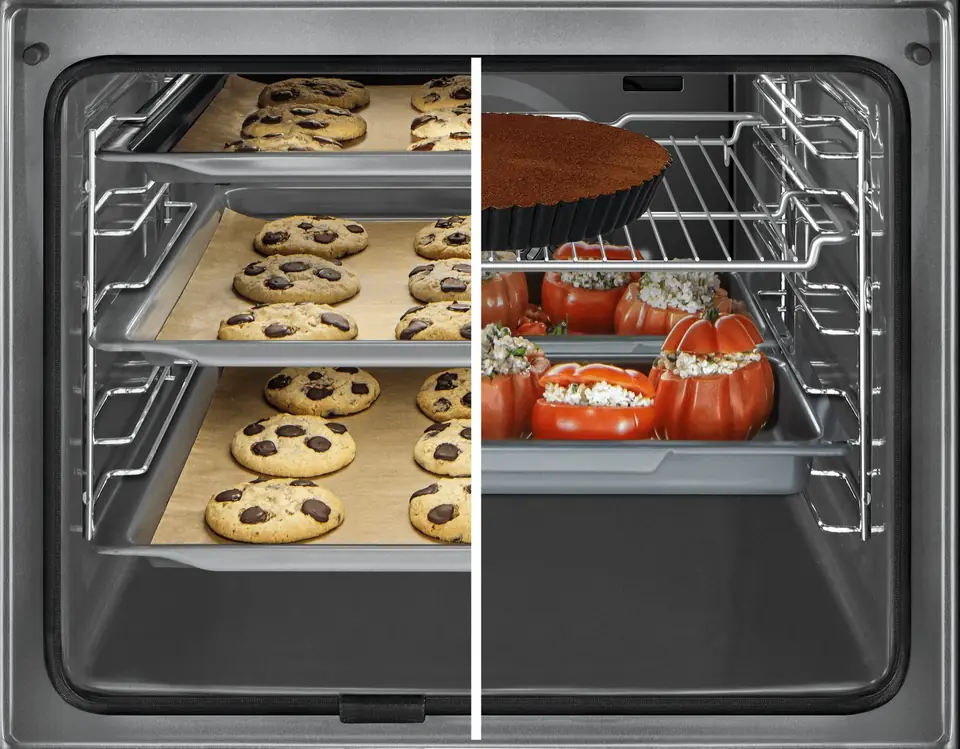 Buying guideChoosing your built-in oven well: pyrolytic, steam, air fry and housingA good oven isn't judged by the number of programmes on the front. What matters: evenly distributed heat, a cleaning method that suits you, a few functions you'll actually use, and a housing of the right dimensions. Here's our method, with our ovens in the shop.5 min read
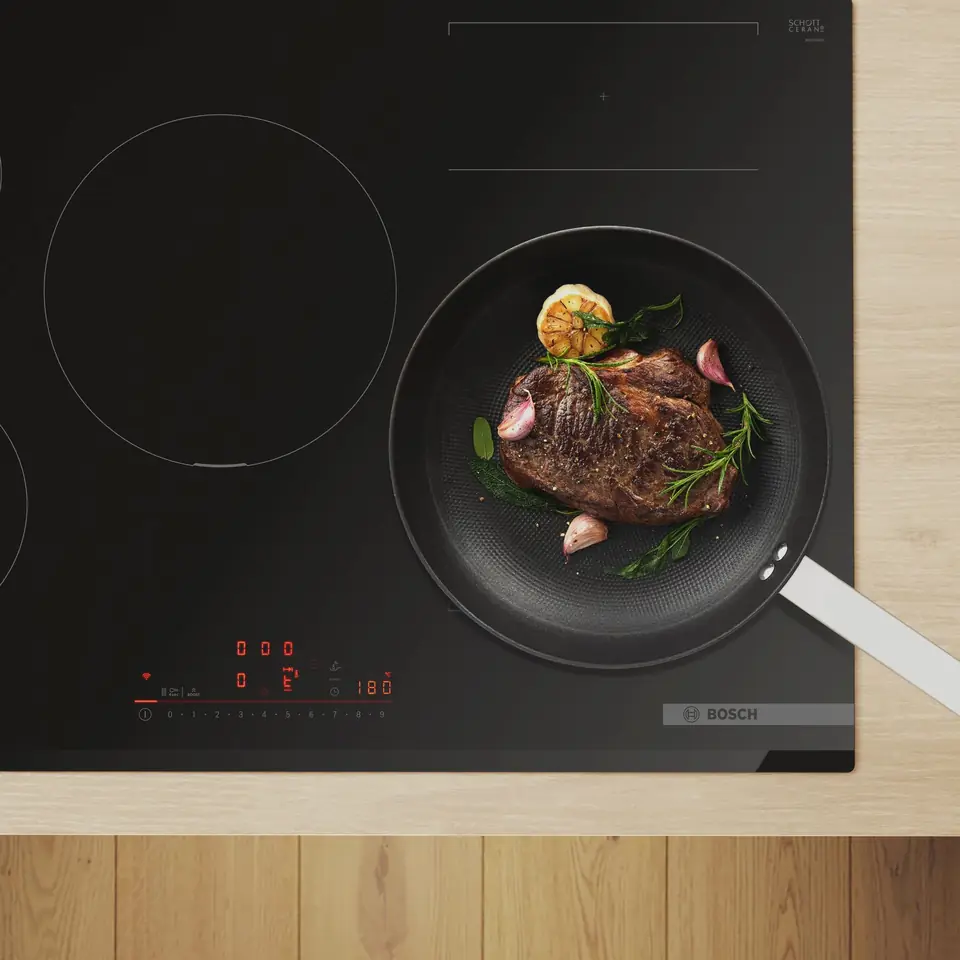 ComparisonInduction, ceramic or gas hob: which one should you choose?Replacing your hob is the moment to ask the right question: induction, ceramic or gas? Each has its strengths, but in 2026 induction wins in most kitchens. On condition you check two things many people forget: the electrical installation and your pans.6 min read
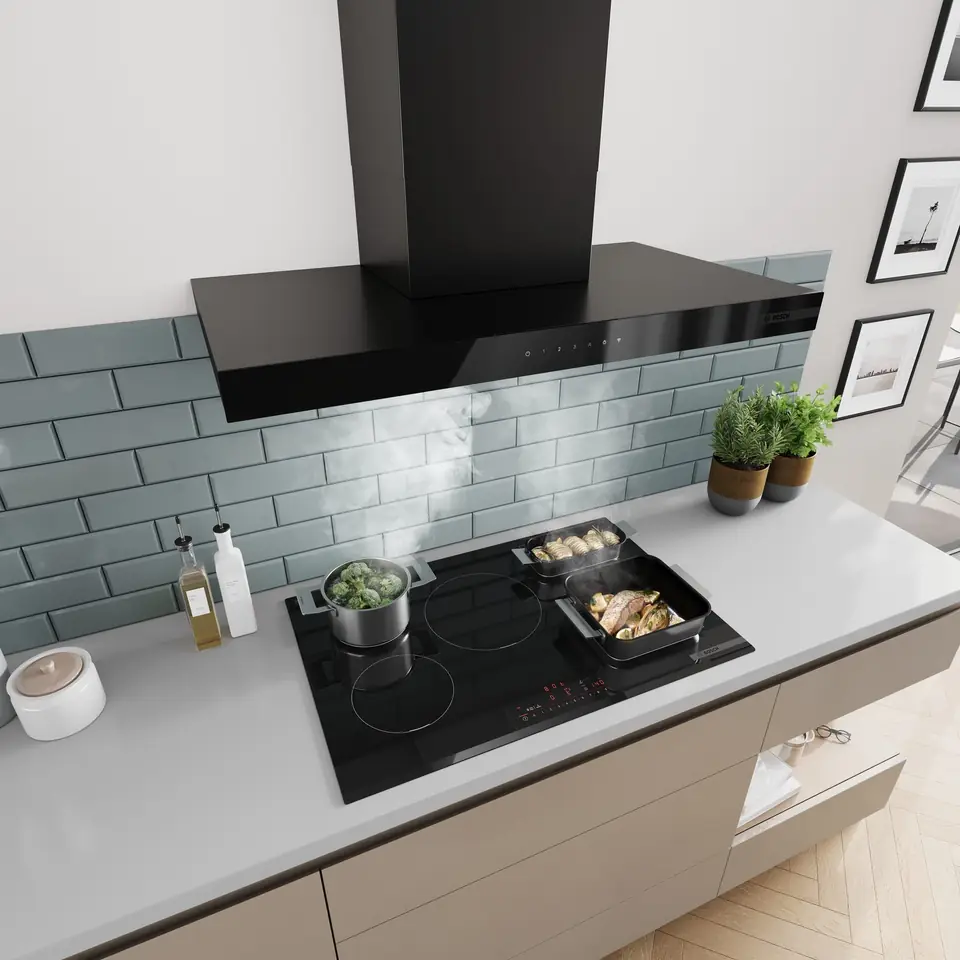 Buying guideCooker hoods, cookers and range cookers: choosing them wellThe cooker hood is the most underrated appliance in the kitchen: well chosen, it keeps the air and the walls clean; badly chosen, it's noisy and nobody switches it on. Cookers and range cookers combine oven and hob in a single unit. Here's how to choose each one.5 min read