
Household appliances: energy and savings, 10 short answers
Which appliance uses the most energy, energy label, class A, running cost of a machine in Belgium, eco-cheques, when to replace and comparing the total cost.
- Biggest energy users: tumble dryer, fridges and freezers, washing machine
- A load of washing: around €0.30 to €0.70 (water and electricity)
- Eco-cheques: depending on the energy class
- Compare: price + 10 years of energy
Short answer: Tumble dryers (especially condenser models), then fridges and freezers, which run day and night, and washing machines or dishwashers used at high temperatures.
Each question has a detailed answer here, then a short answer in the FAQ at the bottom of the page. They are written by the Nimestore team in Temploux (Namur), based on what our customers ask us.
The answers in detail
Which household appliance uses the most energy at home?
The biggest energy user varies by household and usage; drying cycles, cooking and constant cooling are best measured in kWh rather than guessed. Full cost. A fair calculation must distinguish purchase price, kWh per year or per cycle, electricity tariff, water, products, delivery and repairs. Standardised tests and labels provide a basis for comparison, not a promise of identical consumption in every household.
How do you read a washing machine's energy label?
The washing machine label shows class A-G, kWh/100 cycles on the Eco 40-60 programme, water per cycle, duration, capacity and spin noise. Full cost. A fair calculation must distinguish purchase price, kWh per year or per cycle, electricity tariff, water, products, delivery and repairs. Standardised tests and labels provide a basis for comparison, not a promise of identical consumption in every household.
Is an A-rated model worth the extra cost?
An A-rated model is only economically worthwhile in terms of the kWh actually saved, the purchase price and how often you use it; compare equivalent sizes and categories. Full cost. A fair calculation must distinguish purchase price, kWh per year or per cycle, electricity tariff, water, products, delivery and repairs. Standardised tests and labels provide a basis for comparison, not a promise of identical consumption in every household.
How much does one washing machine cycle cost in Belgium?
The cost of a wash can be estimated using the kWh/100 cycles and water per cycle listed for Eco 40-60, multiplied by your tariffs, plus the cost of detergent. Full cost. A fair calculation must distinguish purchase price, kWh per year or per cycle, electricity tariff, water, products, delivery and repairs. Standardised tests and labels provide a basis for comparison, not a promise of identical consumption in every household.
Is a heat pump tumble dryer worth it?
The value of a heat pump tumble dryer depends on the comparative consumption, the purchase price and your number of cycles per year. Full cost. A fair calculation must distinguish purchase price, kWh per year or per cycle, electricity tariff, water, products, delivery and repairs. Standardised tests and labels provide a basis for comparison, not a promise of identical consumption in every household.
Which home appliances are eligible for eco-cheques?
Eligibility for eco-cheques depends on Belgian rules that change over time, on the category, the energy label and the exact product; check the official lists and the payment methods accepted by the retailer. Full cost. A fair calculation must distinguish purchase price, kWh per year or per cycle, electricity tariff, water, products, delivery and repairs. Standardised tests and labels provide a basis for comparison, not a promise of identical consumption in every household.
How can you reduce a fridge's energy consumption?
To reduce fridge consumption, keep the seals clean, ensure good ventilation, set a suitable temperature and keep the door open as little as possible; don't put hot food inside. Full cost. A fair calculation must distinguish purchase price, kWh per year or per cycle, electricity tariff, water, products, delivery and repairs. Standardised tests and labels provide a basis for comparison, not a promise of identical consumption in every household.
Is a dishwasher's eco programme really economical?
The eco programme on a dishwasher generally uses less energy and water under test conditions, even though it takes longer; compare the label values. Full cost. A fair calculation must distinguish purchase price, kWh per year or per cycle, electricity tariff, water, products, delivery and repairs. Standardised tests and labels provide a basis for comparison, not a promise of identical consumption in every household.
When should you replace an old washing machine?
Replace a washing machine mainly if the repair cost, the seriousness of the fault and its consumption make keeping it unreasonable; compare with the price of a new appliance. Full cost. A fair calculation must distinguish purchase price, kWh per year or per cycle, electricity tariff, water, products, delivery and repairs. Standardised tests and labels provide a basis for comparison, not a promise of identical consumption in every household.
How do you compare the total cost of two appliances?
Total cost combines purchase price, delivery, installation, energy, water, consumables, likely repairs and how long you keep the appliance: the displayed price is only part of it. Full cost. A fair calculation must distinguish purchase price, kWh per year or per cycle, electricity tariff, water, products, delivery and repairs. Standardised tests and labels provide a basis for comparison, not a promise of identical consumption in every household.
What to check before you buy
Use the consumption figures on the model's label. For a cost, multiply the kWh by your contract's tariff and state how many cycles you run per year. Total cost also includes delivery, installation, water, consumables and repairs.
To find out more
- The appliance energy label explained: reading, comparing, calculating
- Eco-cheques: which appliances and TVs can you buy with them?
- The appliance glossary: 85 terms explained in plain English
Official sources
- European EPREL database : energy label and official product fiche for each model
- European Commission : energy label for washing machines
- European Commission : energy label for tumble dryers
- European Commission : energy label for fridges and freezers
- European Commission : energy label for dishwashers
Don't see your question here? Visit the shop at Route de Saussin 62 in Temploux (Wednesday to Friday 10am-6pm, Saturday 10am-4pm), or call 02 393 04 02.
Updated on 5 November 2026. Prices, stock and services: the product page on the day of your order is the reference.
Frequently asked questions
Which household appliance uses the most energy at home?
The tumble dryer (especially condenser models), then the fridge and freezer, which run day and night, and the washing machine or dishwasher used at high temperatures.
How do you read a washing machine's energy label?
It shows the class (A to G), consumption per 100 cycles on the Eco 40-60 programme, capacity, eco programme duration, water consumption and spin noise. See the energy label explained.
Is an A-rated model worth the extra cost?
For a heavily used appliance (family washing machine, fridge), usually yes over 10 years, and it lets you pay with eco-cheques. For light use, the difference in consumption takes longer to pay back.
How much does one washing machine cycle cost in Belgium?
Order of magnitude on the Eco 40-60 programme: about 0.5 to 1 kWh of electricity and 45 litres of water, i.e. 0.30 to 0.70 € depending on your electricity and water tariff, excluding detergent. At 90 °C, expect considerably more.
Is a heat pump tumble dryer worth it?
Yes if you dry several times a week: it saves about €1 per cycle compared with a condenser model, so more than €150 a year at 4 cycles a week.
Which home appliances are eligible for eco-cheques?
According to the list in force since 1 June 2026: fridges and freezers class A to C, washing machines class A, washer-dryers A to C, tumble dryers A or B, dishwashers A, TVs A to E. Details: eco-cheques for household appliances and TVs.
How can you reduce a fridge's energy consumption?
Set it to 4 °C, leave space behind it for ventilation, keep it away from the oven, don't put hot dishes inside, check the door seal and defrost it if frost exceeds a few millimetres.
Is a dishwasher's eco programme really economical?
Yes: it takes longer but heats less water, so it uses less electricity. This is the programme on which the energy class is calculated.
When should you replace an old washing machine?
When a repair costs more than half the price of a new appliance, when it is over 10-12 years old and breaks down often, or when it uses a lot of water and electricity. Otherwise, repairing is often still the right choice.
How do you compare the total cost of two appliances?
Add up the purchase price and the consumption over 10 years (annual kWh on the label × price per kWh × 10), plus water for washing machines and dishwashers. A slightly more expensive but more efficient appliance often comes out ahead.
Come and see the appliances in person
At our Temploux shop, we open the doors and compare drums and finishes. Or ask our expert sales adviser online, right now.
Read next
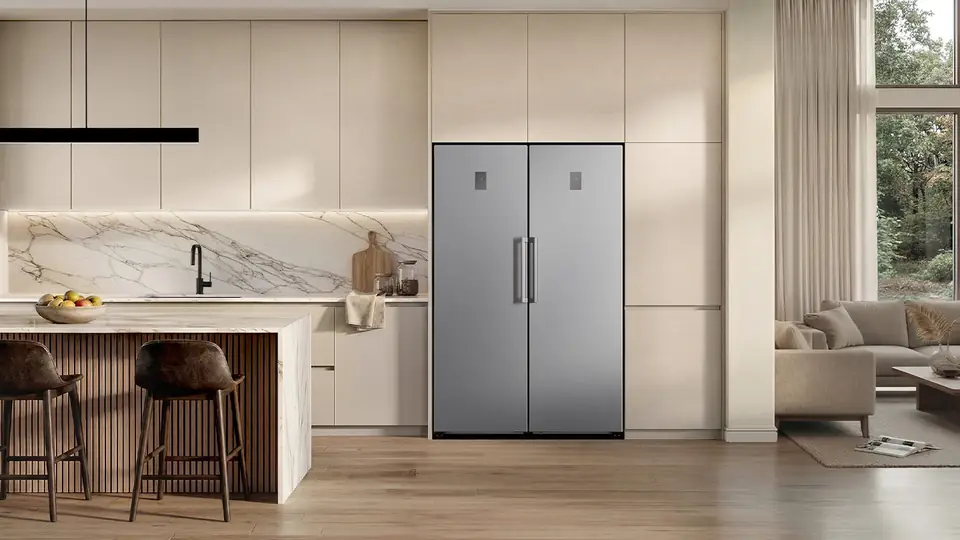 TechnologyThe appliance energy label explained: reading, comparing, calculatingSince 2021, the European energy label has changed: goodbye A+++, hello a much stricter A-to-G scale. As a result, a very good fridge can show a C. Here's how to read the label family by family, how to convert kWh into euros at Belgian prices, and how to check a model in the EPREL database.6 min read
 Practical guideEco-cheques: which appliances and TVs can you buy with them?Since 1 June 2026, the eco-cheque list has changed for fridges, dishwashers and washer-dryers. Here's what you can buy at Nimestore with your eco-cheques, energy class by energy class.2 min read
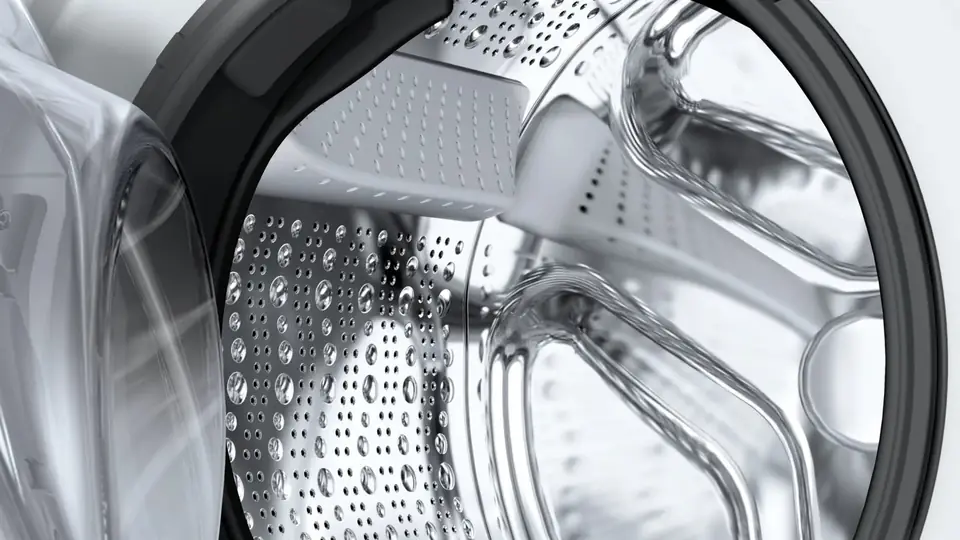 TechnologyThe appliance glossary: 85 terms explained in plain EnglishDirect Drive, i-DOS, autoOpen dry, Low Frost, climate class... Appliances have their own jargon, and every brand adds its own trade names. Here are 85 terms we explain every day in store, sorted by theme, so you can read a product sheet like a pro.8 min read