
Cooking on induction: cookware, booster, flexible zones, the right settings and mistakes to avoid
Induction is fast, precise and easy to clean, but it doesn't work like an old electric hob or gas. Which pans, which setting for simmering or searing, what the booster and flexible zones are for, and which mistakes to avoid: here's everything we explain in store every week.
- Cookware : if a magnet sticks to the base, it's suitable
- Booster : for boiling quickly, never for an empty pan
- Flexible zones : for large dishes and oval casseroles
- Installation: have an electrician check it
How induction works
Beneath the glass, a coil creates a magnetic field. When a pan with a magnetic base is placed on it, the field heats the metal of the base directly. The glass itself only heats through contact with the pan. In practical terms, heat is instant , adjustable to the second, nothing heats without cookware, and spills hardly burn onto the glass. It is also the most efficient cooking technology.
The downside: you need compatible cookware, and a suitable electrical installation.
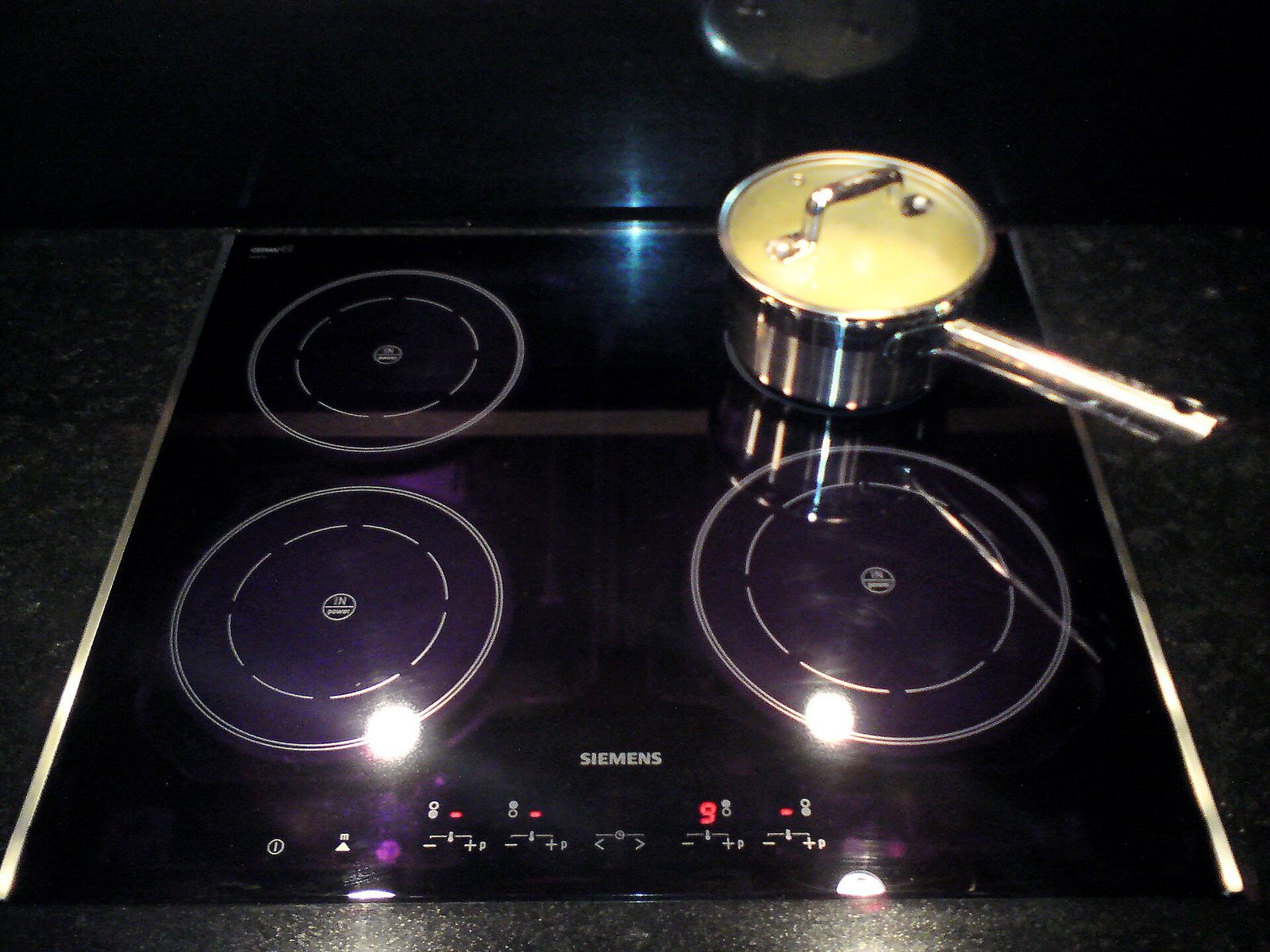
Compatible cookware
- The magnet test : if a magnet sticks firmly to the base, it's fine. If it sticks weakly, the pan will heat poorly or not at all.
- What works : cast iron (bare or enamelled), enamelled steel, carbon steel, stainless steel with a magnetic base, aluminium with a magnetic disc bonded into the base.
- What doesn't work : aluminium alone, copper, glass, ceramic, earthenware.
- A flat base : a convex or warped base makes poor contact with the glass, heats unevenly and may not be detected properly.
- The right size : the pan should cover roughly the whole zone. If it's too small, the hob won't detect it (the pan symbol flashes). Each zone has a minimum diameter, listed in the manual.
Attached to an old aluminium pan? An induction adaptor plate exists, but it heats less well and uses more energy. It's a stopgap, not a day-to-day solution.
Using the booster
The booster (often marked P, PowerBoost or Power) sends maximum power to a zone for a few minutes, then the zone drops back automatically to a lower level. It is ideal for boiling water pasta, bringing soup to the boil or quickly searing a well-filled wok.
Two things to know. First, on many hobs zones work in pairs: when one zone is on booster, its neighbour loses power. Second, the booster isn't suitable for an empty pan, a non-stick pan or caramel: the temperature rises too sharply. Some hobs offer a gentler 'Pan Boost' setting designed for preheating a frying pan.
Flexible, combinable and bridge zones
Recent hobs are no longer limited to four rings:
Combinable zone (Bridge, CombiZone)
Two adjacent zones join to form one large rectangular area, controlled by a single setting. Ideal for a fish pan, a plancha or an oval casserole.
Flexible zone (Flex, FlexInduction)
A large area covered with small coils: the pan is detected wherever you place it. Some hobs even adjust power by position (strong at the front, gentle at the back), handy for switching from high-heat cooking to keeping food warm simply by moving the pan.
Large ring, 28 cm or more
A single large, powerful round zone for cast-iron casseroles and large sauté pans.
Which power level for which cooking
| Cooking | Level out of 9 | Level out of 17 (approx.) | Examples |
|---|---|---|---|
| Melting, keeping warm | 1 to 2 | 1 to 4 | Chocolate, butter, ready-made sauce |
| Simmer gently | 2 to 3 | 4 to 6 | Bolognese, carbonnade, meatballs in sauce |
| Gentle simmer, cook covered | 3 to 4 | 6 to 8 | Soup, rice, steamed vegetables |
| Cook, sauté | 5 to 6 | 9 to 12 | Onions, béchamel, pancakes, omelette |
| Sear, brown | 7 to 8 | 13 to 15 | Steak, meatballs, stir-fried vegetables |
| Boil rapidly | 9 or booster | 16, 17 or booster | Pasta water, bringing a pan of soup to the boil |
These settings apply to most hobs. Induction is more powerful than the old ceramic hobs, so many people initially cook one or two settings too high: start lower and adjust.
To put these settings into practice, follow our butternut squash soup (booster, then simmer) or our boulets à la liégeoise (sear, then simmer).
Features that make life easier
- Timer per zone : the zone switches off automatically once the set time has elapsed.
- Pause, Stop and Go : all zones drop to minimum for as long as it takes to open the door or answer the phone, then resume.
- Frying sensor (PerfectFry on Bosch, fryingSensor on Siemens): the pan is held at the chosen temperature, for evenly cooked steaks or pancakes.
- Connection with the hood : the hood switches on and adjusts its power automatically according to the cooking (depending on compatible brands and models).
- Power limitation (Power Management): the hob limits its total power to suit your electrical installation.
- Child safety lock : locking the controls prevents accidental switch-on.
Mistakes to avoid
- Heating an empty pan on booster : it reaches an excessive temperature within a minute, the non-stick coating deteriorates and can release fumes. Add the fat straight away and preheat on a medium setting.
- Sliding pans across the hob : a grain of salt or sand under a cast-iron pan is enough to scratch the glass. Lift rather than drag.
- Letting sugar boil over onto the glass : any jam or caramel spillage should be removed quickly with a scraper, before it hardens, taking care not to burn yourself.
- Using a pan that is too small or warped : it heats poorly, and the zone may switch off or flash.
- Blocking the ventilation under the hob : the electronics need air. An overfilled drawer or poor installation causes shutdowns due to overheating.
- Placing metal objects on the glass : cutlery, lids or kitchen foil can heat up if they end up on a zone that is switched on.
- Overlooking the electrical installation : a hob connected to an undersized circuit will trip the circuit breaker. Have an electrician check the connection before you buy.
When you switch to induction, set aside a small budget for pans. There's no need to replace everything: a good frying pan, a sauté pan, a large saucepan and a cast-iron casserole cover 90% of cooking. And bring your favourite pan to the shop: we test it with a magnet and tell you straight away whether it will work with induction.
Which induction hob should you choose?
A few pointers from our range, depending on how you cook:
- To start, without getting it wrong : Beko HII64205F2MT (four zones, two of them Flexizone, Power Management, 509,99 €), Candy CTP644SCBB (Twin Power zone, power limitation from 12 to 32 A, 429,99 €).
- The right balance : Bosch PIJ611BB5E (three zones, one of 28 cm, booster up to 3 700 W, 599,99 €), Bosch PVQ611BB6E (two CombiInduction zones, 689,99 €).
- Connected and flexible : Samsung NZ63B6056GK (FlexZone Plus, slider controls, Wi-Fi, 759,99 €).
- Extra-wide : Whirlpool WLB 4265 BFIXL (65 cm, FlexiCook zone, 6th Sense functions, 869,99 €), Siemens EX851HEC1F (80 cm, iQ700, FlexInduction and FlexMotion, fryingSensor Pro, 949,99 €).
- No fitted kitchen : the Smeg C6IPXT2 range cooker (four-zone induction with Bridge and pyrolytic oven, 1 499,99 €).
Recommended retail prices checked on 15 October 2026: the product page is definitive, and Nimesclub members often get a reduced price. All our hobs are in the built-in hobs, and our range cookers are in the cookers.
Induction hobs in store
 Hob BOSCH PIJ611BB5E€599.00
 Hob BOSCH PVQ611BB6E€689.00
 Induction Hob SIEMENS EX851HEC1F€949.00
 SAMSUNG NZ63B6056GK Induction Hob€759.00
 Hob BEKO HII64205F2MT€509.00
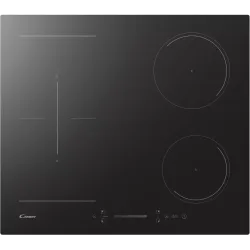 Hob CANDY CTP644SCBB€429.00
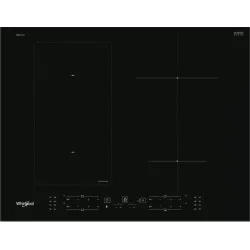 Hob WHIRLPOOL WLB 4265 BFIXL€869.00
 Cooker SMEG C6IPXT2€1,499.00
For the other half of the kitchen, read our guide to oven modes explained.
Frequently asked questions
How do I know if my pans work on induction?
Place a magnet against the base: if it sticks firmly, the pan is compatible. Also look for the spiral or coil symbol on the underside of the cookware. Cast iron, enamelled steel, stainless steel and most magnetic stainless steel work; aluminium alone, copper, glass and earthenware do not.
Why does my induction hob make a noise?
A slight hum or whistling at high power is normal: it comes from the cookware, especially pans made of several layers of metal, and from the fan that cools the electronics. The fan may keep running for a short time after switching off.
Can you use induction with a pacemaker?
Manufacturers advise people with a cardiac pacemaker to ask their doctor for advice and to keep to the distances stated in the manual. Use cookware that is well centred on the zone and suitably sized.
Does induction use less energy than ceramic hobs?
Yes. The heat is generated directly in the base of the pan, and the zone switches off as soon as the cookware is removed. The European Commission notes that electric hobs have an efficiency of around 78%, compared with around 62% for gas, and induction is the most efficient of the electric technologies.
Do you need a special electrical installation?
An induction hob of 60 to 80 cm may require up to around 7.4 kW. In Belgium, it is generally connected to a dedicated circuit, either single-phase 32 A or on two phases, and some hobs cannot be connected to a 3 x 230 V network without neutral. Many models can limit their power. Always have it checked by an electrician, in compliance with the RGIE.
How do you clean an induction hob?
Let it cool down, then wipe with a soft sponge and a little washing-up liquid or a specialist ceramic hob cleaner. For burnt-on residue, use a scraper with a blade. Never use abrasive pads or scouring powder, which scratch the glass.
The right oven makes all the difference
Steam ovens, pyrolytic ovens, induction hobs: come and see them at our Temploux store, or ask our expert salesperson for advice.
Read next
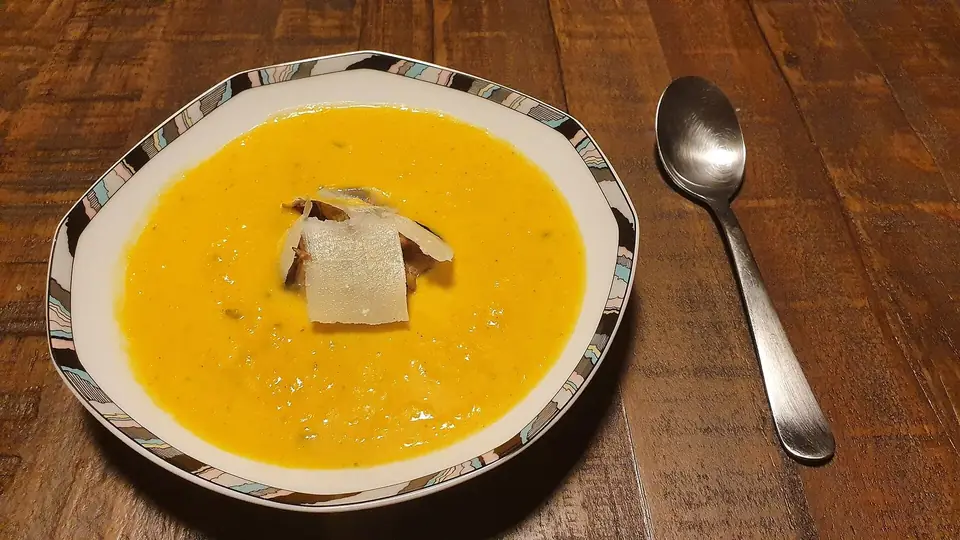 RecipePumpkin or butternut squash soup: velvety, in 40 minutes on inductionOrange, sweet, velvety: squash soup is the queen of October evenings. On an induction hob, it's ready in forty minutes, and a tip in the oven gives it an incomparable roasted flavour. Here's the basic recipe, the right settings and our variations.45 min · Very easy · 6 servings
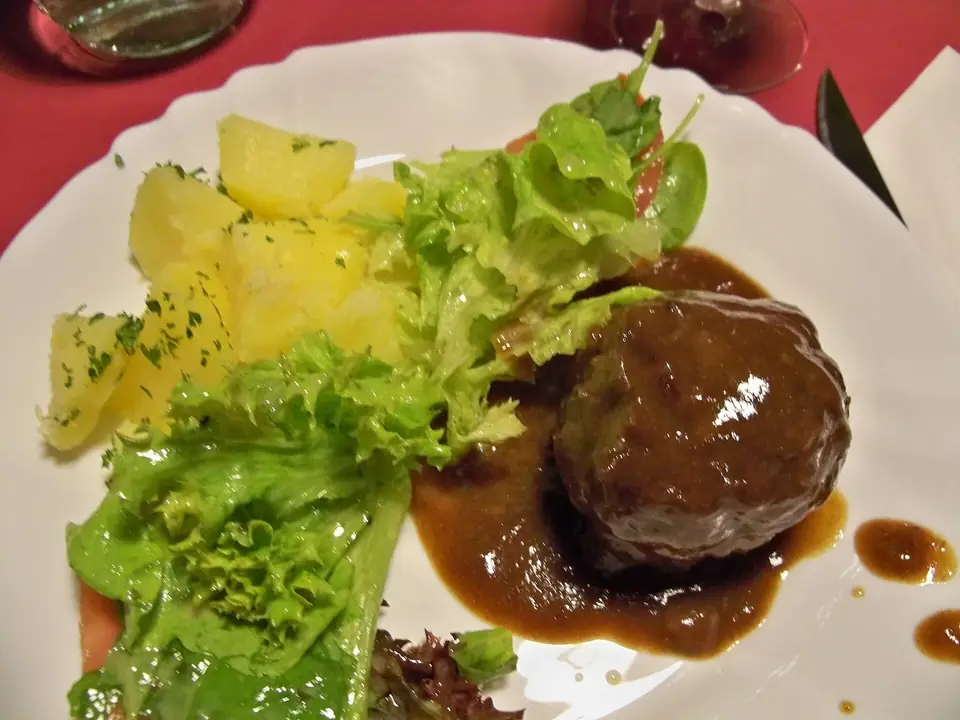 RecipeLiège-style meatballs: the real sauce lapin, with Liège syrupWell-browned meatballs, soft at the centre, simmering in a brown, sweet-and-sour sauce with onions and Liège syrup: the quintessential Walloon brasserie dish. Make them on the hob, with an oven option for browning without splatters.1 h 20 · Easy · Serves 4
 Cooking tipOven modes explained: fan, bottom heat, grill, steam, air fry… when to use whatA fan, two lines, a drop, a little grid: the symbols on your oven aren't there just for decoration. Each mode heats differently and suits particular dishes. Here is the complete guide, mode by mode, with a large chart so you can finally know what to choose.7 min read