
HD, 4K or 8K in 2026: resolution, upscaling and source quality
4K is everywhere, 8K has almost disappeared, and yet most of what you watch isn't in 4K. The secret to a great picture is upscaling: the TV's ability to enhance what it receives. Here's everything you need to know in 2026.
- 4K : the standard from 43 inches up, no need to look further
- 8K : almost gone, with virtually no content
- Theupscaling makes the quality of live TV
- Blu-ray UHD and 4K streaming: the best sources
HD, Full HD, 4K, 8K: the numbers
| Resolution | Pixels | Where to find it in 2026 |
|---|---|---|
| HD (HD ready) | 1 366 × 768 | Small secondary TVs of 24 to 32 inches |
| Full HD | 1 920 × 1 080 | Entry-level TVs of 32 to 43 inches |
| 4K UHD | 3 840 × 2 160 | Almost all TVs from 43 inches up, up to 115 inches |
| 8K | 7 680 × 4 320 | A handful of very high-end Samsung models |
4K has four times as many pixels as Full HD, and 8K four times as many as 4K. But more pixels don't mean a better picture: at normal viewing distance, the eye can no longer distinguish the pixels of a good 4K TV. Contrast, brightness, colours and picture processing matter far more.
4K, the standard
In 2026, the question no longer arises from 43 inches up: all TVs are 4K, from the LG 43QNED72 at €399.99 up to high-end OLEDs. What makes the difference between two 4K TVs is not the resolution, but the panel and the processor.
HelloTV's viewing distance rule confirms this: with 4K, you can sit at roughly 1.5 times the screen diagonal, compared with 2.25 times for Full HD. In other words, 4K allows a larger screen in the same room. To find the right size, read what size TV to choose.
8K: why it has almost disappeared
LG stopped making 8K at the end of 2025, and Sony, TCL and Hisense have dropped or suspended their models. In 2026, Samsung is the only major manufacturer still selling them, with its Neo QLED QN990H series. The reasons are simple:
- No content : neither the channels, Netflix nor Blu-ray offer 8K. Only YouTube has a few videos.
- No visible difference at normal viewing distance, except on huge screens seen very close up.
- A much higher price, for the same panel, than an excellent 4K.
Our advice as sellers: for 99% of customers, the money spent on an 8K is better invested in a better 4K, a bigger screen or a soundbar.

Upscaling: the real secret of a good picture
When a 4K TV receives an HD image, it has to fill four times as many pixels as it receives. This is theupscaling (scaling). A basic processor simply enlarges: the picture looks soft and a little blurry. A good processor analyses the image, recognises edges, faces and textures, reduces compression noise and recreates detail. In recent years, these processors have usedartificial intelligence, trained on millions of images.
| Brand | High-end processor 2026 | Our verdict |
|---|---|---|
| Sony | XR processor (Bravia 9 II, 7 II, 8 II, 3 II) | The benchmark for natural looks, excellent on live TV |
| LG | α11 AI Gen3 (C6, G6, W6, Micro RGB) | Very good upscaling and HDR remastering |
| Samsung | NQ4 AI Gen3 (OLED S92H, S95H…) | Very sharp, with AI Upscaling Pro for weak sources |
| Philips | P5 AI (OLED, PQS9001, PQS8601) | Refined picture, very comprehensive settings |
| Hisense and TCL | Hi-View AI Engine, TSR AiPQ (MediaTek chips) | Decent and improving, a notch behind on weak sources |
The image processing also does the noise reduction (the little blocks caused by compression in channels and online videos) and the HDR conversion of certain SDR programmes. These features are useful with weak sources, but should be used sparingly: on a Blu-ray or a well-encoded film, Filmmaker or Cinema mode reduces them to respect the original image.
Source quality, from worst to best
| Source | Usual resolution | Quality |
|---|---|---|
| RTBF digital terrestrial TV (aerial) | HD | Decent, free, HEVC compression |
| Proximus, Telenet, VOO, Orange set-top box | HD for most channels | Good. Proximus has announced improved quality on 16 channels since February 2026 (fibre and V7 box) |
| Catch-up apps (Auvio, VRT MAX, Play) | HD | Varies with connection |
| YouTube | Up to 4K, sometimes 8K | Very variable depending on the video |
| Netflix, Disney+, Prime Video, Apple TV | 4K HDR on many titles | Very good, depending on the plan and connection (about 15 Mbit/s for 4K) |
| 4K UHD Blu-ray | 4K HDR, much higher bitrate than streaming | The best picture and sound available |
4K streaming is heavily compressed compared with UHD Blu-ray: it's the difference between a good file and a perfect one. On a large screen of 75 inches and up, film enthusiasts will notice the difference, especially in dark scenes. To get the most from HDR on these sources, also read HDR, Dolby Vision and HDR10+.
If you mainly watch live TV and the news, ask us to compare two TVs on an HD channel, not on a 4K demo video. That's where the processor makes the difference, and it's what you'll watch every day. On this point, Sony, LG and Samsung are among the best.
Processors that enhance the picture
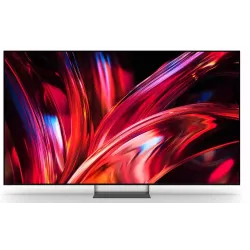 LED TV SONY K65XR95M2PB€2,633.00
 OLED TV LG OLED65C64LA€1,919.00
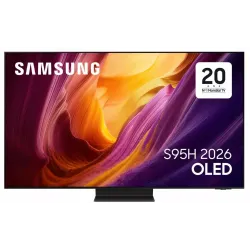 OLED TV SAMSUNG TQ65S95H€2,415.00
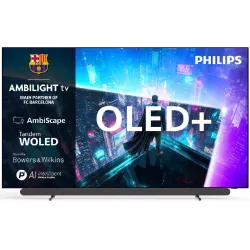 OLED+ TV PHILIPS 65OLED911/12€2,591.00
 QLED TV TCL 65C89L€1,799.00
 LED TV SONY K65XR35M2PB€1,107.00
 TV QNED LG 43QNED72B6B€374.00
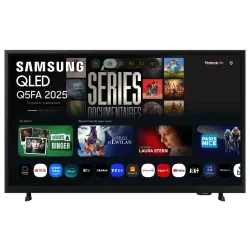 QLED TV SAMSUNG TQ32Q5F€377.00
Resolution and distance: what the eye really sees
The useful resolution depends on the distance between the sofa and the screen. The further away you sit, the less you can make out individual pixels. The HelloTV table gives good guidelines for a 4K TV:
| Diagonal | Recommended distance | Our comment |
|---|---|---|
| 32 inches | up to 1.5 m | Full HD is enough, 4K adds almost nothing |
| 43 inches | from 1.5 to 3 m | 4K is noticeable up close, for example on a desk |
| 55 inches | from 2 to 4 m | 4K becomes clearly visible |
| 65 inches | from 3 m | The best-selling size for the living room |
| 75 inches | from 4 m | Weak sources need a good processor |
| 85 inches and up | from 4.5 m | Where UHD Blu-ray shows its full superiority |
Also keep in mind the flip side: the bigger the screen, the more it magnifies the flaws of a poor source. On an 85-inch, a badly compressed HD channel shows more than on a 55-inch. If you watch a lot of live TV on a very large screen, the processor becomes a major deciding factor, just as much as the panel.
The right habit for a sharper picture
- Ethernet or a good Wi-Fi connection : a weak connection automatically lowers streaming quality.
- Check your subscription : 4K is often reserved for the top-tier plans of streaming services.
- Set the box to 4K or “automatic” if it allows it, and let the TV handle the upscaling.
- Turn off excessive sharpness : a sharpness setting that is too high adds artificial white halos.
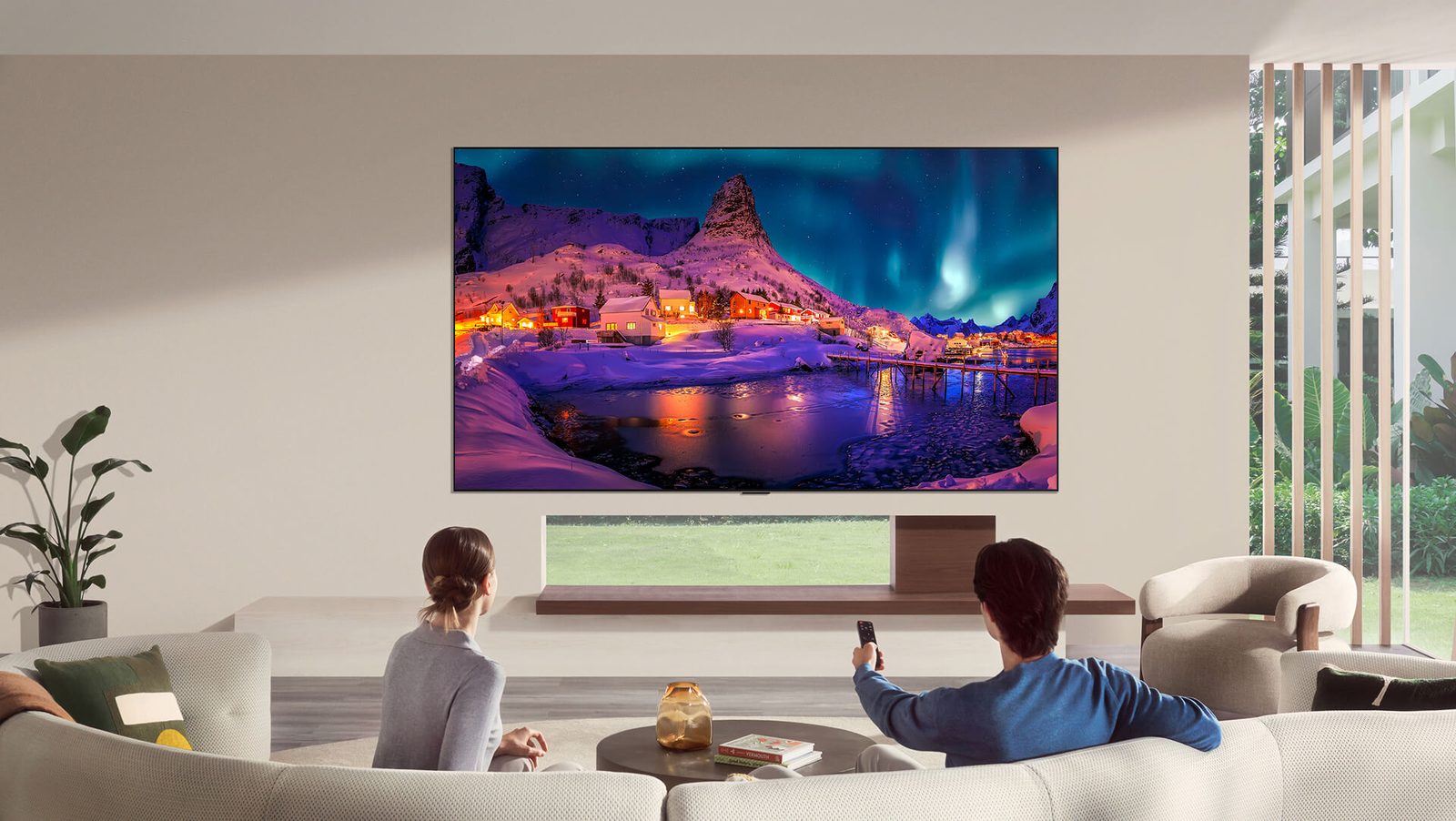
Prices checked on nimestore.com on 15 October 2026. The product sheet prevails. Nimesclub members often benefit from a reduced price.
Frequently asked questions
Should you buy an 8K TV in 2026?
No, for almost all customers. There is almost no 8K content, Samsung is the only major manufacturer still selling them, and at normal viewing distance the eye can't see the difference from a good 4K. It's better to invest in a better 4K panel.
Is live TV in 4K?
No, almost always in HD. Belgian channels, RTBF digital terrestrial TV and set-top boxes broadcast in HD. It's the TV's processor that converts the picture to 4K, hence the importance of upscaling.
Is a small Full HD TV enough?
Yes, up to 32 inches, for a bedroom or kitchen. From 43 inches, 4K becomes the norm and costs barely any more.
Which subscription do you need to watch Netflix in 4K?
Netflix reserves 4K for its most expensive plan. You also need a connection of around 15 Mbit/s. Disney+ and Prime Video also offer 4K content depending on the title and plan.
Come and compare the screens in person
At our Temploux shop, we switch on TVs side by side with your content. Or ask our expert salesperson online, right now.
Read next
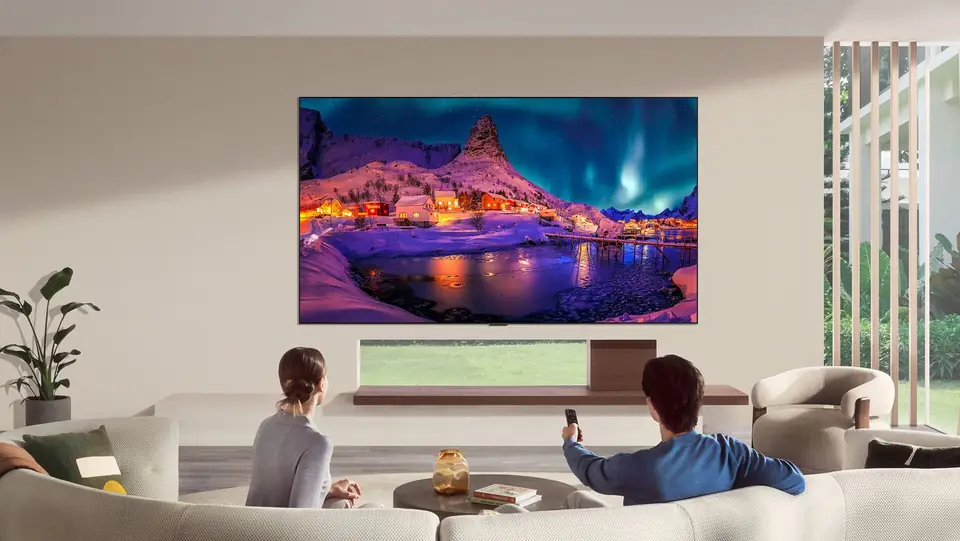 Buying guideWhich TV size for your living room?The question we're asked most often in store. Good news: there's a very simple rule, and it almost always leads to a bigger screen than you had in mind.3 min read
 TechnologyHDR, Dolby Vision, HDR10+: what really changesHDR is what makes the difference between a 'clean' picture and one that really dazzles. But with all the logos, it's easy to get lost. We sort it out for you.3 min read
 PracticalGetting TV in Belgium in 2026: aerial, set-top box, apps or satelliteAerial, set-top box, app or satellite dish: in Belgium there are several ways to watch TV, and they don't all work with every television. Here's the full picture as of October 2026, to help you choose the right solution and the right TV.5 min read