
Homemade crème caramel: smooth, no holes, and caramel that doesn't burn
Six ingredients, no complicated equipment, and yet crème caramel is intimidating: the caramel burns, the custard is full of little holes. Everything depends on two things: a well-adjusted hob and a gentle oven. Here is the method, step by step.
- 6 ramekins, 20 min preparation
- Dry caramel on induction, setting 6 then 4
- Bain-marie in the oven, 150 °C, 35 to 40 min
- 4 hours in the fridge before turning out
Appliance and settingHob for the caramel, then oven at 150 °C in a bain-marie
Ingredients
A simple dessert, provided you're gentle with it
Crème caramel is a custard baked on a base of caramel, then turned out onto the plate. It needs nothing more than milk, eggs, sugar and vanilla. The result depends on two settings: a well-controlled hob for an amber caramel, not black, and a gentle bain-marie in the oven for a custard as smooth as silk.
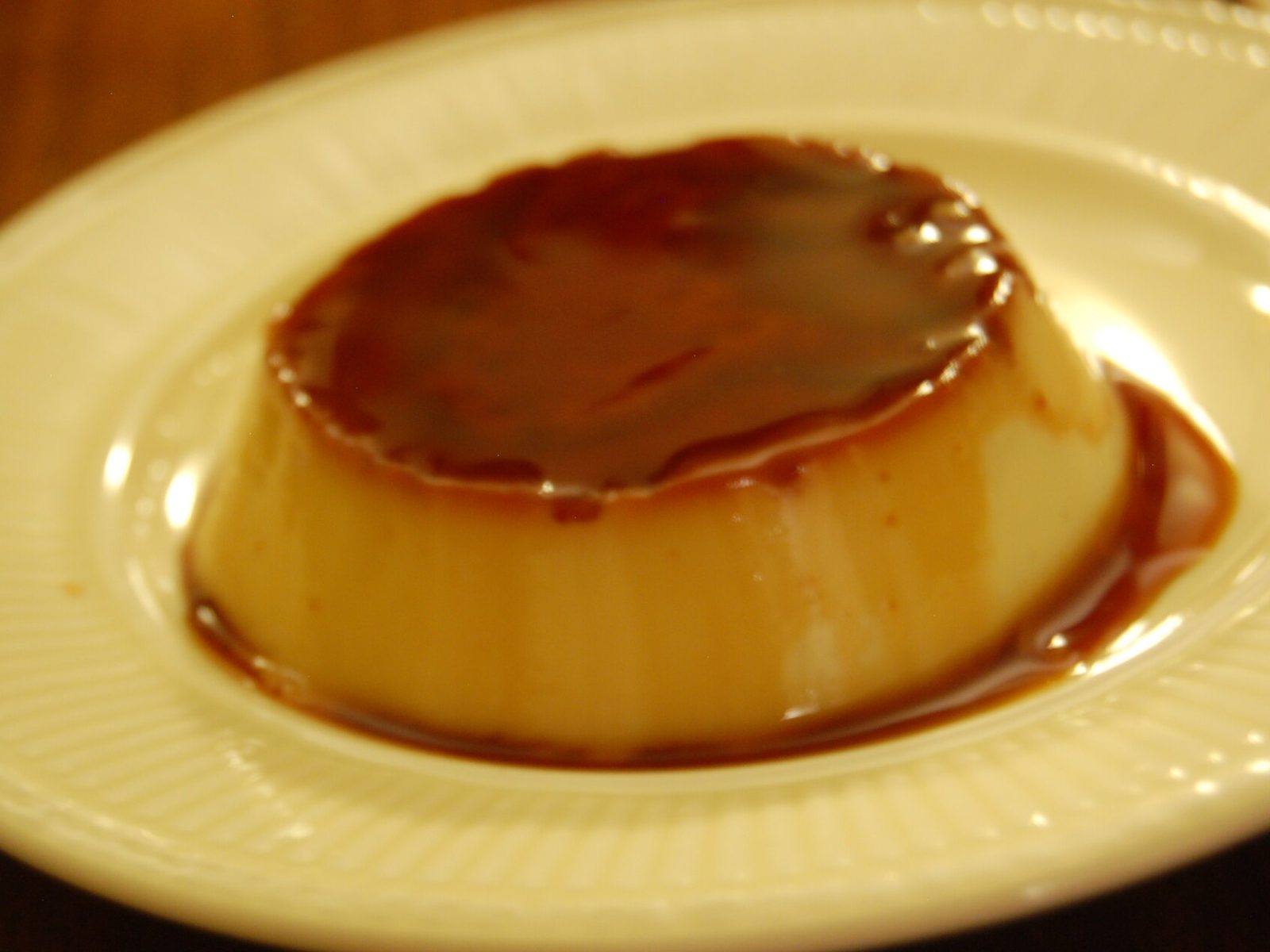
The steps
- Prepare the oven and the ramekins. Preheat the oven to 150 °C on conventional heat. Place 6 ramekins (8 to 10 cm) in a large deep-sided dish. Heat some water in the kettle.
- The caramel. In a small heavy-based saucepan, put the sugar and water. On the hob at setting 6 (out of 9), let it melt without stirring. Just swirl the pan if one side colours faster. When the caramel turns amber, like dark honey (6 to 8 minutes), remove from the heat.
- Pour immediately. Divide the caramel between the ramekins and swirl them to coat the base. Careful, the caramel is above 160 °C: don't touch it.
- Heat the milk. Split the vanilla pod, scrape out the seeds and put everything into the milk. Heat on setting 5 until it starts to shiver, without boiling. Remove the pod.
- The custard. In a bowl, whisk together the eggs, yolks and sugar, gently, without making it frothy. Pour the hot milk in a thin stream, whisking constantly.
- Strain. Pass the custard through a fine sieve and skim off any foam from the surface with a spoon. This is the secret to a bubble-free custard.
- Fill and bake. Pour the custard into the ramekins. Put the dish in the oven on shelf 2, then pour the hot water into the dish until it reaches halfway up the ramekins. Bake for 35 to 40 minutes. The custard should be set around the edges but still wobble slightly in the centre.
- Cool. Take the ramekins out of the bain-marie, let them cool slightly, then chill them for at least 4 hours in the fridge, ideally overnight.
- Turn out. Run a thin knife around the edge, place a plate on top and turn it over in one swift movement.
Appliance settings
| Step | Appliance and mode | Setting | Duration |
|---|---|---|---|
| Caramel | Induction hob | Setting 6, then 4 if it colours too quickly | 6 to 8 min |
| Vanilla milk | Induction hob | Setting 5, do not boil | 4 to 5 min |
| Baking custards | Oven, conventional heat, bain-marie | 150 °C, shelf 2 | 35 to 40 min |
| Baking custards (variation) | Oven, fan, bain-marie | 140 °C, shelf 2 | 35 to 40 min |
| Baking custards (variation) | Steam oven or combi steam oven | 90 °C, 100% steam, no bain-marie | 25 to 30 min |
Fan heat dries the top of custards slightly: reduce the temperature by 10 °C compared with conventional heat. With a steam oven, cover each ramekin with special cooking film or a sheet of foil to prevent water droplets falling onto the custard.
Variations
- In a large mould : a 20 cm cake or springform tin, 50 to 60 minutes at 150 °C in a bain-marie.
- Salted butter caramel : add a pinch of fleur de sel to the caramel just before pouring it.
- With speculoos : infuse 3 crumbled speculoos biscuits in the warm milk, then strain.
- Lighter version : semi-skimmed milk and 4 whole eggs, with no extra yolks. The custard is a little less silky.
Storage
Crème caramel keeps 3 days in the fridge, in its ramekins, covered with cling film. Only turn it out just before serving. It does not freeze well: the custard turns grainy when thawed.
When making caramel, induction is your friend: it reacts instantly when you turn the heat down, whereas a ceramic hob keeps on heating. Stay nearby and remove the pan as soon as the colour turns amber. And don't wash the pan straight away: fill it with water, boil for 2 minutes, and the stuck caramel will dissolve on its own. The same caramel technique is used for our tarte Tatin.
Which appliance?
A successful crème caramel relies on a hob with precise control for the caramel, and an oven that holds a low, steady temperature, with natural convection.
An oven with conventional heating and bottom heat
For delicate desserts, choose an oven with natural convection. Examples: Smeg SFP61TB3FR (Linea, pyrolytic, 10 modes, up to 280 °C), Beko BCBIM17604KSBMPS (pyrolytic, 3D pulsed heat, Wi-Fi), Whirlpool OMR55RR0B (natural convection, pizza mode, pyrolytic and hydrolytic cleaning).
From €629.99 to €759.99
Precise induction
Smeg SIB2641D: four zones, Bridge zone and nine power levels.
599,99 €
An induction and pyrolytic range cooker
Smeg C6IPBLT2, gloss black: four-zone induction hob with Bridge and 70-litre pyrolytic oven.
1 499,99 €
Public prices noted on 15 October 2026: the product page is definitive, and Nimesclub members often get a reduced price.
Ovens, hobs and cookers in store
 SMEG SFP61TB3FR built-in oven€759.00
 Built-in oven BEKO BCBIM17604KSBMPS€629.00
 Built-in oven WHIRLPOOL OMR55RR0B€749.00
 Cooker SMEG C6IPBLT2€1,499.00
 Hob SMEG SIB2641D€599.00
Natural convection or fan-assisted? Our guide to oven functions will help you choose. And for stress-free caramel, read cooking with induction.
Frequently asked questions
Why does my crème caramel have little holes?
The oven was too hot or the custard was over-whisked. Above 160 °C, the water in the custard boils and forms bubbles. Whisk gently, strain the custard, skim off the foam and bake at 150 °C in a bain-marie.
My caramel has hardened at the bottom of the ramekin, is that normal?
Yes. It hardens as it cools, then liquefies on contact with the custard during baking and resting in the fridge. After 4 hours in the cold, it forms a sauce.
How do I turn out a crème caramel without breaking it?
Run a thin knife all around the edge, against the side. Place the plate on top of the ramekin, turn it over sharply and wait a few seconds. If it won't release, dip the base of the ramekin in hot water for 10 seconds.
The right oven makes all the difference
Steam ovens, pyrolytic ovens, induction hobs: come and see them at our Temploux store, or ask our expert salesperson for advice.
Read next
 RecipeBelgian apple Tarte Tatin: Jonagold and Boskoop apples, caramel on the tray, baked in the ovenMelting, caramelised apples, a crisp pastry, a spectacular unmoulding: the Tarte Tatin is the quintessential autumn dessert. With Belgian apples, Jonagold for sweetness and Boskoop for structure, a caramel made on the tray and a well-judged oven bake, it's within your reach.1 h 20 · Medium · 8 pers.
 Cooking tipOven modes explained: fan, bottom heat, grill, steam, air fry… when to use whatA fan, two lines, a drop, a little grid: the symbols on your oven aren't there just for decoration. Each mode heats differently and suits particular dishes. Here is the complete guide, mode by mode, with a large chart so you can finally know what to choose.7 min read
 Cooking tipCooking on induction: cookware, booster, flexible zones, the right settings and mistakes to avoidInduction is fast, precise and easy to clean, but it doesn't work like an old electric hob or gas. Which pans, which setting for simmering or searing, what the booster and flexible zones are for, and which mistakes to avoid: here's everything we explain in store every week.6 min read