
RGB Mini LED, Micro RGB, True RGB: the big new thing for 2026
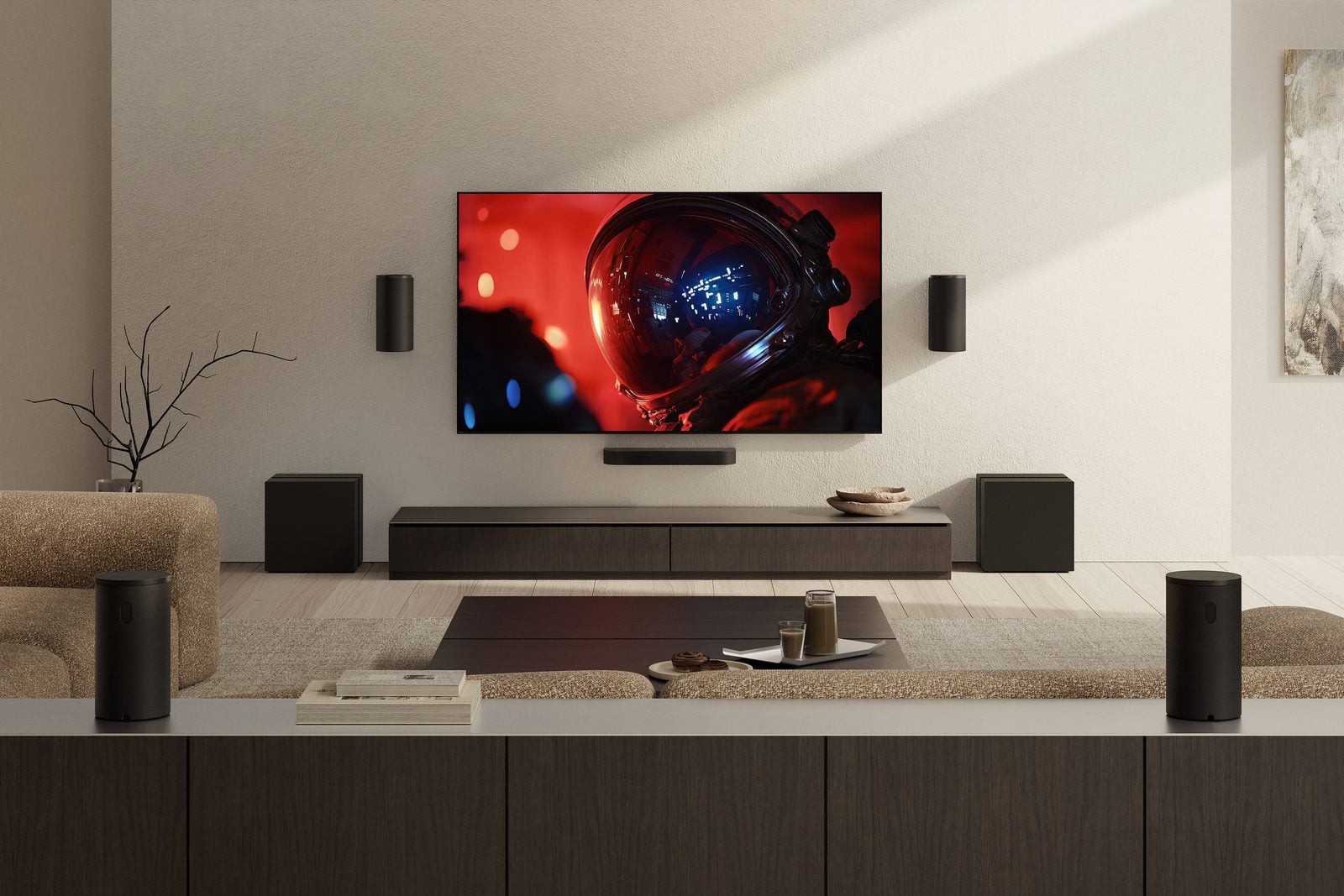
It's THE trend of the year: all the major brands are launching TVs with RGB backlighting. Samsung talks about Micro RGB, Sony about True RGB, and Hisense and TCL about RGB Mini LED. Behind the names is a simple idea that delivers spectacular colours.
- Separate LEDs in red, green and blue light up the screen
- The result: more richer colours even at high brightness
- It's still an LCD, not MicroLED
- Who it's for: high-end, bright room, large screen
How it works: LEDs in three colours
A standard Mini LED is lit by blue LEDs ; a layer of quantum dots converts part of that light into red and green. It works very well, but at very high brightness, colours lose a little of their purity.
On an RGB, the backlight uses separate LEDs in red, green and blue, controlled zone by zone. The TV adjusts each colour at the source. You get:
- a wider colour gamut (LG claims up to 100% of the BT.2020 standard on its flagship model);
- colours that stay pure even at high brightness ;
- very high brightness, with no risk of burn-in.
Names vary by brand
| Brand | Name | 2026 ranges |
|---|---|---|
| Samsung | Micro RGB | R95H (high-end), R85H (from 55 inches); in the Benelux, they also appear as MR95H and MR86H |
| Sony | True RGB | Bravia 9 II, Bravia 7 II |
| LG | Micro RGB evo, Mini RGB evo | Micro RGB evo MRGB96B (86 and 100 inches), Mini RGB evo MRGB86 to 88 (50 to 86 inches) |
| Hisense | RGB MiniLED | UR9S, UR8S |
| TCL | RGB Mini LED | RM9L, RM7L |
| Philips | RGB Mini LED | MLED981 (85 inches) |
RGB Mini LED, Mini LED or OLED?
| Criterion | Mini LED | RGB Mini LED | OLED |
|---|---|---|---|
| Brightness | Very high | Very high | Good to very good (high-end) |
| Colours at high brightness | Good | Excellent | Very good |
| Blacks | Very good, slight halo | Very good, reduced halo | Perfect, no halo |
| Viewing angle | Medium | Medium to good | Excellent |
| Burn-in | None | None | Low risk |
| Price | Affordable | High (2026 = first generation) | Medium to high |
RGB is the ideal choice if your living room is bright and you want top-end large-screen performance without worrying about burn-in. For cinema in a dark room, I'm still a fan of OLED. The best approach is to compare the two with the same video: in store, it takes two minutes.
Limitations to know about
- The price : the technology is only just getting started, and models are mostly high-end. The Samsung R85H, Hisense UR8S or LG Mini RGB evo open the door to more reasonable prices.
- Blooming : reduced, but still present on a black background, as with any LCD TV.
- Independent measurements are still few in number: early tests (Sony Bravia 9 II, Samsung R95H) are very positive.
RGB TVs in store
 TV LED SAMSUNG TMR65R85H€1,879.00
 LED TV SAMSUNG TMR55R85H€1,139.00
 LED TV SAMSUNG TMR65R95H€2,654.00
 LED TV LG 55MRGB88B6B.AEU€999.00
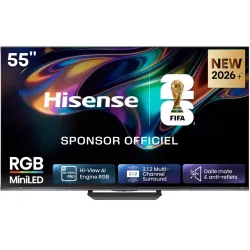 MINILED TV HISENSE 55UR8S€1,296.00
 LED TV SONY K65XR75M2B€1,864.00
 LED TV SONY K65XR95M2PB€2,633.00
Frequently asked questions
Micro RGB and MicroLED, is it the same thing?
No. MicroLED (Samsung The Wall, for example) is a screen where each pixel is a microscopic LED, sold for tens of thousands of euros. Micro RGB is an LCD screen with RGB backlighting: far more affordable.
Is RGB Mini LED better than OLED?
It is brighter and doesn't suffer from burn-in, with superb colours. OLED keeps the advantage of perfect blacks, a complete absence of blooming and wide viewing angles. For a bright room, RGB is appealing; for cinema in the dark, OLED remains the benchmark.
Should I wait for the technology to mature?
2026 is the first big year for RGB Mini LED, and prices are still high. If you're aiming for bright high-end, it's already an excellent choice; if your budget is tight, a good conventional Mini LED does the job very well.
Come and compare the screens in person
At our Temploux shop, we switch on TVs side by side with your content. Or ask our expert salesperson online, right now.
Read next
 TechnologyLED, QLED, Mini LED: LCD screens explainedQLED, Neo QLED, QNED, Mini LED, SQD… all these names belong to one family: the LCD screen. What makes the difference is how it's lit. We explain everything so you can read a spec sheet like a salesperson.2 min read
 ComparisonOLED, Mini LED or RGB Mini LED: which to choose?It's the question everyone asks in front of the TV aisle. There's no outright winner: there's the technology that suits your living room and your habits. Here's our comparison, criterion by criterion, and our clear verdict.2 min read
 2026 rangeSamsung TV range 2026: all the series explainedSamsung is renewing almost its entire line-up for 2026: four OLED series, the new Micro RGB technology, Neo QLED models, Mini LED from €500 and The Frame. Here's every series in detail, from top to bottom of the range, with its features and our prices.10 min read