
LED, QLED, Mini LED: LCD screens explained
QLED, Neo QLED, QNED, Mini LED, SQD… all these names belong to one family: the LCD screen. What makes the difference is how it's lit. We explain everything so you can read a spec sheet like a salesperson.
- LED, QLED and Mini LED are all LCD screens backlit
- The QLED improves the colours and the Mini LED the contrast and brightness
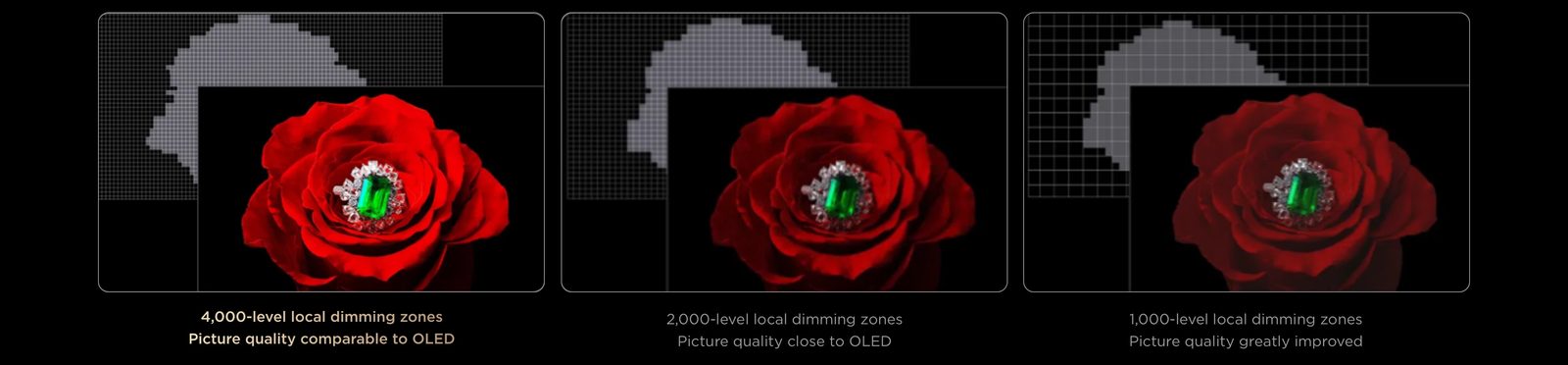
- The more local dimming zones, the less blooming there is
- Ideal for bright rooms and very large screens
The common principle: an LCD screen backlit
An LCD TV is made of two layers: an LCD panel that lets light through or blocks it pixel by pixel, and a backlight LED array placed behind, which produces the light. LED, QLED, Mini LED or RGB Mini LED: all these screens work this way. What changes is the quality of the lighting and colours.
The families, from the simplest to the most advanced
| Technology | What it is | Best for |
|---|---|---|
| LED (Direct LED, Edge LED) | A few LEDs behind the screen or along the edges. Little or no local dimming. | Small budgets, bedroom, kitchen |
| QLED | A layer of quantum dots (nanocrystals) makes the colours purer and brighter. | Budget-conscious living room |
| Mini LED | Thousands of tiny LEDs, grouped into hundreds or thousands of zones that light up independently. | Bright living room, sport, large screens |
| RGB Mini LED | Mini LED with separate red, green and blue LEDs: even more colours. Our dedicated article. | Bright high end |
Local dimming zones, the key to contrast
On a night scene, a good Mini LED switches off the areas that must be black and pushes to maximum those that must shine (the moon, a headlight). The more zones there are, the more precisely the lighting follows the image:
- entry level: no zones, or a few dozen;
- mid-range Mini LED: a few hundred to about 2,000 zones;
- high-end Mini LED 2026: several thousand, up to more than 20,000 zones announced on the TCL X11L.
The quality of the algorithm matters as much as the number: Sony and Samsung are known for limiting blooming with relatively few zones.
VA or IPS panel?
| VA panel | IPS panel | |
|---|---|---|
| Contrast | Good (fairly deep blacks) | Weak (greyish blacks in the dark) |
| Viewing angle | Limited: the image fades when viewed from the side | Wide |
| Best for | Facing the screen, films | Corner sofa, family seated in an arc |
The vast majority of Mini LEDs use VA panels. If you often watch from the side, OLED remains the best choice.
Commercial names decoded
| Name | Brand | What it really is |
|---|---|---|
| Crystal UHD | Samsung | Simple 4K LED |
| QLED | Samsung, TCL, Hisense, Philips | LCD with quantum dots |
| Neo QLED | Samsung | Mini LED with quantum dots |
| QNED, QNED evo | LG | LCD with colour technologies; Mini LED on some series only |
| QD-Mini LED, SQD-Mini LED | TCL | Mini LED with quantum dots (SQD: improved version for 2026) |
| Mini LED ULED | Hisense | Mini LED with quantum dots |
| The One (PQS) | Philips | QLED without Mini LED ("Micro Dimming" dimming), Ambilight except on the PQS7801 |
On a spec sheet, three lines are worth more than all the logos: the native refresh rate (100/120 Hz for sport and gaming), the number of local dimming zones and the HDR brightness in nits. If a spec sheet hides these figures, it is rarely a good sign.
Mini LED: strengths and limits
Why we love it
- Very high brightness, perfect in daylight
- No risk of burn-in
- Large sizes (75 to 115 inches) affordable
- Excellent for sport
Good to know
- Slight possible halo on black background
- Limited viewing angle (VA panels)
- Blacks less perfect than OLED in complete darkness
Frequently asked questions
QLED and OLED, pretty much the same?
No, despite the similar names. QLED is an LCD screen lit from behind, with a layer of quantum dots for colour. OLED has no backlight: each pixel produces its own light.
Can a Mini LED suffer burn-in like an OLED?
No. Mini LED carries no burn-in risk, even with a static logo on all day.
What is blooming (halo)?
A slight glow around a bright object on a black background, for example white subtitles. It appears when a backlight zone lights up wider than the object. The more zones there are, the less noticeable it is.
Neo QLED, QNED, QD-Mini LED: what's the difference?
These are each brand's commercial names. Neo QLED (Samsung) and QD-Mini LED (TCL) refer to Mini LED with quantum dots. At LG, QNED refers to LCD TVs with colour technologies, with or without Mini LED depending on the series: check the spec sheet.
Come and compare the screens in person
At our Temploux shop, we switch on TVs side by side with your content. Or ask our expert salesperson online, right now.
Read next
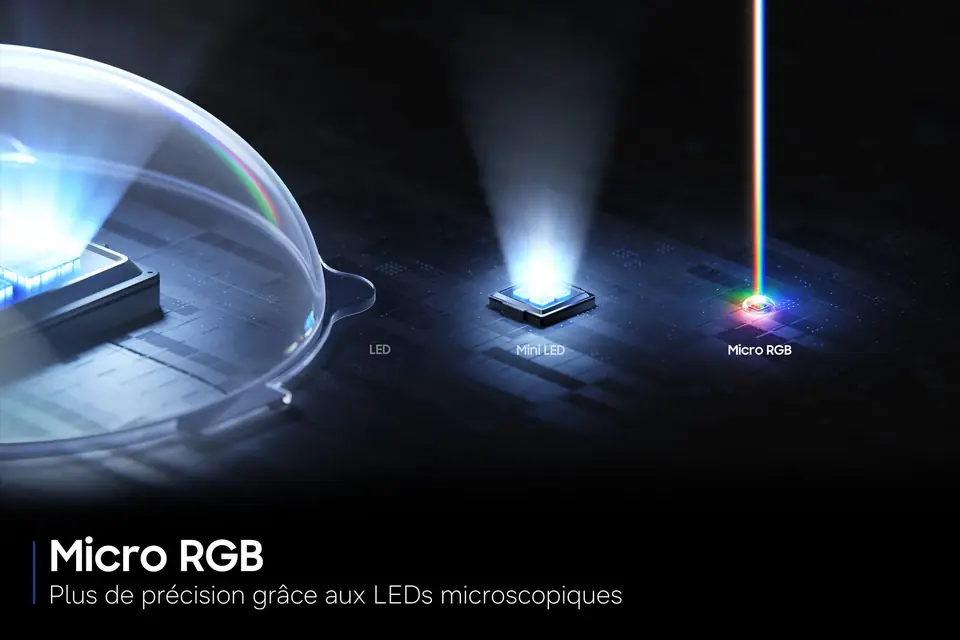 TechnologyRGB Mini LED, Micro RGB, True RGB: the big new thing for 2026It's THE trend of the year: all the major brands are launching TVs with RGB backlighting. Samsung talks about Micro RGB, Sony about True RGB, and Hisense and TCL about RGB Mini LED. Behind the names is a simple idea that delivers spectacular colours.2 min read
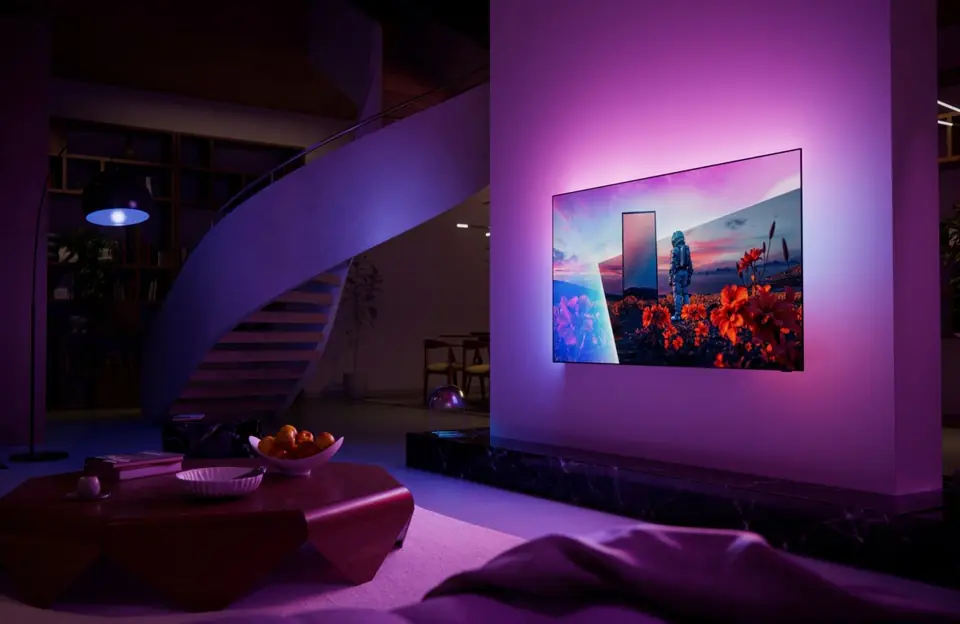 ComparisonOLED, Mini LED or RGB Mini LED: which to choose?It's the question everyone asks in front of the TV aisle. There's no outright winner: there's the technology that suits your living room and your habits. Here's our comparison, criterion by criterion, and our clear verdict.2 min read
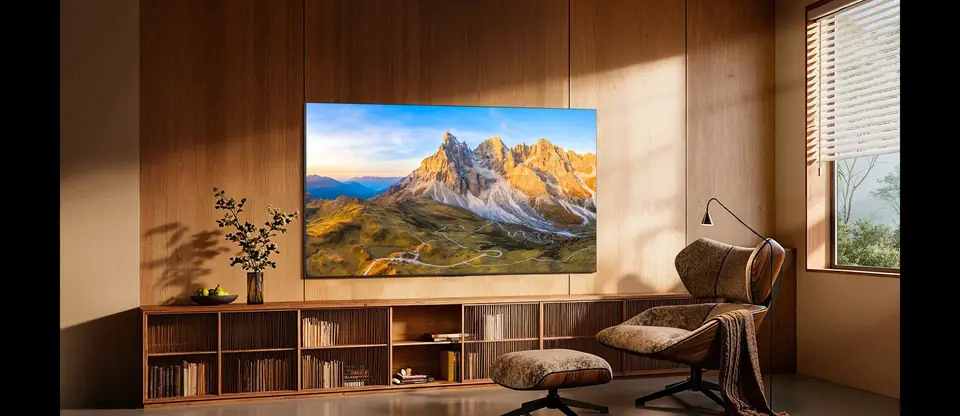 Comparison2026 Mini LED and RGB Mini LED comparison: our match-upMini LED is the technology for bright living rooms and very large screens, with no risk of burn-in. In 2026 it splits in two: classic Mini LED on one side, RGB Mini LED (Micro RGB, True RGB) on the other. Here's our comparison of the series we sell in store, from €649.99 to over €6,000, with a verdict for each type of viewer.6 min read