
2026 Mini LED and RGB Mini LED comparison: our match-up
Mini LED is the technology for bright living rooms and very large screens, with no risk of burn-in. In 2026 it splits in two: classic Mini LED on one side, RGB Mini LED (Micro RGB, True RGB) on the other. Here's our comparison of the series we sell in store, from €649.99 to over €6,000, with a verdict for each type of viewer.
- Best value for money : TCL C89L in 65 or 75 inches
- Small budget : TCL P89L, LG QNED85, Hisense U7SE
- High-end RGB : Samsung R95H and Sony Bravia 9 II
- The number of zones and the processor matter more than the name
Mini LED, RGB Mini LED: what are we talking about?
All the TVs in this comparison are LCD screens LCD : a panel filters the light from a backlight placed behind it. The Mini LED uses thousands of tiny LEDs, grouped into zones that switch on or off according to the image (local dimming). The RGB Mini LED goes further: the LEDs are red, green and blue, driven separately, for purer colours at high brightness. Samsung calls it Micro RGB, Sony True RGB, LG Mini RGB evo, Hisense and Philips RGB MiniLED.
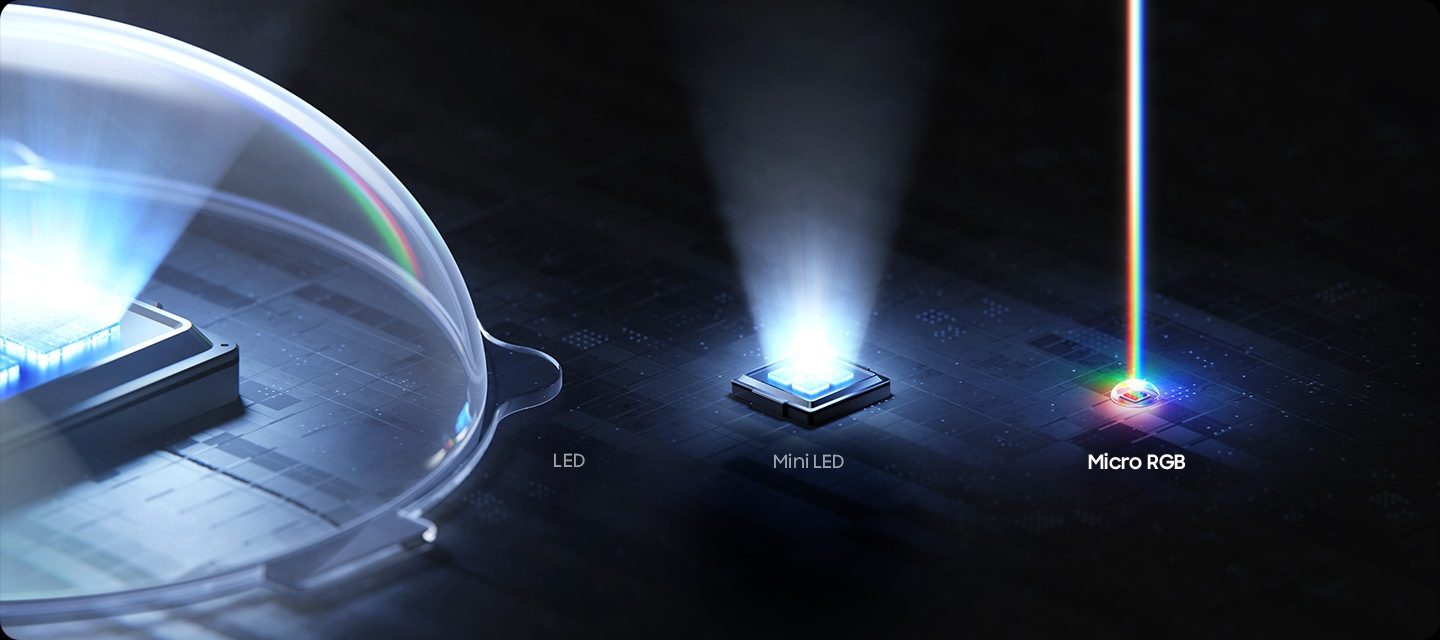
For details on the technologies, read our article on Mini LED and our article on RGB Mini LED.
Standard Mini LEDs compared
| Series | Key points | Frequency | Dynamic HDR | Sound | Platform | Nimestore price |
|---|---|---|---|---|---|---|
| TCL C89L | SQD-Mini LED, 1 008 to 4 032 zones and 3 000 to 6 000 nits claimed depending on size, 4 HDMI 2.1 from 65" | 144 Hz | Dolby Vision, HDR10+ | Bang & Olufsen 2.2 | Google TV | 55 to 98" · 1 199,99 to 3 799,99 € |
| TCL C79L | SQD-Mini LED, 800 to 2 176 zones, 2 700 to 3 000 nits claimed, narrower viewing angle | 144 Hz | Dolby Vision, HDR10+ | Bang & Olufsen | Google TV | 55 to 98" · 1 099,99 to 3 299,99 € |
| TCL P89L | QD-Mini LED, affordable | 144 Hz | Dolby Vision, HDR10+ | Onkyo | Google TV | 55 to 98" · 649,99 to 2 099,99 € |
| Samsung QN80H | Neo QLED, Mini LED on VA panel, NQ4 AI Gen2 processor, 4 HDMI 2.1 | 100 Hz native, 144 Hz in VRR | HDR10+ (no Dolby Vision) | 30 W | Tizen | 50 to 100" · 899,99 to 3 799,99 € |
| LG QNED85 | Mini LED, α8 AI Gen3 processor, 4 HDMI 4K 120 Hz | 120 Hz, 144 Hz in VRR | Dolby Vision (no HDR10+) | 20 W | webOS | 50 to 75" · 749,99 to 1 499,99 € |
| Hisense U7SE | Mini LED, 1 300 nits claimed, 4 HDMI 2.1 (VRR on two), no anti-glare coating | 144 Hz | Dolby Vision, HDR10+ | 40 W, tuned by Devialet | VIDAA | 50, 55, 75 and 85" · 799,99 to 2 299,99 € |
| Philips MLED910 (2025) | Mini LED with Ambilight | 144 Hz | See product page | See product page | Titan OS | 55 and 65" · 799,99 and 1 399,99 € |
At TCL, the C89L is the French reference for the series sold as the C8L in Belgium and the Netherlands (C79L = C7L). The P89L most likely corresponds to the P8L (to be confirmed). The number of zones and the brightness depend on the size: a 55C89L (1 008 zones, 3 000 nits claimed, HVA panel) is not a 98C89L.
RGB Mini LEDs compared
| Series | Key points | Frequency | Dynamic HDR | Sound | Platform | Nimestore price |
|---|---|---|---|---|---|---|
| Sony Bravia 9 II | True RGB, matte anti-glare filter, XR processor, around 3 990 nits measured (Tom's Guide), 2 HDMI 2.1 | 120 Hz | Dolby Vision (no HDR10+) | 80 to 85 W | Google TV | 65 to 85" · 2 999,99 to 4 999,99 € |
| Samsung R95H | Micro RGB, Glare Free, 4 HDMI 2.1, optional wireless box | 100 Hz native, 165 Hz in VRR | HDR10+ (no Dolby Vision) | 70 W 4.2.2 | Tizen | 65 to 85" · 3 799,99 to 6 699,99 € |
| Sony Bravia 7 II | True RGB without matte filter, XR processor, around 2 080 nits measured (Tom's Guide), 2 HDMI 2.1 | 120 Hz | Dolby Vision | 40 or 65 W depending on size | Google TV | 55 to 85" · 1 899,99 to 3 599,99 € |
| Samsung R85H | Micro RGB without anti-glare coating, 4 HDMI 2.1 | 100 Hz native, 144 Hz in VRR | HDR10+ | 30 W | Tizen | 55 to 85" · 1 499,99 to 4 499,99 € |
| Hisense UR8S | RGB MiniLED, up to 3 500 nits claimed, Dolby Vision 2 via update | 180 Hz (PC) | Dolby Vision, HDR10+ | 2.1.2 Devialet | VIDAA | 55, 65 and 85" · 1 499,99 to 2 799,99 € |
| LG Mini RGB evo | Mini RGB, α8 AI Gen3 processor, 4 HDMI 4K 120 Hz | 120 Hz, 144 Hz in VRR | Dolby Vision | 20 W | webOS | 55" · 999,99 € |
| Philips MLED981 | RGB Mini LED, Ambilight, 11 520 zones claimed, 4 HDMI 2.1 | 120 Hz, 165 Hz in VRR | HDR10+, Dolby Vision 2 Max | 70 W | Titan OS | 85" only · not yet in store |
Public prices checked on nimestore.com on 15 October 2026; the product page prevails, and Nimesclub members often get a reduced price. Claimed brightness figures are the manufacturers'; the measurements cited come from independent tests. The Philips MLED981 is not in the range at present: ask us if you are interested.
What really makes the difference
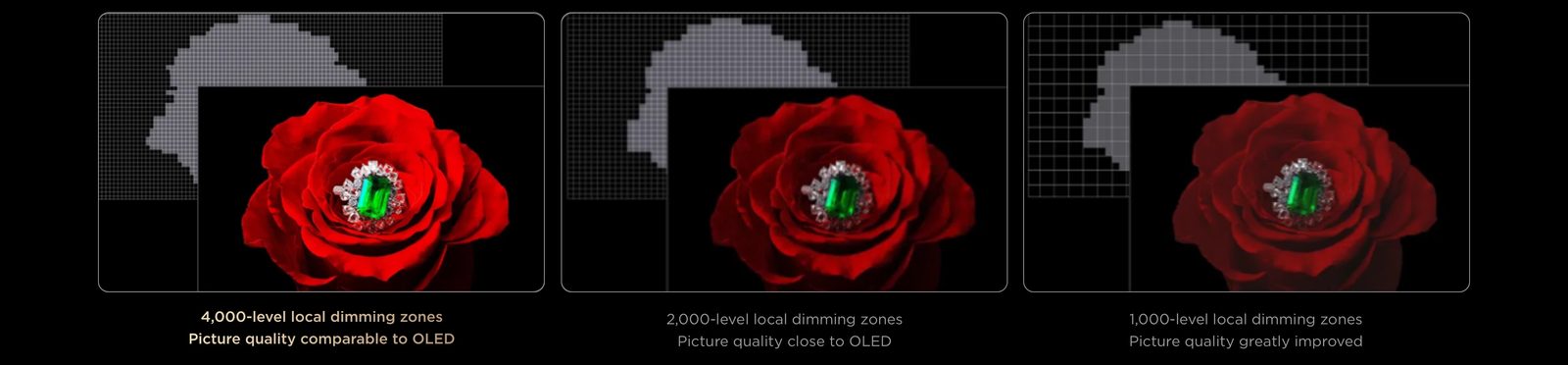
Dimming zones
The more zones there are, the deeper the blacks and the less halo around bright objects. It is the primary quality criterion for a Mini LED. Manufacturers don't always publish this figure: TCL does, size by size.
Anti-glare treatment
Facing a window, it is decisive. Only the Samsung R95H (Glare Free) and the Sony Bravia 9 II (matte filter, except in 115") have a genuine one in this comparison. The TCL C89L, Hisense U7SE, Samsung R85H and Sony Bravia 7 II have none.
Viewing angle
Most of these TVs have a VA panel: excellent contrast head-on, but colours wash out from the side. The TCL C89L (from 65 inches up) and the Sonys have wide-angle panels or filters. For a corner sofa, this needs a closer look, and OLED remains better on this point.
HDR formats
TCL, Hisense and Philips support Dolby Vision and HDR10+. LG and Sony only have Dolby Vision, and Samsung only has HDR10+. Dolby Vision 2 arrives via software update on the Hisense UR8S and U7S Pro, the TCL C89L and the Philips MLED981, so don't count on it from the moment you unbox it.
Gaming
For a PS5 or Xbox, 120 Hz and HDMI 2.1 are enough. 144, 165 or 180 Hz only matter for PC. Watch out for the Sony Bravia 9 II and 7 II: they have just two HDMI 2.1 ports, one of which is shared with the soundbar. For several consoles, TCL, Samsung and LG are more convenient. All the details in our gaming guide.
Between a TCL 65C79L at 1 499,99 € and a 65C89L at 1 799,99 €, I almost always go for the C89L: nearly twice as many zones, a wide-angle panel and four confirmed HDMI 2.1 ports. That's the kind of gap you notice every evening. And check out the Nimesclub member price listing too.
Mini LEDs in store
 QLED TV TCL 65C89L€1,799.00
 TCL 65C79L QLED TV€1,476.00
 LED TV TCL 65P89L€791.00
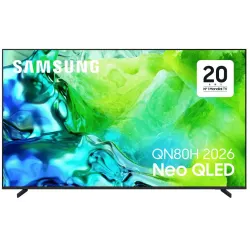 TV QLED SAMSUNG TQ65QN80H€961.00
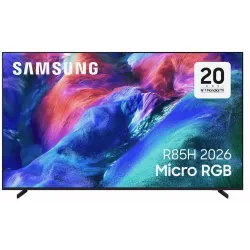 TV LED SAMSUNG TMR65R85H€1,879.00
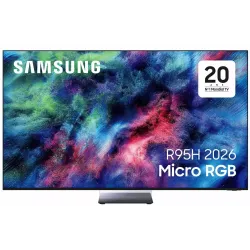 LED TV SAMSUNG TMR65R95H€2,654.00
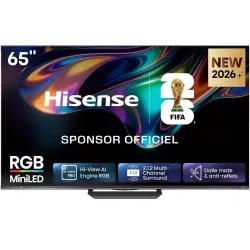 MINILED TV HISENSE 65UR8S€1,481.00
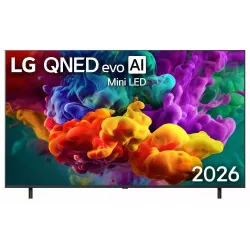 LG 65QNED85B6B QNED TV€843.00
 LED TV SONY K65XR75M2B€1,864.00
 LED TV SONY K65XR95M2PB€2,633.00
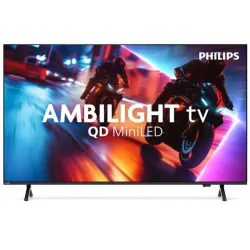 PHILIPS QLED TV 65MLED910/12€1,399.00
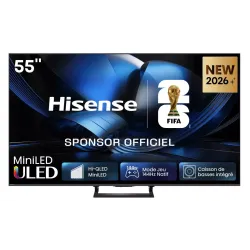 Mini LED TV HISENSE 55U7SE€700.00
Our verdict by your profile
TCL C89L
Very bright, lots of zones, 144 Hz, four HDMI 2.1 ports and Bang & Olufsen sound. No anti-glare coating, average viewing angle.
65" à 1 799,99 € · 75" à 2 199,99 €
TCL P89L
144 Hz Mini LED with Dolby Vision and Google TV, at a very tight price, up to 98 inches.
55" à 649,99 € · 65" à 849,99 €
LG QNED85
120 Hz Mini LED with webOS, Dolby Vision and four 4K 120 Hz ports. No HDR10+.
50" à 749,99 € · 65" à 1 099,99 €
Samsung QN80H
Versatile and bright, 144 Hz VRR, seven years of Tizen updates. No Dolby Vision.
65" à 1 499,99 € · 100" à 3 799,99 €
Samsung R95H
Micro RGB with Glare Free, 165 Hz VRR, 70 W. Top-end performance with no risk of burn-in.
65" à 3 799,99 €
Sony Bravia 9 II
True RGB, matte filter, XR processing: the most natural LCD image in the store. Only two HDMI 2.1 ports.
65" à 2 999,99 €
Hisense UR8S or Samsung R85H
RGB colours from 1 499,99 € in 55 inches. Hisense for Dolby Vision and Devialet sound, Samsung for Tizen.
55" à 1 499,99 €
TCL 98P89L or 98C89L
A very large screen at a moderate price. The LG 100QNED87 (3 499,99 €) and Samsung 100QN80H (3 799,99 €) also come in 100 inches.
98" dès 2 099,99 €
Mini LED or OLED, the final word
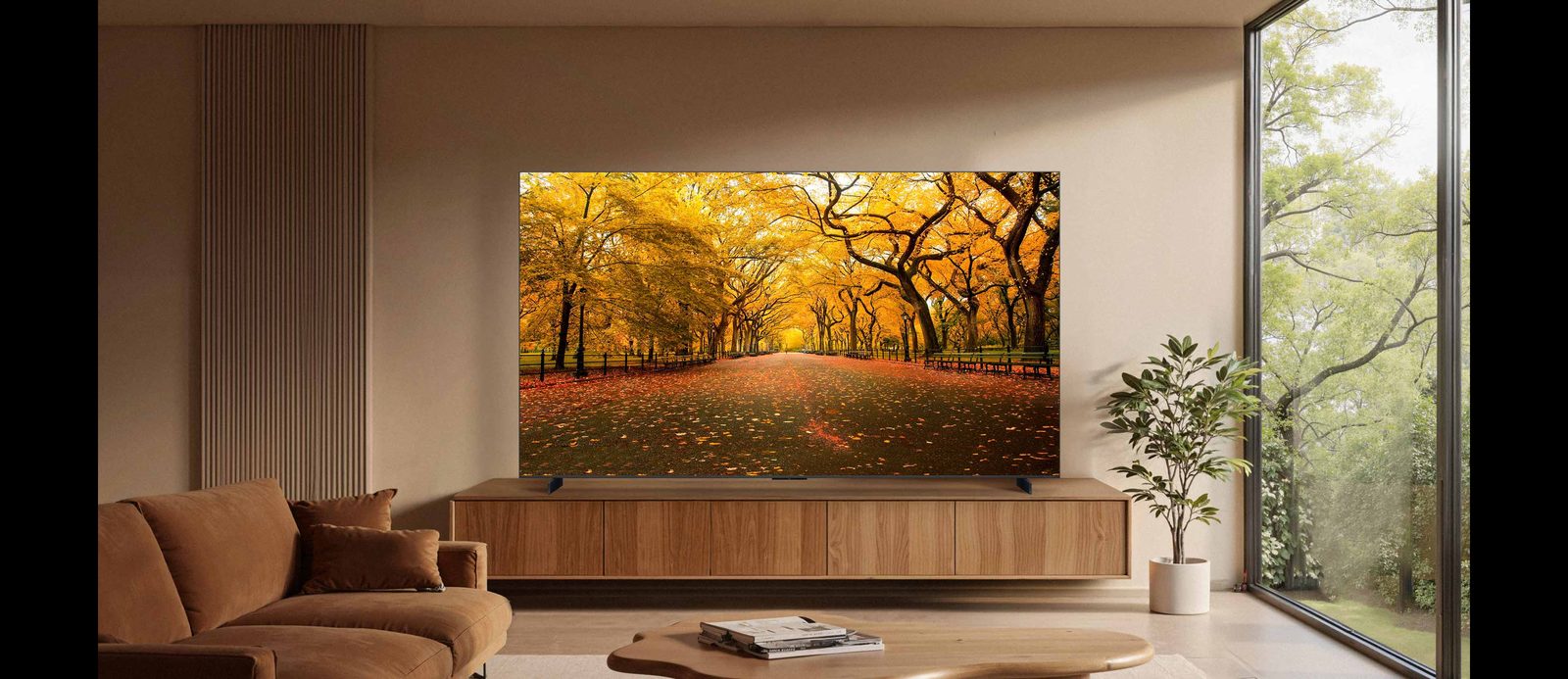
Choose Mini LED if your living room is bright, if the TV stays on for long hours (news channels, static logos) or if you want 75 inches and up without blowing the budget. Choose OLED if you mainly watch films in the evening, often sitting off to the side. To compare the two types, see our OLED comparison 2026 and our article OLED, Mini LED or RGB Mini LED.
Frequently asked questions
What's the best Mini LED in 2026?
For pure picture quality, the Sony Bravia 9 II and Samsung R95H are at the top, with anti-glare treatment. For value for money, the TCL C89L is hard to beat: up to 6 000 nits claimed, 144 Hz and four HDMI 2.1 ports from 65 inches up.
RGB Mini LED or standard Mini LED?
RGB Mini LED gives purer colours at high brightness. But a very good standard Mini LED can beat an entry-level RGB: the processor, the panel and the number of zones matter more than the name of the technology.
Does Mini LED have blooming?
A little, around white subtitles or stars on a black background. The more dimming zones and the better the processor, the less noticeable the halo. On good models, it only shows up in very dark scenes.
Mini LED or OLED for a bright living room?
Mini LED, generally: it is much brighter on a bright, full-screen image and doesn't risk burn-in. OLED keeps the advantage of perfect blacks and viewing angle, ideal in the evening.
Which Mini LED for the PS5?
Choose a 120 Hz or higher model with HDMI 2.1: TCL C89L or C79L, Samsung QN80H, LG QNED85, Hisense U7SE or UR8S. Avoid 60 Hz models. 144 to 180 Hz only matters for PC.
Come and compare the screens in person
At our Temploux shop, we switch on TVs side by side with your content. Or ask our expert salesperson online, right now.
Read next
 TechnologyLED, QLED, Mini LED: LCD screens explainedQLED, Neo QLED, QNED, Mini LED, SQD… all these names belong to one family: the LCD screen. What makes the difference is how it's lit. We explain everything so you can read a spec sheet like a salesperson.2 min read
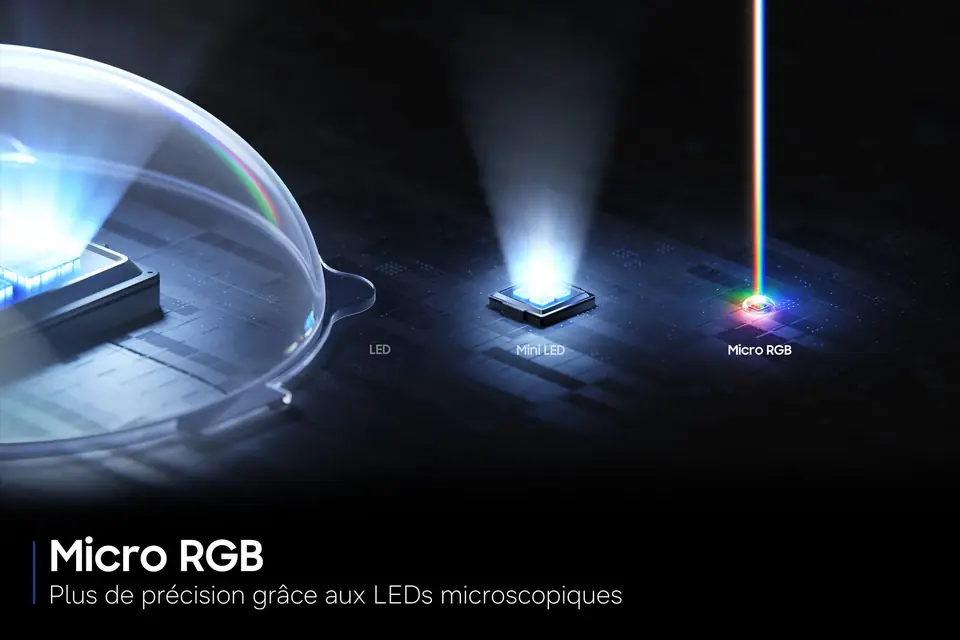 TechnologyRGB Mini LED, Micro RGB, True RGB: the big new thing for 2026It's THE trend of the year: all the major brands are launching TVs with RGB backlighting. Samsung talks about Micro RGB, Sony about True RGB, and Hisense and TCL about RGB Mini LED. Behind the names is a simple idea that delivers spectacular colours.2 min read
 Comparison2026 OLED comparison: LG, Samsung, Sony or Philips?Ten OLED series are competing for your living room in 2026, from €1,199.99 to over €5,000. They all have perfect blacks; what sets them apart is brightness, anti-reflection, HDR format, gaming, sound and system. Here's our full comparison, with store prices and a clear verdict for each type of viewer.7 min read