
OLED, Mini LED or RGB Mini LED: which to choose?
It's the question everyone asks in front of the TV aisle. There's no outright winner: there's the technology that suits your living room and your habits. Here's our comparison, criterion by criterion, and our clear verdict.
- OLED : films at night, perfect blacks, viewing angle
- Mini LED : bright room, large screen, best price
- RGB Mini LED : top-end colours and brilliance
- Your light and your habits decide, not the figures on the box
The criterion-by-criterion comparison
| Criterion | OLED | Mini LED | RGB Mini LED |
|---|---|---|---|
| Blacks and contrast | Perfect | Very good, slight halo possible | Very good, reduced halo |
| Full-screen brightness | Average | Very high | Very high |
| HDR peak (high-end 2026) | Up to 2,000 to 4,000 nits claimed | Up to 5,000 nits and more | Up to 4,000 to 5,000 nits claimed |
| Colours at high brightness | Very good | Good | Excellent |
| Viewing angle | Excellent | Medium | Medium to good |
| Gaming (responsiveness) | Excellent | Very good | Very good |
| Burn-in | Low but real risk | None | None |
| Sizes | 42 to 97 inches | 32 to 115 inches | 50 to 115 inches |
| Price for a 65-inch | Medium to high | Gentlest | High |
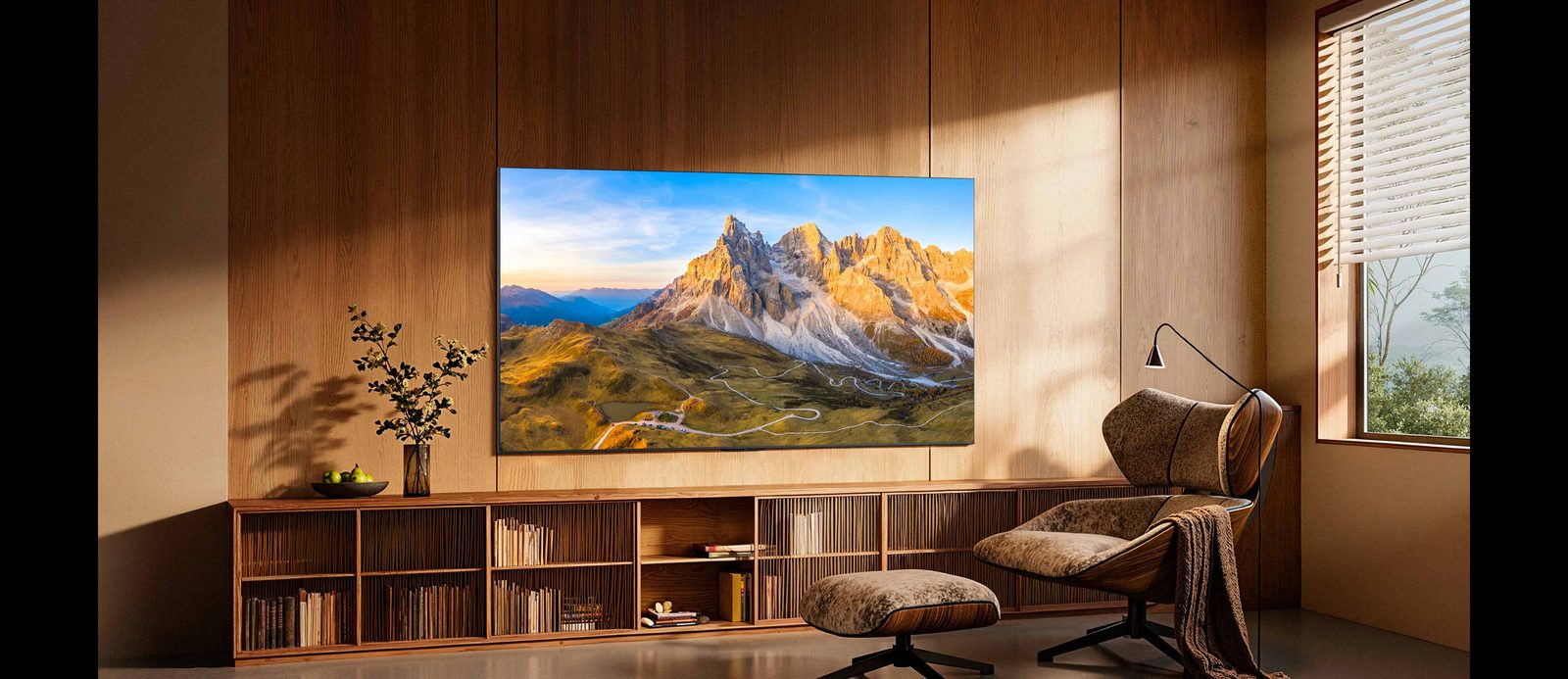
Our verdict based on your situation
OLED
For the cinema atmosphere: nothing beats perfect blacks and the absence of halo.
LG C6, Philips OLED811, Samsung S92H
Mini LED
Very bright, no problem with reflections or burn-in, and a large screen at the best price.
TCL C89L, Hisense U7, Samsung Neo QLED
RGB Mini LED
For those who want the most spectacular brilliance and colours, on a large scale.
Samsung R85H and R95H, Sony Bravia 7 II and 9 II
Mini LED
News channels, static logos, PC use: zero risk, zero worry.
Samsung QN70H, TCL C89L
OLED
Instant responsiveness, 120 to 165 Hz, four HDMI 2.1 ports on LG and Philips.
LG C6, Philips OLED811
Mini LED
Very large OLEDs are expensive; Mini LED makes the 85-inch affordable.
TCL 85C89L, Sony Bravia 3 II 85"
One question often decides everything: "Is your TV facing a window and switched on during the day?" If so, I'd point you towards a Mini LED or an RGB. If not, OLED is a real favourite. Both are excellent choices in 2026.
Common misconceptions
"OLED isn't bright enough"
That was true a few years ago. High-end 2026 OLEDs with Tandem panels (LG G6, Philips OLED+) or QD-OLED (Samsung S95H) are very bright. Entry-level OLEDs remain more subdued in direct sunlight.
"Mini LED always has halo"
On good models with many zones and a good processor, the halo is subtle and only noticeable with white subtitles in a very dark scene.
"RGB is just MicroLED"
No: it's an LCD screen with RGB backlighting. Superb, but not self-emissive like OLED or MicroLED.
Frequently asked questions
Which technology lasts the longest?
All three are designed for more than ten years of normal use. Mini LED carries no burn-in risk; OLED only requires avoiding static images for hours every day and keeping it plugged in for its maintenance.
Which one uses the least power?
It mainly depends on size and the brightness setting. OLED uses little power on dark images, Mini LED is more consistent. Compare the kWh/1,000 h on the energy label for two models of the same size.
For sport, OLED or Mini LED?
Both are excellent at 100/120 Hz. Mini LED if you watch matches in daytime in a bright room; OLED if you watch with several people, from the side, or in the evening.
Come and compare the screens in person
At our Temploux shop, we switch on TVs side by side with your content. Or ask our expert salesperson online, right now.
Read next
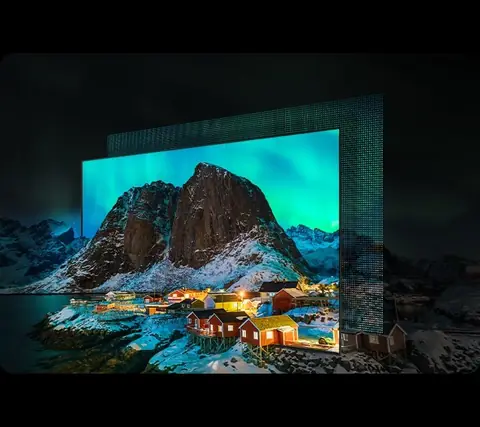 TechnologyOLED explained simply (WOLED, QD-OLED, Tandem)Perfect blacks, infinite contrast, a picture that still looks great from the side: OLED is a dream. But how does it work, what's the difference between WOLED and QD-OLED, and what about the famous burn-in: myth or reality? We tell you everything.3 min read
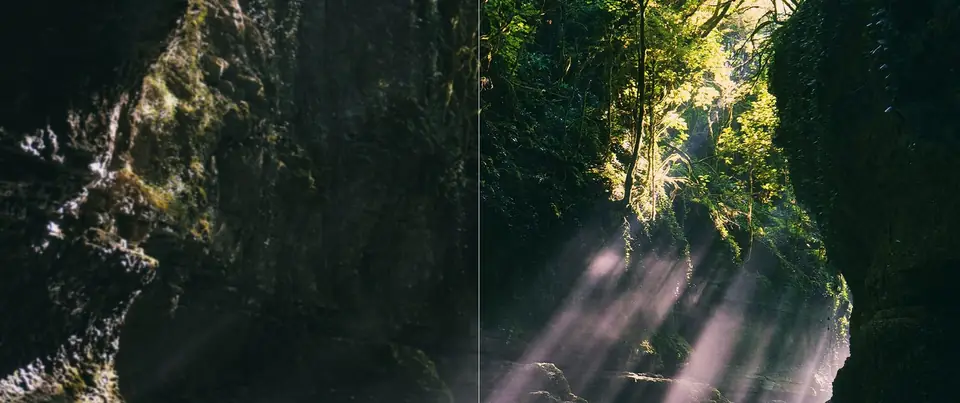 TechnologyLED, QLED, Mini LED: LCD screens explainedQLED, Neo QLED, QNED, Mini LED, SQD… all these names belong to one family: the LCD screen. What makes the difference is how it's lit. We explain everything so you can read a spec sheet like a salesperson.2 min read
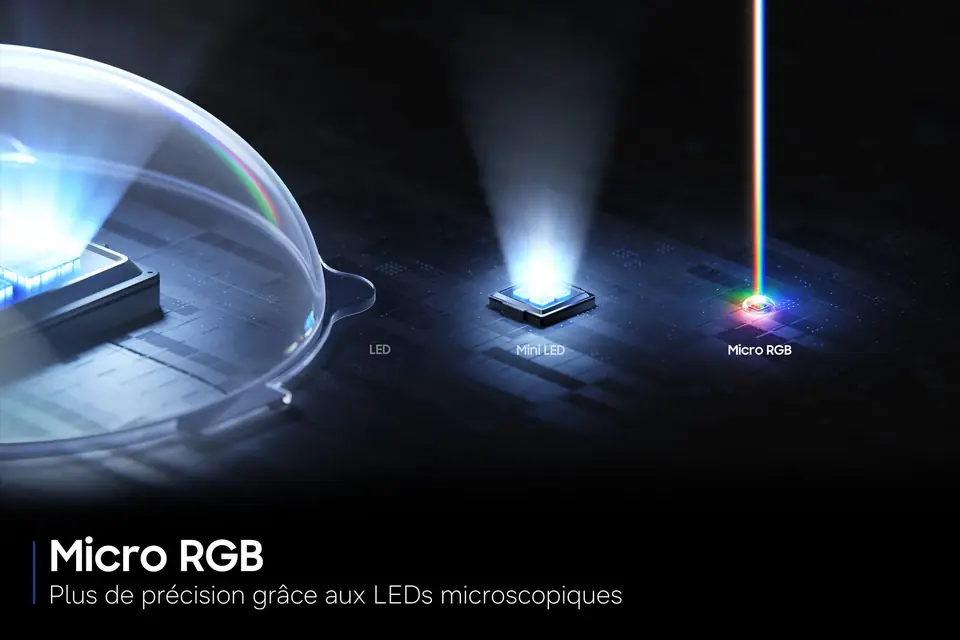 TechnologyRGB Mini LED, Micro RGB, True RGB: the big new thing for 2026It's THE trend of the year: all the major brands are launching TVs with RGB backlighting. Samsung talks about Micro RGB, Sony about True RGB, and Hisense and TCL about RGB Mini LED. Behind the names is a simple idea that delivers spectacular colours.2 min read