
Tumble dryers: heat pump, real consumption and maintenance
Since July 2025, only heat pump tumble dryers have been sold in Europe. Good news for your bills, provided you understand how they work, how much they really use and how to maintain them so they stay efficient.
- Heat pump : the only technology still sold new since 2025
- About 2 to 3 times less electricity than an older resistance model
- Capacity: matches the washing machine, ideally 1 kg more
- The key habit: lint filter cleaned after every cycle
What has changed: the heat pump for everyone
Since 1 July 2025, according to the European Commission, ecodesign requirements now only allow tumble dryers with the most efficient technology on the market: the heat pump. On the same day, a new energy label from A to G came into force. Vented and resistance-condenser models have therefore disappeared from new stock.
In Belgium, the change is significant: according to a Test-Achats survey published in February 2026, 71% of Belgian respondents own a tumble dryer, but only 36% a heat pump model. Many households will therefore be replacing an old, energy-hungry appliance, and that is where the savings are most spectacular.
Heat pump, condenser, vented: the differences
| Technology | Principle | Consumption per cycle (approximate) | In 2026 |
|---|---|---|---|
| Vented | A heating element warms the air, which is expelled outside through a duct | 4 to 5 kWh | No longer sold new; it needed an outlet to the outside |
| Condenser with resistance heating | A heating element warms the air, and the water is condensed into a tank | 4 to 5 kWh | No longer sold new |
| Heat pump | A refrigerant circuit warms the air, cools it to recover the water and recycles the heat | 1 to 1.5 kWh | The only technology permitted for new sales |
In practice, a heat pump works like a small fridge in reverse. It dries at a lower temperature: this is gentler on fibres, the laundry shrinks less and wears less. It is, however, slower than a resistance model. Recent models often use a natural refrigerant (R290, propane), to be checked model by model on the spec sheet.
Real running costs, in euros
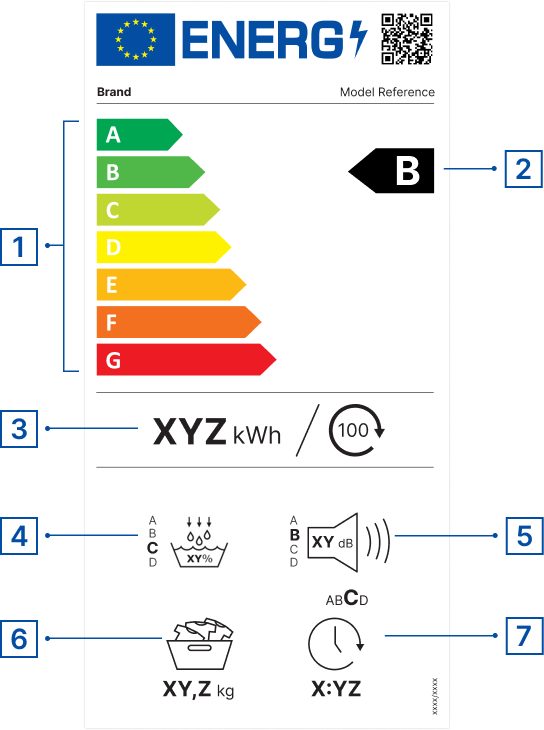
The label shows kWh per 100 cycles of the Eco programme at full load. Here is what that means in daily use, based on a reference price of €0.35 per kWh and 150 cycles a year.
| Device | Power consumption | Cost per cycle | Annual cost (150 cycles) |
|---|---|---|---|
| Heat pump class A (e.g. 79 kWh/100 cycles) | ≈ 0.8 kWh | ≈ 0,28 € | ≈ 41 € |
| Heat pump class C (e.g. 110 kWh/100 cycles) | ≈ 1.1 kWh | ≈ 0,39 € | ≈ 58 € |
| Old resistance tumble dryer | 4 to 5 kWh | €1.40 to €1.75 | €210 to €263 |
Orders of magnitude. Examples A and C use published figures for Samsung (6000 series) and Hisense (3S series) models. Your actual cost depends on your contract, the spin speed and the programmes you choose.
Replacing an old resistance tumble dryer with a heat pump model often saves €150 to €200 a year for a family that dries a lot. Over the average lifespan of a tumble dryer (11 years and 5 months according to Test-Achats), the appliance partly pays for itself.
Choosing the right capacity
Simple rule: the capacity of the tumble dryer should be at least equal to that of the washing machine, ideally 1 kg more. Laundry needs room to move around in the drum: if it is packed in too tightly, it dries poorly, creases and the cycle takes longer.
- 8 kg : 1 to 3 people, with a 7 to 8 kg washing machine.
- 9 kg : the families' favourite, with an 8 to 9 kg washing machine.
- 10 kg or more : large families, duvets, and to pair with a 10 kg or larger washing machine.
The criteria that make the difference
The moisture sensor
The appliance stops when the chosen level is reached (ready to put away, ready to iron). Always prefer these programmes over timed ones, which over-dry and use more energy.
Found on all recent models
The self-cleaning condenser
It is rinsed automatically during the drying cycle. Without it, you have to clean the condenser or the base filter yourself, roughly once a month, otherwise energy consumption goes up.
Often in mid-range and high-end models
The inverter compressor
It adjusts its speed: shorter and quieter cycles. Some brands guarantee it for 10 years (LG in the Benelux for its Dual Inverter, part only).
To check on the spec sheet
Drain connection
There is no need to empty the water tank: the water goes into the drain. The hose is often supplied. Handy if the appliance is stacked.
Check the space behind the appliance
Also look at the noise (around 57 to 65 dB depending on the model), the Eco programme duration at full load (it is shown on the label, often more than 3 hours), and the special programmes: wool, down jackets, waterproof garments, steam refresh. And if your two appliances are of the same brand and connected, some can adjust themselves according to the wash started (Smart Dry at Bosch, Auto Cycle Link at Samsung, Smart Pairing at LG).
Where to install it?
A heat pump releases a little heat and needs air. It works less well in a very cold room (an unheated garage in winter) or a very hot one. Check the ambient temperatures allowed in the manual. Leave space around the appliance and do not block the vents on the base.
To save space, stack it on the washing machine with the brand's stacking kit, on a washing machine of compatible width and depth. After transport lying down or tilted, wait for the period stated in the manual before plugging it in, as you would with a fridge.
Filter maintenance: the secret to a longer life
The main cause of a "never-ending" drying cycle is not a fault: it is clogged filters. According to Test-Achats, the filter is in fact one of the problems most often reported by users.
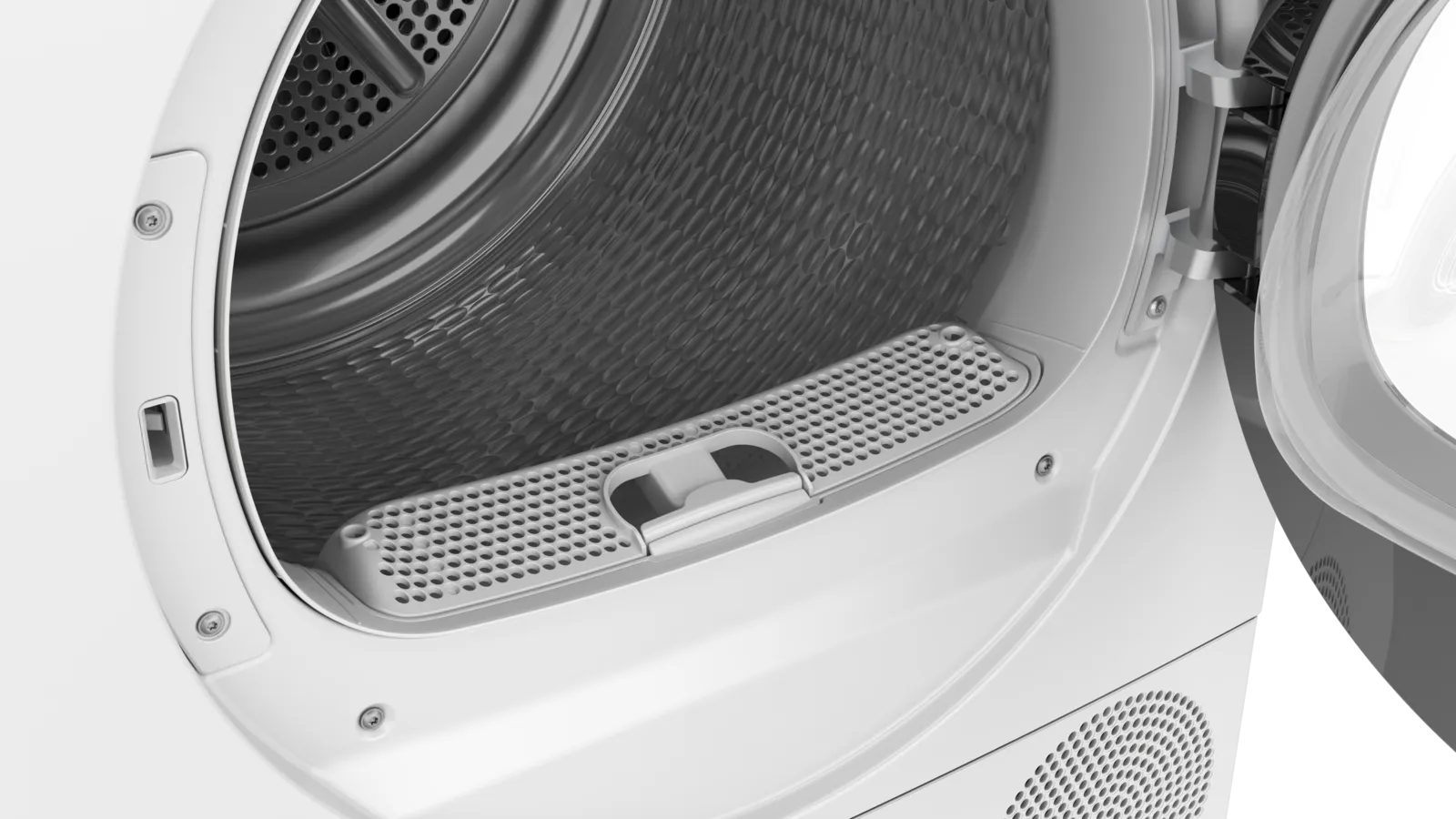
- After every cycle : empty the lint filter (there are sometimes two, one in the door and one in the opening).
- After every cycle : empty the water tank if the appliance is not connected to a drain. This water is not drinkable.
- Roughly once a month : rinse the base filter or the sponge filter under clear water, let it dry and put it back properly (except for self-cleaning condensers, depending on the manual).
- From time to time : wipe the door seal and the moisture sensor (two small metal strips in the drum) with a slightly damp cloth.
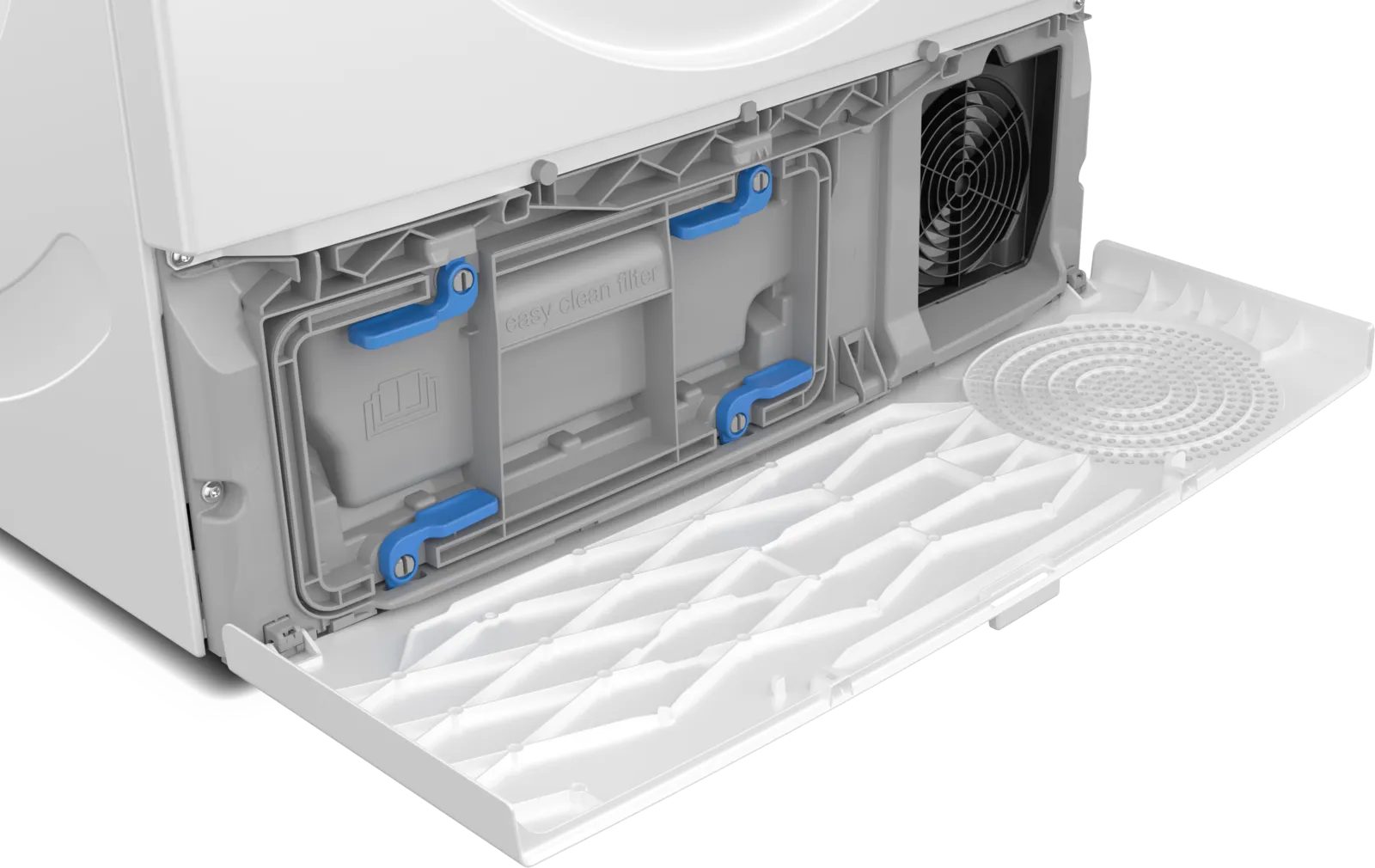
The best ally of your tumble dryer is your washing machine: a spin at 1,400 rpm instead of 1,000 noticeably shortens drying time. And if you are torn between two models, choose the one with the self-cleaning condenser: it is the option people most regret not having taken.
Our selection by budget
| Model | Key points | Public price |
|---|---|---|
| Hisense DHQE802U | 8 kg, heat pump, to get started | 499,99 € |
| Hisense DH3S902UWDC | 9 kg, 3S series | 599,99 € |
| LG RH8N15WH | 8 kg, LG heat pump | 649,99 € |
| Whirlpool CWD84MWBSFR | 8 kg, Whirlpool heat pump range | 699,99 € |
| LG RH9B15WH | 9 kg, LG heat pump | 749,99 € |
| Haier HD100-A357U1-FR | 10 kg, X5 series | 799,99 € |
| Bosch WQJ24203FR | 9 kg, Series 6, class D according to Bosch | 909,99 € |
| Samsung DV90DG6845HH | 9 kg, AI Dry+, class A (79 kWh/100 cycles) | 999,99 € |
| Samsung DV16DG8600BW | 16 kg, to pair with a 20 kg washing machine | 1 499,99 € |
Public prices checked on nimestore.com on 15 October 2026: the product page prevails, and Nimesclub members often get a reduced price. Energy class, noise and presence of a self-cleaning condenser vary from model to model: check the product page or ask us.

Short on space for two appliances? Compare with a washer-dryer in our dedicated page. And for the matching washing machine, follow our washing machine buying guide. Brands are detailed in their own sections, for example Samsung, Bosch or Haier.
Our heat pump tumble dryers in store
 HISENSE DHQE802U Heat Pump Tumble Dryer€420.00
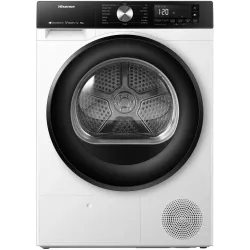 Tumble dryer HISENSE DH3S902UWDC€523.00
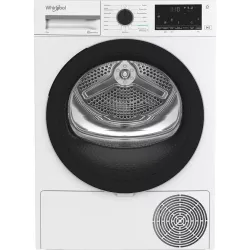 Tumble dryer WHIRLPOOL CWD84MWBSFR€699.00
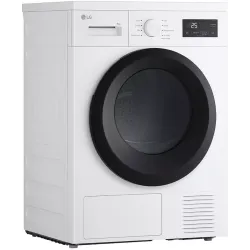 LG RH8N15WH Tumble Dryer€545.00
 Tumble dryer LG RH9B15WH€749.00
 Tumble Dryer BOSCH WQJ24203FR€909.00
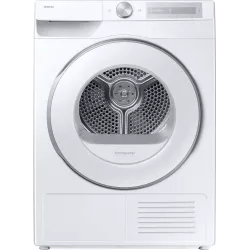 Tumble dryer SAMSUNG DV90DG6845HH€999.00
 Tumble dryer HAIER HD100-A357U1-FR€799.00
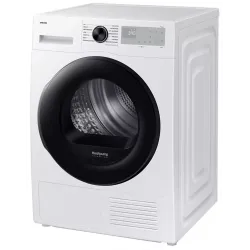 SAMSUNG DV90DG52A0AH Tumble Dryer€674.00
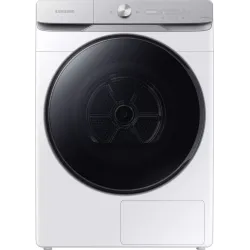 SAMSUNG DV16DG8600BW Tumble Dryer€1,045.00
All models are in the tumble dryer section of the shop. Any questions? Our expert salesperson will answer you online, or come and see us in the Temploux store.
Frequently asked questions
Can you still buy a vented or traditional condenser tumble dryer?
Not new any more: since 1 July 2025, EU ecodesign rules only allow heat pump tumble dryers on the market. Some end-of-line stock or second-hand models may remain. If you see a very cheap tumble dryer, check its technology.
How much does a drying cycle cost with a heat pump?
Allow around 1 to 1.5 kWh per cotton cycle, that is 35 to 55 cents at €0.35 per kWh. An older resistance tumble dryer used more like 4 to 5 kWh, that is €1.40 to €1.75 per cycle.
Why is my heat pump tumble dryer slower?
Because it dries at a lower temperature, which is gentler on the laundry and far more economical. Allow often 2½ hours to over 3 hours for a full load on the Eco programme. A higher spin speed when washing noticeably shortens drying time.
Can you install a tumble dryer in a garage?
With care: a heat pump works less well in a very cold room, such as an uninsulated garage in winter. Check the permitted room temperatures in the model's manual.
Do I need to empty the water tank every time?
Yes, unless you connect the appliance to a drain (sink, waste pipe) using the hose provided, which is often included. This is the most convenient option if your utility room allows it.
Come and see the appliances in person
At our Temploux shop, we open the doors and compare drums and finishes. Or ask our expert sales adviser online, right now.
Read next
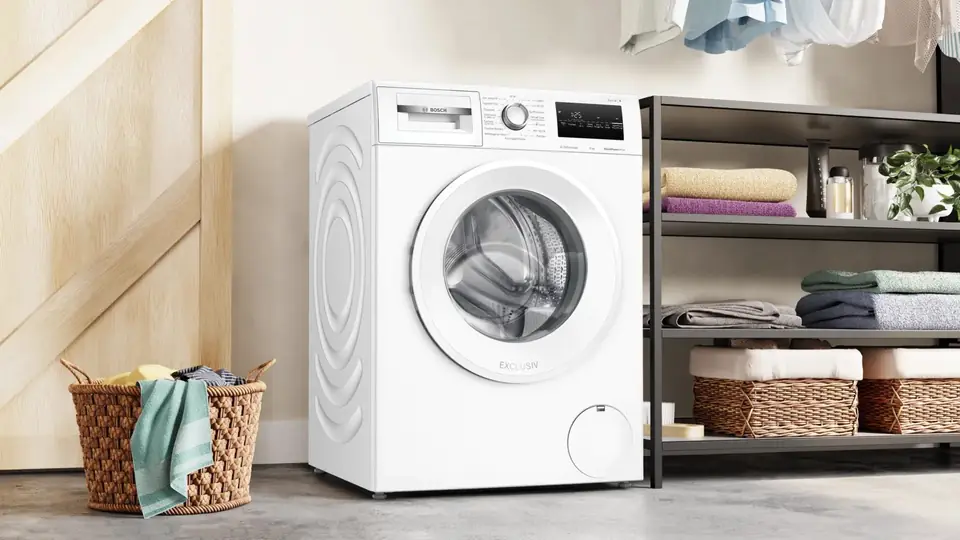 Buying guideChoosing your washing machine well in 2026: the complete guideA washing machine runs around two hundred times a year for a dozen years or so, so it's worth choosing it well. Here, criterion by criterion, is what really matters, what is just marketing, and the models we recommend in the shop according to your budget.8 min read
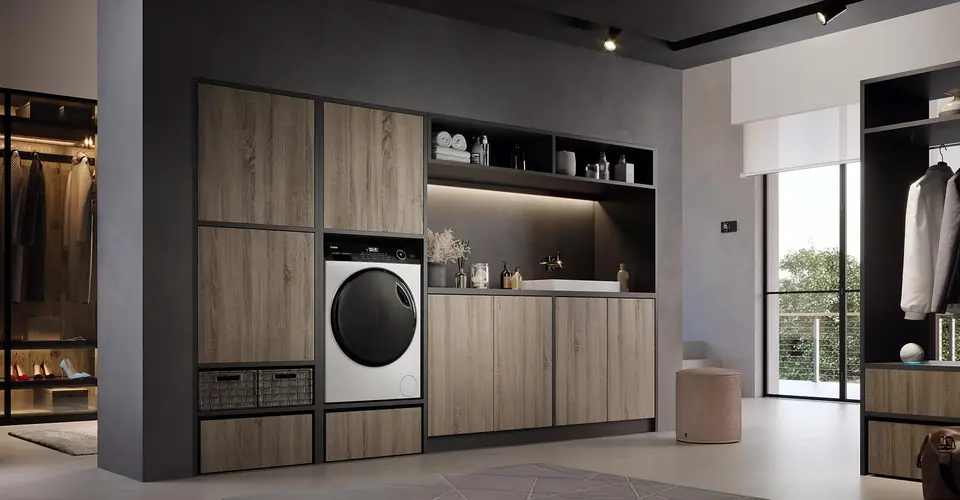 ComparisonWasher-dryer or washing machine plus tumble dryer: our honest opinionOne appliance that washes and dries, or two dedicated machines? The question comes up every day in the shop. The answer depends mostly on your space and how much laundry you dry. Here's the showdown, backed by the numbers, and our no-nonsense verdict.6 min read
 PracticalMaintaining your washing machine and dishwasher: the habits that make them lastA well-maintained washing machine or dishwasher cleans better, uses less energy, smells fresher and lasts longer. Good news: a few minutes a month is all it takes. Here are the habits, appliance by appliance, with a simple schedule to keep handy.6 min read