
Washing programmes explained: Eco 40-60, cotton, quick, steam
Three hours to wash laundry at '40 °C' that never actually reaches 40 °C? It's the number one question in store. Yet there's real logic behind every programme. Once you understand it, you wash better, wear your clothes out less and pay less for electricity.
- Eco 40-60 : it takes longer because it heats less, and it washes just as well
- Heating the water is the bulk of the energy use
- Quick : small, lightly soiled loads only
- Steam and auto-dosing : comfort, not miracles
The secret of washing: four ingredients
Effective washing relies on four factors that offset one another: the temperature, the chemistry (the detergent), themechanical action (the agitation of the drum) and time. If you reduce one, you need to increase the others to get the same result.
Now, temperature is what costs the most: heating the water accounts for most of the electricity consumed by a washing machine. Modern programmes therefore work on the other three levers, particularly time. That is the whole explanation behind the Eco programme.
Eco 40-60: the programme that looks scary, and is right to be
Since March 2021, all washing machines sold in the European Union must offer a programme Eco 40-60. It washes normally soiled cotton together, labelled 40 °C or 60 °C, with equivalent effectiveness. This is also the programme used to measure the energy class on the label.
- It heats less : the actual temperature often stays below 40 °C, even for laundry set to 60 °C.
- It takes a long time : 3 hours or more at full load (3 h 28 on the Commission's reference label, 3 h 48 on the spec sheets of recent Samsung and LG models, nearly 4 hours for others).
- It uses little energy : around 0.3 to 0.5 kWh per cycle on a recent class A washing machine, i.e. 10 to 18 cents at €0.35 per kWh.
- It adapts its duration to the load: with a half load, it is shorter.
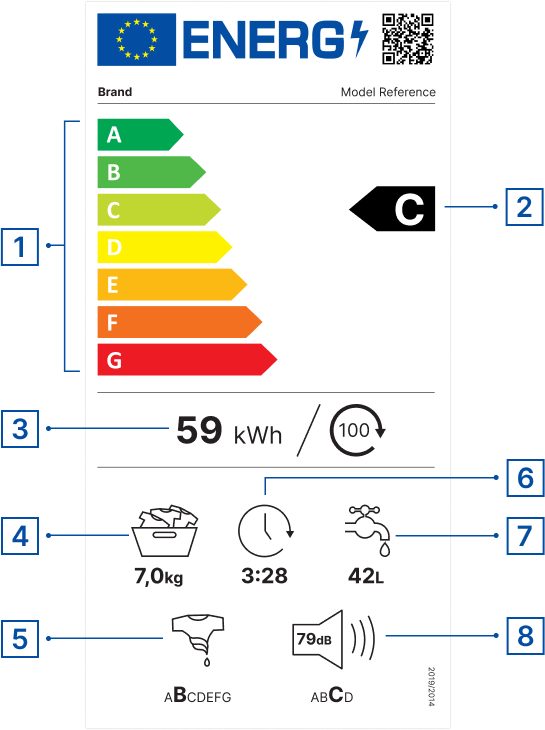
An Eco cycle lasting 3 h 30 is therefore not a machine on the blink: it is the machine saving money for you. It is, incidentally, the number one cause of complaints with no real fault at all, across all retailers.
The main washing machine programmes
| Programme | What for | Load | Good to know |
|---|---|---|---|
| Eco 40-60 | Everyday cotton and mixed laundry, 40 or 60 °C | Full | Long but the most economical; use as the default |
| 20 °C (mandatory) | Lightly soiled laundry, delicate colours | Average | Very economical; a detergent suited to cold washing is recommended |
| Cotton 40, 60 °C | Sturdy laundry when you want a proper temperature | Full | Shorter than Eco but more energy-hungry |
| Synthetics | Polyester, polyamide, mixed laundry | About half | Gentler tumbling and spinning, fewer creases |
| Delicates, wool, silk | Fragile fabrics | Small | Drum barely moves, low spin |
| Quick (15, 30, 39 min) | A few lightly soiled items | Small | Heats up quickly, uses more per kilo |
| Mixed, everyday | Mixed load, reasonable duration | Average | A good compromise between time and energy use |
| Duvets, quilts | Bulky laundry | One item | More water, gentle rinses; check the capacity |
| Shirts, de-creasing | Shirts and blouses | Small | Gentle spin, sometimes steam |
| Drum cleaning | Machine maintenance | Empty | Once a month to fight odours |
The temperature displayed is not always the temperature actually reached of the water. On standard programmes, the machine generally heats to close to the chosen value; on Eco programmes, it heats deliberately less and compensates with a longer duration. The exact energy consumption of each programme is often given in the manual, programme by programme: it's well worth a look.

Quick programmes: useful, but not for everything
Programmes of 15 to 45 minutes are handy for a sports t-shirt or an outfit that needs freshening up. But to finish quickly, they have to heat faster and agitate harder, with little time to rinse. They suit a small, lightly soiled load, often 2 to 5 kg depending on the manual. Some brands have developed technologies to speed things up without losing efficiency: Speed Perfect from Bosch (up to 65% shorter according to the brand), TurboWash 360° from LG or QuickDrive from Samsung (full wash in 39 minutes, as announced). They reduce time, not the laws of physics: for a large, very dirty load, Eco remains the best choice.
Steam: what it really does
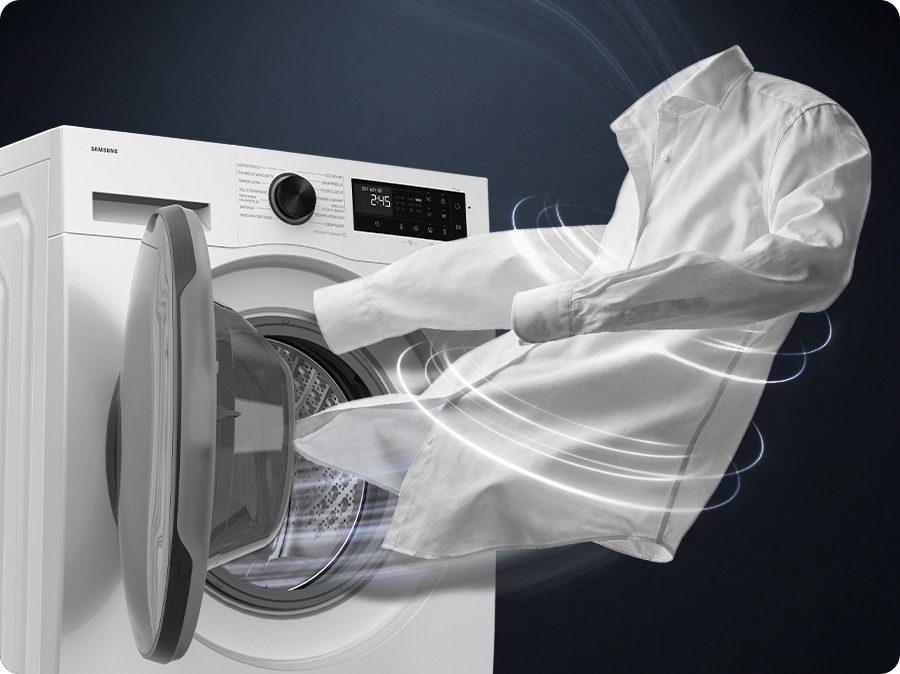
Steam is injected at the end of the cycle or in a dedicated programme. It is mainly used for three things:
- Removing creases : fewer creases, so less ironing (Iron Assist from Bosch, Steam from LG, SteamCure from Beko, FreshCare+ Steam from Whirlpool).
- Freshening up an item worn once, without washing it (jacket, jumper), in about twenty minutes.
- Hygiene : some brands claim to eliminate bacteria or dust mite allergens, backed by laboratory tests (Allergy UK or the British Allergy Foundation, depending on the brand).
Steam does not replace dry cleaning, and it won't remove an ingrained stain.
Auto-dosing: the right amount, every time
A reservoir of liquid detergent (and sometimes fabric softener) is filled for several weeks: about a month for Samsung's Auto Dispense, about 27 washes for the Autodose on a Hisense 5i, up to 35 doses for LG's ezDispense, depending on the brand. The machine weighs the laundry, sometimes assesses how dirty it is, and doses accordingly. Bosch claims up to 38% detergent savings with its i-DOS.
The benefit is real: you avoid overdosing (which is common), the laundry is better rinsed, and the machine gets less clogged up. You just need to clean the reservoir from time to time, especially if you change detergent.
Sensors, ‘AI' and apps
Load weighing, turbidity sensors that measure how dirty the water is, fabric recognition, learning your preferences (AdaptiveWash from Whirlpool, AI Wash from Samsung, AI DD from LG): these functions adjust the water, detergent and duration. They help, without being miraculous. The app, for its part, mainly lets you download special programmes (padded jackets, jeans, outdoor clothing) and start the machine at the best time: at night, when electricity is cheapest on a dynamic tariff, or when your solar panels are producing.
Keep it simple: Eco 40-60 for 80% of your washes, synthetics for sportswear, delicates for wool, and a monthly drum clean. And don't pack the machine tight: a flat hand should still fit over the laundry.
And the dishwasher?
The same logic applies. The programme Eco, which is used to measure the energy label, takes a long time (4 h 30 on the Bosch SMS6ECC12E spec sheet, over 5 hours on some models) because it heats less and lets things soak for longer.
| Programme | What for | Good to know |
|---|---|---|
| Eco | Normally soiled dishes | The most economical, long by nature |
| Car | Variable load and soiling | Sensors choose water and temperature (often 45 to 65 °C) |
| Intensive | Pans, baked dishes | About 70 °C, energy-hungry |
| Quick | Lightly soiled dishes, straight after the meal | Poorer drying, not for dried-on food |
| Glasses, delicate | Fine glassware | Low temperature, around 40 °C |
| Hygiene | Baby bottles, chopping boards | High-temperature final rinse (around 70 °C) |
| Night, quiet | Open-plan kitchen, night-time | A few decibels quieter, longer cycle |
Indicative temperatures, taken from recent model spec sheets (Hisense HS672B90B, Samsung): they vary by brand. Your appliance's manual takes precedence.
Choosing the right machine based on its programmes
When buying, don't be swayed by the number of programmes: you'll only use four or five. Look instead for a good quick programme, a mixed everyday mode, a drum-cleaning reminder, and possibly automatic dosing if you do a lot of washing. Our washing machine buying guide goes into these criteria in detail, and the appliance glossary explains all the technology names. Each brand's specifics are in the Samsung, LG, Bosch or Whirlpool.
Washing machines with well-designed programmes
 BOSCH WAN2827AFR Series 4 Washing Machine€529.00
 Washing machine LG F94R50WHS€611.00
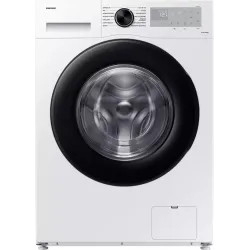 Washing machine SAMSUNG WW90CGC04DAH€507.00
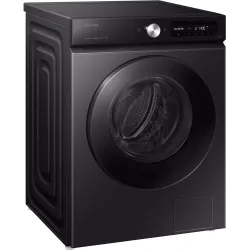 Washing machine SAMSUNG WW11DB7B94GB€1,199.00
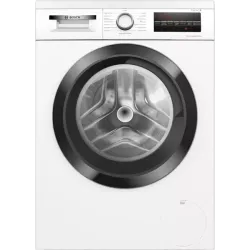 Washing machine BOSCH WUU28T69FR€879.00
 Washing machine LG F14X58WHST€674.00
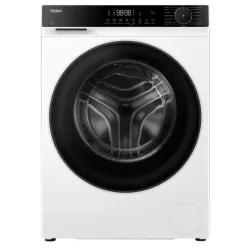 Washing Machine HAIER HW100BP14357EU1€549.00
 Bosch SMS6ECC12E Dishwasher€1,239.00
Prices and specifications: the product page on nimestore.com is the reference, and Nimesclub members often get a reduced price.
Frequently asked questions
Does Eco 40-60 really wash laundry at 60 °C?
It washes laundry labelled 40 or 60 °C with equivalent efficiency, but heating less, often to under 40 °C in reality, and extending the agitation. For laundry that needs to be heated (a sick baby's clothes, very dirty tea towels), a genuine 60 °C cotton programme is still preferable.
Why does the displayed time change during the cycle?
Because the machine weighs the laundry, measures the foam or the dirt and adjusts the duration. An unbalanced load at the spin stage can also extend the cycle by a few minutes while the laundry is redistributed.
Does a quick programme use less energy?
Not necessarily. To finish quickly, it heats more and agitates a small load more vigorously. Per kilo of laundry, it often uses more than the Eco 40-60. It is designed for a small quantity of lightly soiled laundry.
Is it still necessary to wash at 90 °C?
Rarely. A monthly empty maintenance cycle at 60 or 90 °C is still useful for the machine. For laundry, 60 °C is sufficient for household linen and special hygiene situations, according to the care labels.
Come and see the appliances in person
At our Temploux shop, we open the doors and compare drums and finishes. Or ask our expert sales adviser online, right now.
Read next
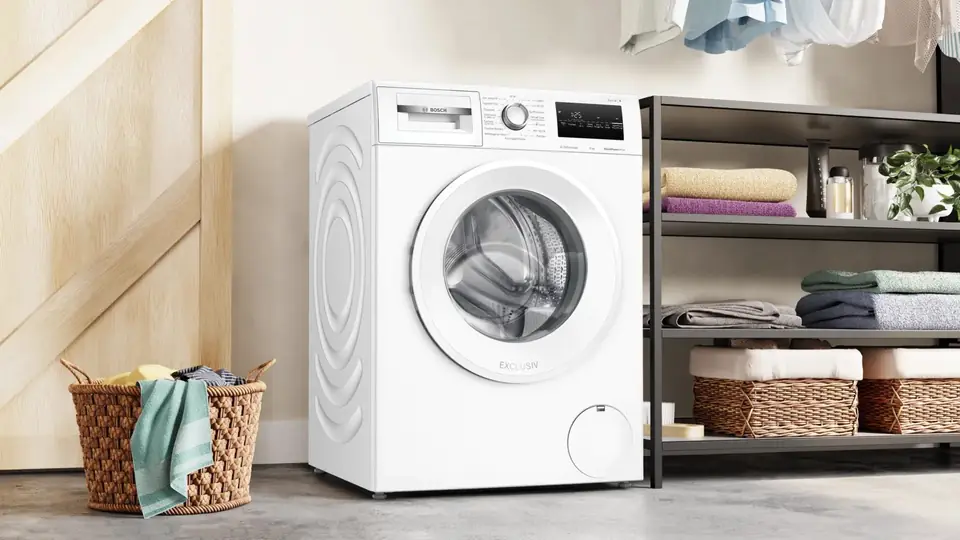 Buying guideChoosing your washing machine well in 2026: the complete guideA washing machine runs around two hundred times a year for a dozen years or so, so it's worth choosing it well. Here, criterion by criterion, is what really matters, what is just marketing, and the models we recommend in the shop according to your budget.8 min read
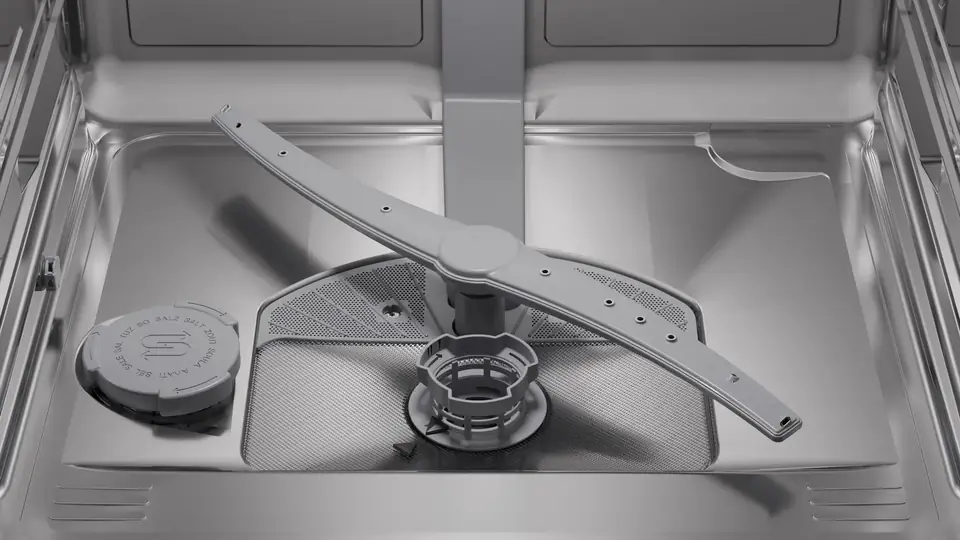 PracticalMaintaining your washing machine and dishwasher: the habits that make them lastA well-maintained washing machine or dishwasher cleans better, uses less energy, smells fresher and lasts longer. Good news: a few minutes a month is all it takes. Here are the habits, appliance by appliance, with a simple schedule to keep handy.6 min read
 TechnologyThe appliance glossary: 85 terms explained in plain EnglishDirect Drive, i-DOS, autoOpen dry, Low Frost, climate class... Appliances have their own jargon, and every brand adds its own trade names. Here are 85 terms we explain every day in store, sorted by theme, so you can read a product sheet like a pro.8 min read