
TV energy consumption and energy label: how much does your television cost per year?
Class F, class G, 85 kWh/1,000 h: a TV energy label can look daunting, but it's easy to read. We checked the official European database for the energy consumption of twelve 65-inch TVs from 2026 sold in our store, and calculated what they really cost per year.
- Two classes: SDR and HDR, from A to G
- A 65-inch 2026 model: about €28 to €45 a year in SDR
- The useful figure: the kWh/1,000 h, not the letter
- OLED or Mini LED : no clear winner in 2026
Reading a TV's energy label
Since 1 March 2021, the European energy label for TVs has used a scale from A to G, deliberately demanding: classes A and B are almost empty and the vast majority of TVs are rated E, F or G. It shows:
- Two classes : one in SDR (normal picture: TV, series, YouTube) and one in HDR (HDR films and series, brighter).
- Two consumption figures in kWh/1,000 h : the energy used for 1,000 hours of viewing. This figure also corresponds to the average power in watts: 85 kWh/1,000 h means about 85 W while switched on.
- The screen size and the resolution.
- A QR code that links to the model's page in the official European database EPREL.
Consumption is measured in the picture mode set by default. A ‘Vivid' mode or maximum brightness uses more power, while an eco mode or the ambient light sensor uses less.
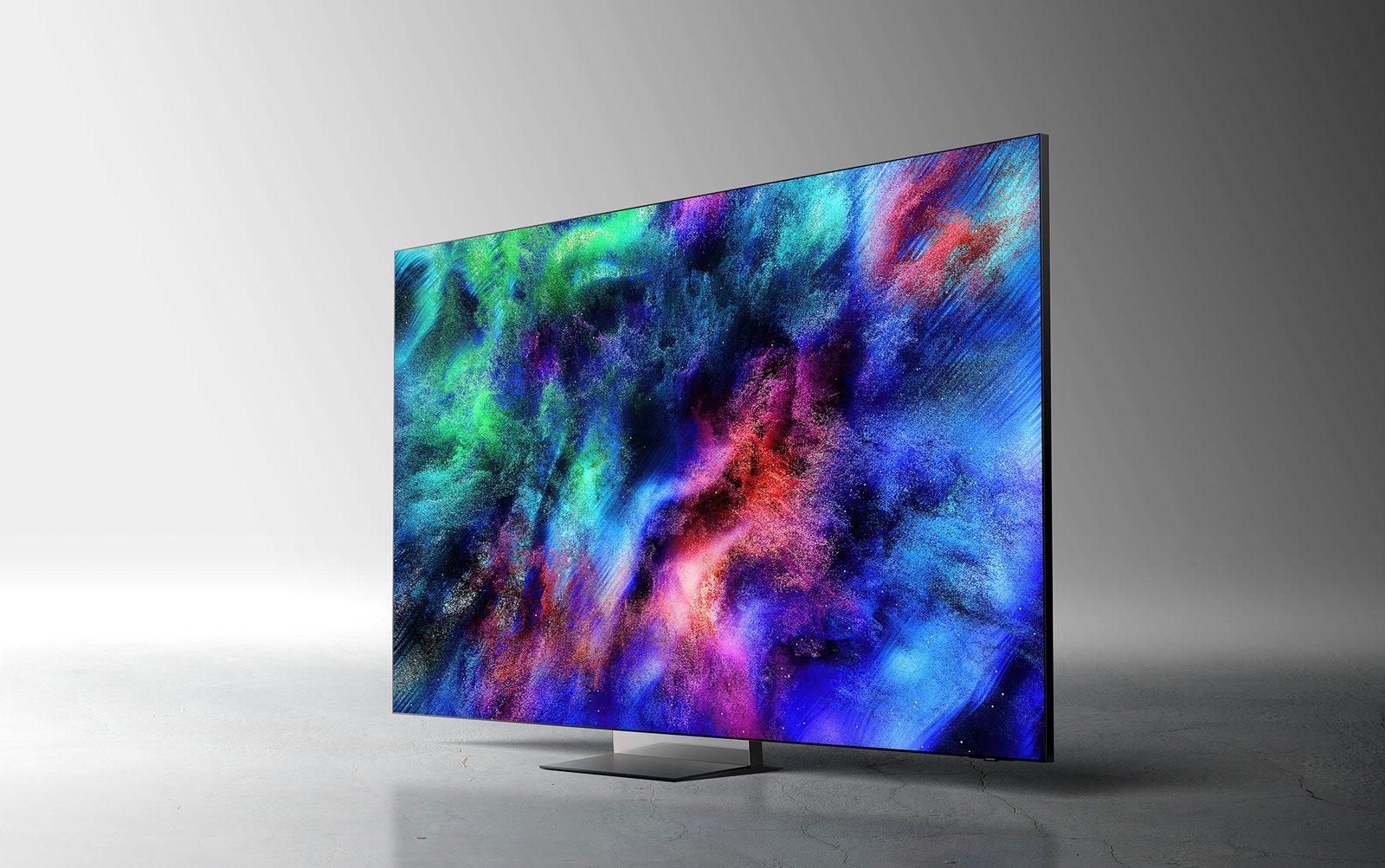
Our survey: twelve 65-inch TVs from 2026
We looked up the official consumption of twelve 65-inch TVs sold at Nimestore in the EPREL database, then calculated their annual cost.
Our calculation assumptions : 4 hours a day, i.e. 1,460 hours a year, and an electricity price of €0.30 per kWh, all taxes included. This is a rough guide for a Belgian residential contract: your actual price depends on your supplier and contract. To adjust the calculation, multiply the number of kWh per year by your own price per kWh.
| Model (65-inch) | Technology | SDR / HDR class | SDR (kWh/1,000 h) | Annual cost in SDR | HDR (kWh/1,000 h) |
|---|---|---|---|---|---|
| Sony Bravia 7 II | True RGB | D / E | 63 | about €28 | 76 |
| TCL 65C89L | Mini LED | D / G | 67 | about €29 | 300 |
| LG OLED65G64LW (G6) | OLED | E / G | 77 | about €34 | 262 |
| Hisense 65UR8S | RGB Mini LED | E / G | 80 | about €35 | 140 |
| Samsung S95H | QD-OLED | E or F / G depending on the variant | 83 to 99 | about €36 to €43 | 315 to 320 |
| LG OLED65C64LA (C6) | OLED | E / G | 85 | about €37 | 232 |
| Samsung TQ65QN80H | Mini LED | E / G | 85 | about €37 | 245 |
| TCL 65P89L | Mini LED | E / G | 85 | about €37 | 180 |
| Sony Bravia 6 (K-65A65) | OLED | F / F | 97 | about €42 | 98 |
| Philips 65OLED851 | OLED | F / G | 102 | about €45 | 124 |
| Samsung TU65M74H | Mini LED | F / G | 102 | about €45 | 149 |
| Philips 65PQS8601 | QLED | F / G | 102 | about €45 | 145 |
Source: European EPREL database, accessed 15 October 2026, figures declared by manufacturers for the 65-inch model of each series (the European reference closest to the one sold in store). Cost calculated for 4 hours a day at €0.30/kWh. Actual figures vary depending on settings, content and room brightness.
What this table tells us
- In normal use, the gap is small : between the most frugal and the most power-hungry, about €17 a year. Over ten years, that's €170: worth considering, but not the primary factor in your choice.
- HDR changes everything : certain very bright models exceed 250 to 300 kWh/1,000 h in HDR (TCL C89L, Samsung S95H, LG G6). That is the price of their spectacular peak brightness. But not everything is watched in HDR: live TV and most programmes are in SDR.
- Energy classes are a bit misleading : a model rated G in HDR may consume less in SDR than a model rated F. Compare kWh, not letters.
OLED or Mini LED: which uses the least?
There is no clear winner in 2026, as our survey shows: you find OLEDs and Mini LEDs at every level of the table. The difference lies in how they produce light:
Frugal with dark images
Each pixel switches off in darkness: a dark film uses little power. A very bright, full-screen image (sport on grass, studio programme) uses more.
Steady, but power-hungry at peaks
Local dimming switches off dark areas, but the backlight works hard for very bright HDR highlights: that is where consumption climbs.
The real factor is the brightness you set and the size : at equal technology, an 85-inch uses about one and a half to twice as much as a 65-inch. To compare technologies on other criteria, read OLED, Mini LED or RGB Mini LED.
Three simple steps cut your bill without spoiling the picture: turn on the ambient light sensor, switch from ‘Vivid' to Filmmaker or Cinema mode, and set automatic standby for when nobody is watching. And with an OLED, never pull the plug: it runs its maintenance during standby.
The 65-inch models in our survey
 LED TV SONY K65XR75M2B€1,864.00
 QLED TV TCL 65C89L€1,799.00
 OLED TV LG OLED65C64LA€1,919.00
 OLED TV SAMSUNG TQ65S95H€2,415.00
 OLED TV PHILIPS 65OLED851/12€1,935.00
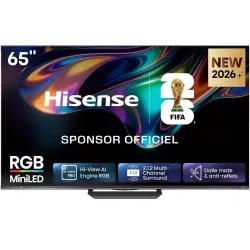 MINILED TV HISENSE 65UR8S€1,481.00
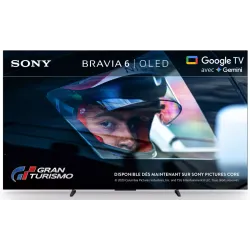 OLED TV SONY K65A65PB€1,490.00
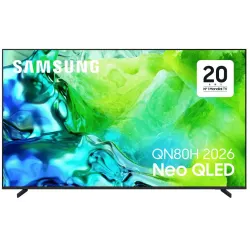 TV QLED SAMSUNG TQ65QN80H€961.00
Eco modes and settings that matter
- Brightness sensor (automatic brightness, eco mode): the picture adapts to the room's light. In the evening the screen dims by itself: your eyes and your bill will thank you.
- Picture mode : ‘Vivid' or ‘Dynamic' pushes brightness to the maximum. Filmmaker or Cinema mode is both more faithful and more economical.
- Automatic power-off : most TVs switch off after a few hours without any remote control action. Keep this option on.
- Screen off for music : if you listen to the radio or Spotify on your TV, the ‘screen off' option cuts the picture but keeps the sound.
- Right size : choose the size that suits your viewing distance (see what size TV), without oversizing for no reason.
What about standby?
Recent TVs consume about 0.5 W on standby simple, i.e. barely more than a euro a year. If the network standby is active (to cast to the TV, use voice control or switch it on from a smartphone), it rises to about 2 W according to EPREL data sheets, i.e. a few euros a year. You can turn it off in the settings if you don't use these features.
Durability: software updates and spare parts
The European ecodesign regulation also requires manufacturers to provide software updates and spare parts for several years after a product is placed on the market. The EPREL records for the 2026 models we checked, for example, state 8 years of updates and parts for the LG C6. Brands' promises sometimes go further for system updates: 7 years for Samsung Tizen, 8 years for Philips Titan OS and Hisense VIDAA.

Electricity price used: €0.30/kWh, indicative assumption. Consumption figures: official EPREL data as of 15 October 2026. For TV prices, the nimestore.com product page is the reference; Nimesclub members often get a reduced price.
Frequently asked questions
Why are almost all TVs rated E, F or G?
The 2021 European scale was deliberately made demanding to leave room for future progress. Classes A and B are almost empty. An E or F rating is normal for a large recent TV: compare kWh/1,000 h instead.
How much does a TV consume on standby?
About 0.5 W on simple standby, i.e. barely more than a euro a year. With network standby active (for casting or voice control), it is about 2 W, i.e. a few euros a year.
Should you unplug your TV at night?
No, especially not an OLED: it uses standby to run its automatic panel maintenance. The financial saving would anyway be very small.
Does a big screen use much more?
Yes, for the same technology: an 85-inch uses about one and a half to twice as much as a 65-inch. But that still amounts to around €50 to €60 a year in normal use.
Come and compare the screens in person
At our Temploux shop, we switch on TVs side by side with your content. Or ask our expert salesperson online, right now.
Read next
 ComparisonOLED, Mini LED or RGB Mini LED: which to choose?It's the question everyone asks in front of the TV aisle. There's no outright winner: there's the technology that suits your living room and your habits. Here's our comparison, criterion by criterion, and our clear verdict.2 min read
 Buying guideChoosing the right TV in 2026: the complete guideOLED, Mini LED, RGB, 120 Hz, Dolby Vision… Choosing a TV has never offered so much, or been so confusing. Here's our sales team's method, in six questions, to find the TV that really suits you.3 min read
 PracticalInstalling and setting up your new TV properlyA poorly set-up TV can lose half its quality. Good news: ten minutes is enough to get it right, and we show you exactly what to adjust.3 min read