
Choosing the right TV in 2026: the complete guide
OLED, Mini LED, RGB, 120 Hz, Dolby Vision… Choosing a TV has never offered so much, or been so confusing. Here's our sales team's method, in six questions, to find the TV that really suits you.
- 1. Size: 1,5 to 2,25 times the diagonal
- 2. The room: bright = Mini LED, dimly lit = OLED
- 3. How you'll use it: films, sport, gaming, regular TV
- 4. The system and Belgian apps, then sound and budget
1. What size for your room?
Measure the distance between your eyes (sitting on the sofa) and where the screen will go. In 4K, the ideal distance is 1.5 to 2.25 times the diagonal. In practice:
- at 2 metres: 50 to 55 inches;
- at 2,5 metres: 55 to 65 inches;
- at 3 metres and more: 65 to 75 inches.
And a salesperson's observation: almost nobody regrets going bigger. All the details, with a table, in Which TV size to choose.
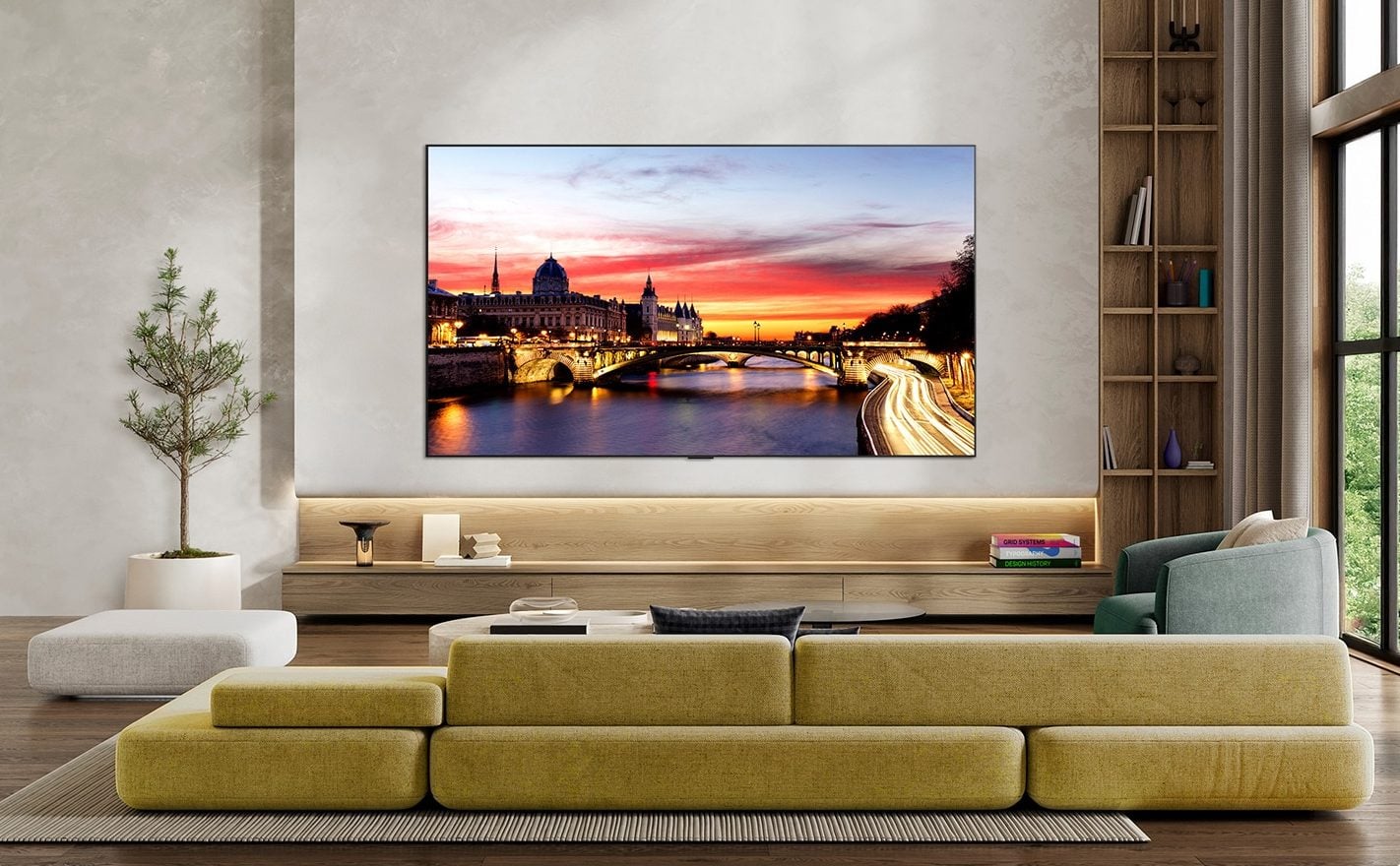
2. Is your room bright?
This is THE question that steers you towards one technology rather than another.
| Your room | Recommended technology | Why |
|---|---|---|
| Very bright, floor-to-ceiling windows, TV watched during the day | Mini LED or RGB Mini LED, or high-end OLED with anti-glare coating | Very high brightness, good resistance to reflections |
| Moderately lit | OLED or Mini LED | Both work very well: choose according to how you use it |
| Dimly lit in the evening, home cinema | OLED | Perfect blacks, infinite contrast, no halo |
To understand the technologies: OLED, Mini LED and QLED, and this year's newcomer, RGB Mini LED.
3. What will you be watching?
The film buff
Contrast and HDR above all. OLED, and Dolby Vision if you use Netflix or Disney+.
The sports fan
Native 100/120 Hz panel, good motion handling, wide viewing angle for watching with others.
The news devotee
A natural picture, good handling of HD channels, a simple menu and clear sound.
4. The Smart TV system and your apps
Each brand has its own system: webOS on LG, Tizen on Samsung, Google TV on Sony and TCL, Titan OS on Philips, VIDAA on Hisense. All offer Netflix, YouTube, Prime Video and Disney+. The real difference lies in the Belgian apps (Auvio, VRT MAX, RTL Play, Streamz, operator apps) and in how long updates are supported: see our table of Belgian apps by brand.
All the details in Smart TV: which system and which Belgian apps.
5. Sound
The thinner a TV, the weaker its sound. If you love films or someone at home has reduced hearing, plan for a soundbar with subwoofer, connected via HDMI eARC. See do you need a soundbar.
6. Budget
| Budget | What you get in 2026 |
|---|---|
| Under €500 | 43 to 55 inch 4K LED or QLED, ideal for a bedroom, kitchen or small living room |
| €500 to €1,000 | 55 to 65 inch Mini LED or QLED, sometimes 120 Hz; the first OLEDs on promotion |
| €1,000 to €2,000 | Mid-range OLED 55 to 65 inches, high-performance Mini LED from 65 to 75 inches |
| More than €2,000 | High-end OLED, RGB Mini LED, very large screens of 85 inches and up |
Our detailed selection: which TV for which budget.
Don't be led by the biggest numbers on the box (‘4,000 nits', ‘288 Hz'). What matters is the picture in your home, in your light, with your programmes. That's why we always compare screens side by side in store, using the same video.
Pitfalls to avoid
- Fake hertz : ‘200 Hz' and ‘Motion Rate 240' are simulated values. What matters is the native refresh rate (50/60 Hz or 100/120 Hz).
- HDR on a dim screen : the logo is there, but the effect is far less noticeable.
- The word ‘QLED' : it guarantees neither Mini LED nor 120 Hz. Read the spec sheet.
- 8K : there is virtually no content, and an excellent 4K set does better at the same price.
- The ‘Vivid' mode in store : it flatters the eye under shop lights but distorts colours at home.
Brands at a glance
| Brand | Strength | Platform | Good to know |
|---|---|---|---|
| LG | Reference OLED, gaming | webOS | No HDR10+ |
| Samsung | Brightness, anti-glare, 7 years of updates | Tizen | No Dolby Vision |
| Sony | Picture processing and motion | Google TV | Few HDMI 2.1 ports on high-end models |
| Philips | Ambilight, very complete OLEDs | Titan OS | No Auvio or Pickx on Titan OS |
| TCL | Large Mini LED screens at gentle prices | Google TV | Average viewing angles |
| Hisense | Bright Mini LED and RGB, good value for money | VIDAA | Smaller app catalogue |
Each brand has its own full page: LG, Samsung, Sony, Philips, TCL, Hisense, and other brands.
Frequently asked questions
What is the best TV in 2026?
There isn't just one: the best TV for a very bright living room isn't the same as for a dark home cinema. In our selection, the LG OLED C6 is the best compromise for most people, and the TCL C8 (C89L) offers the best size-for-price ratio.
When should you buy a TV?
New models arrive in spring. Prices then fall in autumn (Black Friday) and during major sporting events. A 2026 TV bought at the end of the year is generally cheaper than at launch.
How long does a TV last?
A good-quality TV typically lasts 7 to 10 years. The smart TV platform sometimes ages faster: Samsung promises 7 years of updates, LG 5 years.
Is a 2025 TV on offer worth it?
Often, yes: the differences between two years are small on many ranges. Above all, check the platform (remaining updates) and the HDMI 2.1 ports if you game.
Should you take an extended warranty?
The Belgian statutory guarantee is 2 years, and during those 2 years it is up to the seller to prove that the fault did not exist at the time of purchase. An extension is mainly reassuring for large screens and OLEDs.
Come and compare the screens in person
At our Temploux shop, we switch on TVs side by side with your content. Or ask our expert salesperson online, right now.
Read next
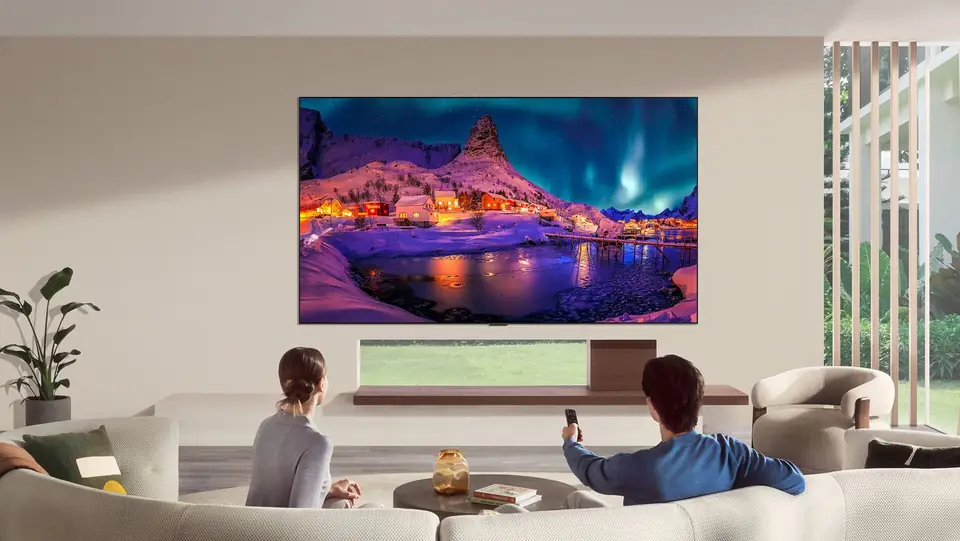 Buying guideWhich TV size for your living room?The question we're asked most often in store. Good news: there's a very simple rule, and it almost always leads to a bigger screen than you had in mind.3 min read
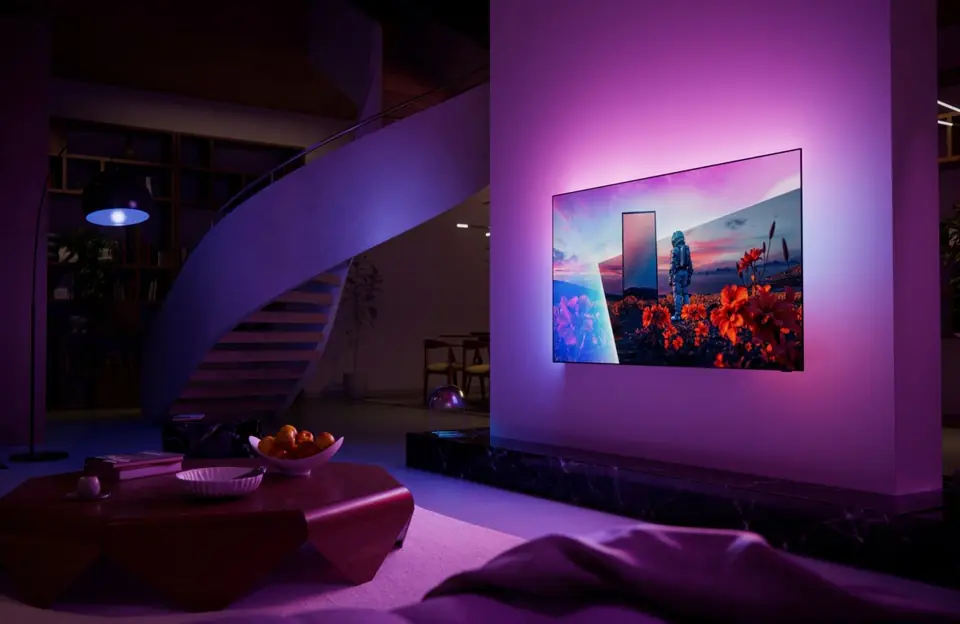 ComparisonOLED, Mini LED or RGB Mini LED: which to choose?It's the question everyone asks in front of the TV aisle. There's no outright winner: there's the technology that suits your living room and your habits. Here's our comparison, criterion by criterion, and our clear verdict.2 min read
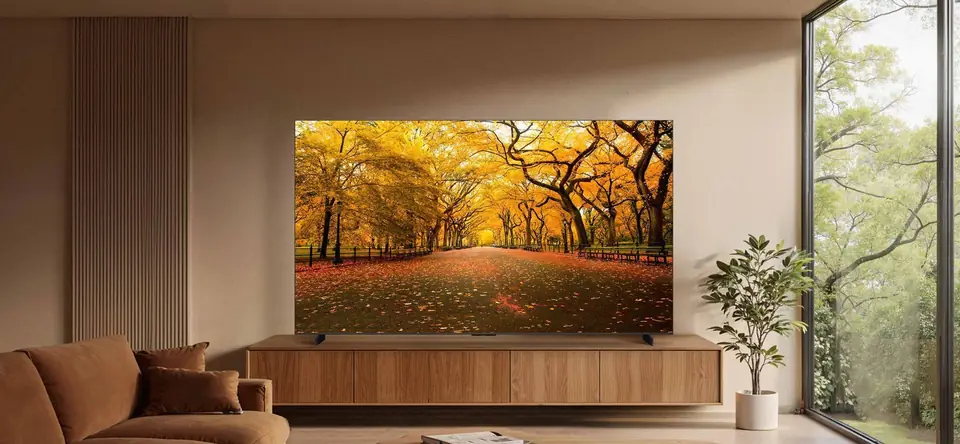 Buying guideWhich TV for which budget in 2026?There's a best TV for every budget. Here's what you can reasonably expect at each price level in 2026, and the models we most often recommend in store, with recommended retail prices.2 min read