
Sony Bravia 2026 TV range: all the series explained
In 2026 Sony is focusing on a short, clear range: two True RGB TVs, two OLEDs and affordable 4K LEDs. Here is each series in detail, from top to entry level, with its features, sizes and our prices.
- True RGB : Bravia 9 II and Bravia 7 II, the newcomers
- OLED : Bravia 8 II (QD-OLED) and the new Bravia 6
- LED 4K : Bravia 3 II at 120 Hz, Bravia 2 II at 60 Hz
- Good to know: no HDR10+, 120 Hz maximum
Sony in 2026: what to know
Sony isn't chasing the most impressive numbers: the brand aims for the picture the most accurate, with natural colours, realistic faces and very smooth motion. The 2026 range consists of six series, all in 4K and all under Google TV with the Gemini assistant. Two things to know in common: no Sony has HDR10+ and the refresh rate is capped at 120 Hz.
Why we like it
- Reference picture processing
- Dolby Vision and Dolby Atmos (except Bravia 2 II for Dolby Vision)
- Full Google TV, built-in Chromecast
- PS5 features on models with XR processor
Limitations
- No HDR10+
- 120 Hz maximum
- Only two HDMI 2.1 ports on the 9 II, 7 II and 8 II
- Slightly higher prices for the same size
True RGB: the 2026 high end
True RGB is Sony's version of RGB Mini LED: separate red, green and blue LEDs light the LCD panel, zone by zone. To understand the technology, read our article on RGB Mini LED and our page Sony technologies.
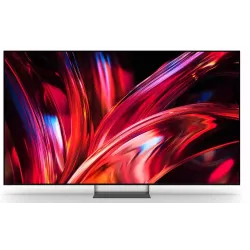
Bravia 9 II: the flagship
- Technology : True RGB LCD, with the "Immersive Black Screen Pro" matte anti-reflection filter in 65, 75 and 85 inches (not in 115 inches).
- Processor : XR, with scene-recognition artificial intelligence.
- Frequency : native 120 Hz.
- HDMI 2.1 : two out of four (HDMI 3 and 4). VRR works only on these two ports, and HDMI 3 is also used for the soundbar (eARC).
- HDR : Dolby Vision, HDR10, HLG, IMAX Enhanced.
- Sound : Acoustic Multi-Audio+ with beam tweeters, 80 or 85 W depending on size, Dolby Atmos, DTS:X, Voice Zoom 3.
- Sizes : 65, 75, 85 and 115 inches.
- Our price : 65" (K-65XR95M2) £2,999.99 · 75" £3,499.99 · 85" £4,999.99.
Who it's for: the cinephile with a bright living room, who wants Sony's best brightness without the constraints of OLED.
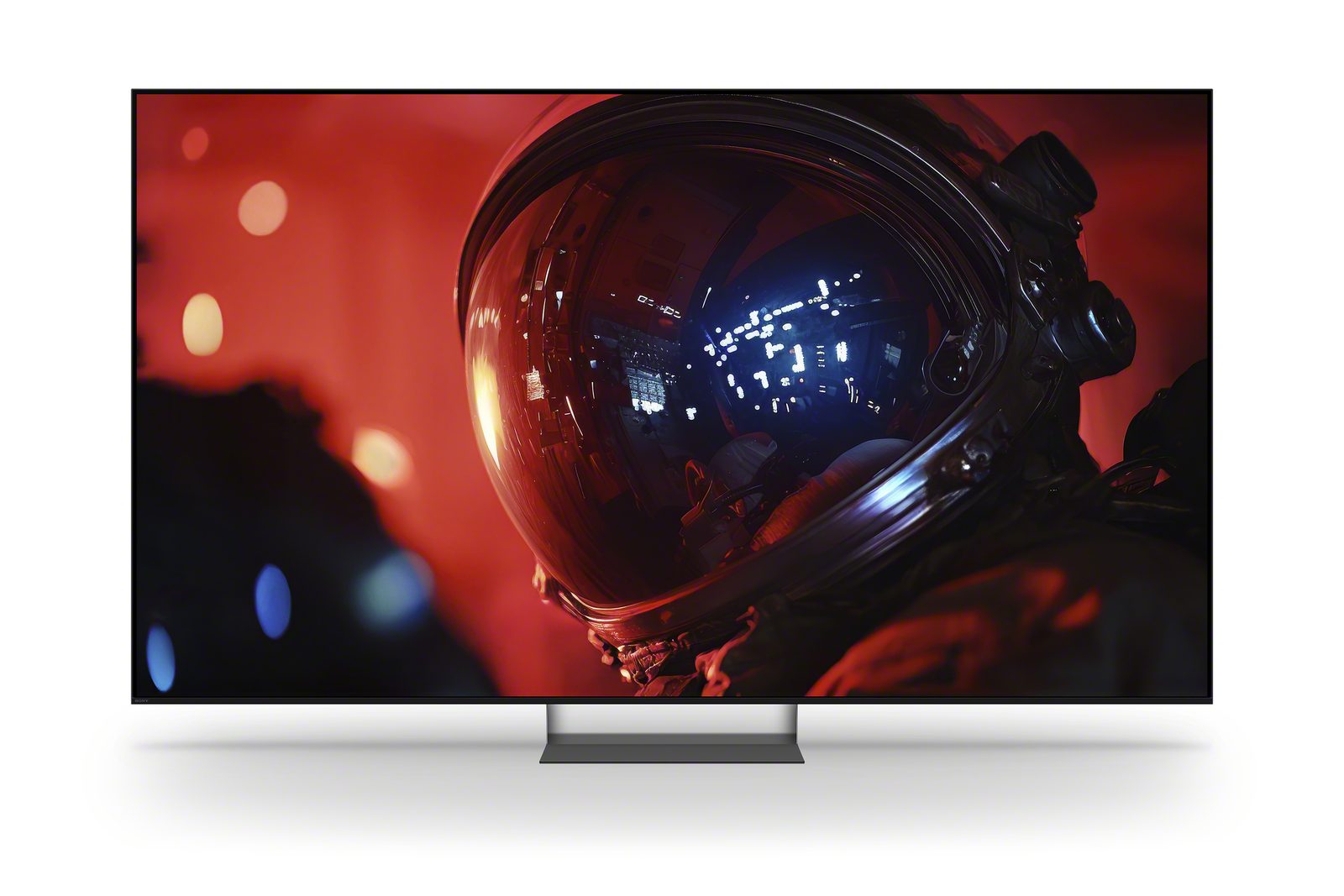
Bravia 7 II: the more affordable True RGB
- Technology : same True RGB principle, with fewer zones and less power, and without an anti-reflective filter.
- Processor : XR. Frequency : native 120 Hz.
- HDMI 2.1 : two out of four (HDMI 3 and 4, VRR on those two ports).
- HDR : Dolby Vision, HDR10, HLG.
- Sound : 40 W (4 speakers) or 65 W (6 speakers, including 2 subwoofers) depending on size, Dolby Atmos, DTS:X, Voice Zoom 3.
- Sizes : 50, 55, 65, 75, 85 and 98 inches.
- Our price : 55" (K-55XR75M2) 1 899,99 € · 65" 1 999,99 € · 75" 2 899,99 € · 85" 3 599,99 €.
Who it's for: someone who wants the essentials of True RGB for around 2 000 € in 65 inches. In a very dark room, an OLED keeps the edge on blacks.
Sony OLEDs
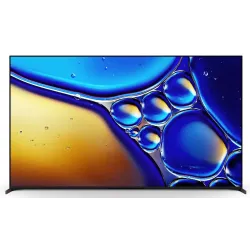
Bravia 8 II: the cinema OLED (2025 model)
- Technology : QD-OLED, with very bright colours and excellent viewing angles.
- Processor : XR. Frequency : 120 Hz.
- HDMI 2.1 : two out of four (VRR on HDMI 3 and 4).
- HDR : Dolby Vision, HDR10, HLG, IMAX Enhanced.
- Sound : Acoustic Surface Audio+, the screen vibrates and becomes the speaker, 50 W, Dolby Atmos, DTS:X.
- Sizes : 55 and 65 inches.
- Our price : 55" (K-55XR8M2) 2 499,99 € · 65" 3 199,99 €.
At list price, the 65-inch Bravia 8 II costs more than the 65-inch Bravia 9 II. The Nimesclub member price of the Bravia 8 II is significantly lower: compare both product pages before choosing.
Bravia 6: the affordable Sony OLED (new)
- Technology : white-panel OLED (WOLED), announced at the end of August 2026.
- Processor : no XR processor (Sony lists 'Processor: No' on its spec sheet).
- Frequency : native 120 Hz.
- HDMI 2.1 : four, with 4K 120 Hz, VRR and ALLM on all four ports. A first for a Sony OLED.
- HDR : Dolby Vision, HDR10, HLG.
- Sound : 20 W, 4 speakers, Dolby Atmos and DTS:X.
- What's missing : the PS5 features Auto HDR Tone Mapping and Auto Genre Picture Mode, the Studio Calibrated mode and Voice Zoom.
- Sizes : 48, 55, 65, 77 and 83 inches.
- Our price : 48" (K-48A65) 1 199,99 € · 55" 1 299,99 € · 65" 1 799,99 € · 77" 2 499,99 € · 83" 2 999,99 €.
Who it's for: discovering Sony OLED on a mid-range budget, or gaming with several consoles. Its brightness remains modest: best reserved for a dimmed or moderately lit room.
The 4K LEDs: Bravia 3 II and Bravia 2 II
Bravia 3 II: the best value for money
- Technology : Direct LED LCD, without local dimming.
- Processor : XR. Frequency : native 120 Hz on all sizes, including 43 and 50 inches.
- HDMI 2.1 : four, with 4K 120 Hz, VRR and ALLM on all four ports, PS5 features.
- HDR : Dolby Vision, HDR10, HLG.
- Sound : 20 W, 2 speakers, Dolby Atmos, DTS:X.
- Sizes : 43, 50, 55, 65, 75, 85 and 100 inches.
- Our price : 43" (K-43XR35M2) 799,99 € · 50" 899,99 € · 55" 999,99 € · 65" 1 199,99 € · 75" 1 399,99 € · 85" 1 999,99 € · 100" 2 799,99 €.
Who it's for: families, sport, consoles, and very large screens at a sensible price. Don't buy it for HDR: its brightness remains modest.
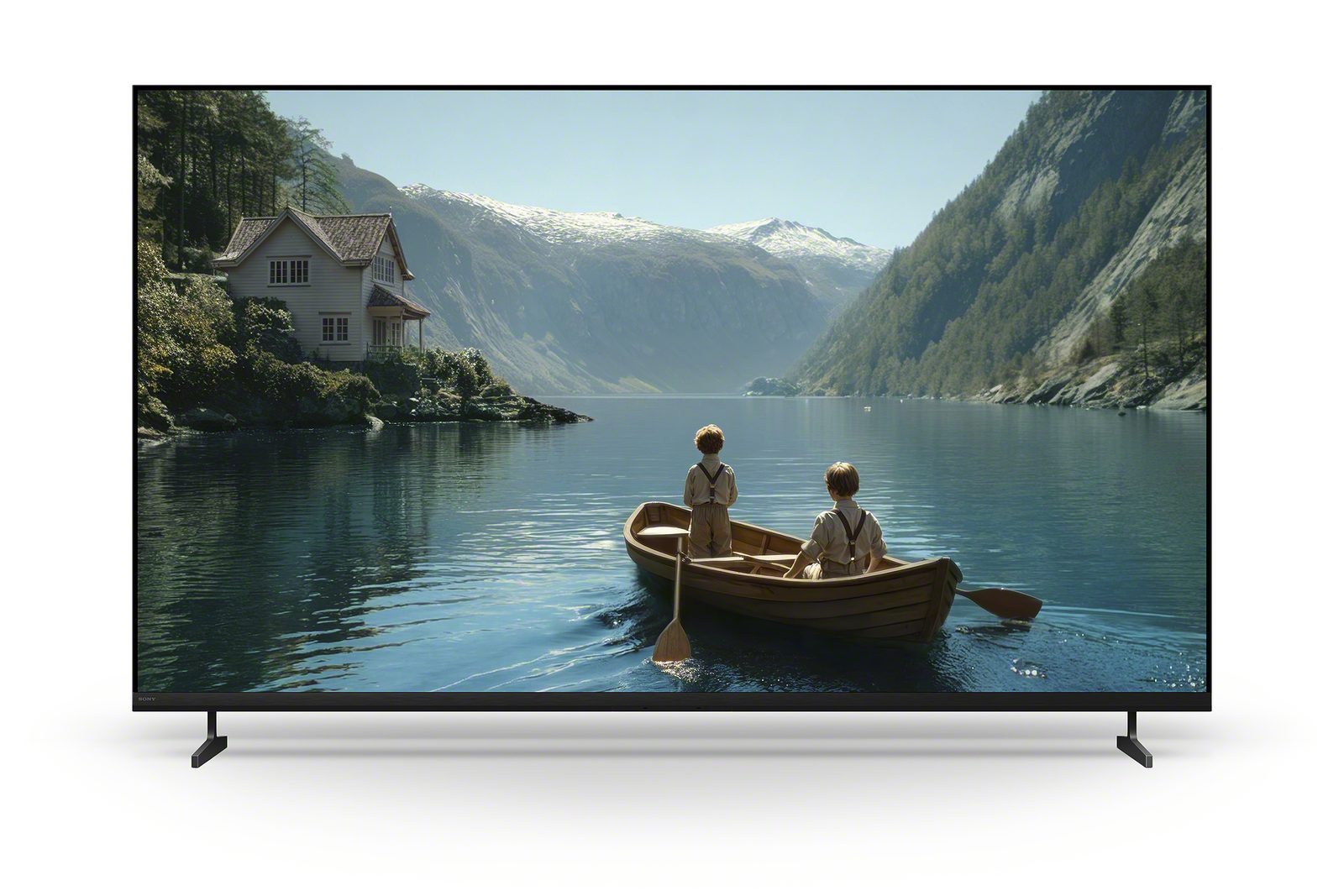
Bravia 2 II: the entry-level option
- Technology : Direct LED LCD. Processor : 4K X1 (no XR).
- Frequency : native 60 Hz, no 4K 120 Hz or VRR.
- HDMI : four ports with eARC and ALLM, but none with full HDMI 2.1.
- HDR : HDR10 and HLG only, no Dolby Vision.
- Sound : 20 W, Dolby Atmos, DTS:X.
- Sizes : 43, 50, 55, 65 and 75 inches.
- Our price : 43" (K-43S25M2) 699,99 € · 50" 799,99 € · 55" 899,99 €.
Who it's for: a bedroom, a kitchen, a second TV. For 100 € more, the Bravia 3 II is much more complete.
The full comparison table
| Series | Technology | Processor | Hz | HDMI 2.1 | Dolby Vision | Sound | Sizes |
|---|---|---|---|---|---|---|---|
| Bravia 9 II | True RGB, anti-reflective | XR | 120 | 2 | Yes | 80 to 85 W | 65 to 115" |
| Bravia 7 II | True RGB | XR | 120 | 2 | Yes | 40 or 65 W | 50 to 98" |
| Bravia 8 II | QD-OLED | XR | 120 | 2 | Yes | 50 W, vibrating screen | 55 and 65" |
| Bravia 6 | WOLED | None named | 120 | 4 | Yes | 20 W | 48 to 83" |
| Bravia 3 II | LED, no local dimming | XR | 120 | 4 | Yes | 20 W | 43 to 100" |
| Bravia 2 II | LED | X1 | 60 | 0 | No | 20 W | 43 to 75" |
No series has HDR10+. All have Dolby Atmos, DTS:X and Google TV. Nimestore list prices as of 15 October 2026; the product page prevails. Nimesclub members often get a reduced price.
Decoding a Sony model number
Example: K-55XR35M2PB.
- K : the prefix for Sony TVs since 2024 (it replaces the former 'KD' and 'XR').
- 55 : the screen size in inches.
- XR : model with XR processor. S = no XR (Bravia 2 II), A = OLED Bravia 6.
- 35 : the series. 95 = Bravia 9 II, 75 = Bravia 7 II, 8 = Bravia 8 II, 35 = Bravia 3 II, 25 = Bravia 2 II.
- M2 : 'Mark II', the second generation of the series. It is not a tier: only the series number matters.
- PB : the European suffix (colour and batch). A '.CEI' at some retailers is a logistics code, not a different model.
France and Belgium : the model numbers are the same on sony.fr and sony.be. There are only variants depending on the sales channel, with identical looks: XR32M2, XR35M2 and XR39M2 for the Bravia 3 II, S20M2 and S25M2 for the Bravia 2 II, A62, A65 and A69 for the Bravia 6. In the United States, the numbers differ (Bravia 7 II = XR70M2, Bravia 8 II = XR80M2): don't rely on a US review without checking the match.
Older models still on sale
- Bravia 8 II (2025): still Sony's flagship OLED in 2026; it has no successor.
- Bravia 5 (2024): Mini LED with local dimming, from 55 to 98 inches, two HDMI 2.1 ports. It can still be found at some retailers; we don't offer it.
- Bravia 3 (first generation): we still have an 85-inch (K-85S35) at 1 699,99 €. Careful, this is not the Bravia 3 II: it runs at 60 Hz, with an X1 processor. For 300 € more, the 85-inch Bravia 3 II adds 120 Hz and four HDMI 2.1 ports.
- Bravia 8 (2024, WOLED): only clearance stock remains, and the Bravia 6 is taking its place.
- KD-32W800 : a small 32-inch HD model running Android TV (369,99 €), for a kitchen or a child's bedroom.
My Sony trio: the Bravia 3 II for a very large screen at a sensible price, the Bravia 6 in 55 or 65 inches to discover OLED, and the Bravia 7 II for True RGB. If your living room is very bright, the Bravia 9 II is a gem. And for pure cinema in the dark, the Bravia 8 II remains my benchmark.
Sony Bravia TVs in store
 LED TV SONY K43S25M2PB€601.00
 TV LED SONY K55XR35M2PB€822.00
 LED TV SONY K65XR35M2PB€1,107.00
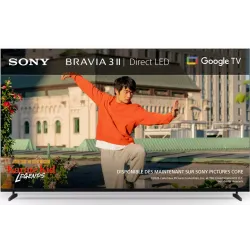 LED TV SONY K85XR35M2PB€1,935.00
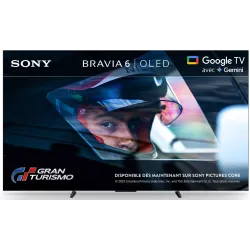 OLED TV SONY K55A65PB€1,193.00
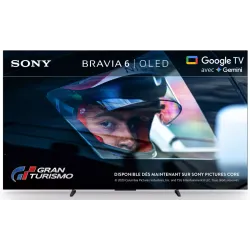 OLED TV SONY K65A65PB€1,490.00
 LED TV SONY K65XR75M2B€1,864.00
 LED TV SONY K65XR95M2PB€2,633.00
 OLED TV SONY K65XR8M25B€2,421.00
 OLED TV SONY K55XR8M25BP€1,906.00
Sony versus the competition
| Sony | Direct competitor | Our verdict |
|---|---|---|
| Bravia 9 II | Samsung Micro RGB R95H | Sony for natural image and Dolby Vision; Samsung for 165 Hz and HDR10+ |
| Bravia 8 II | Samsung S95H, LG G6 | Sony for cinema and built-in sound; LG and Samsung for gaming and brightness |
| Bravia 6 | LG C6 and B6, Philips OLED811 | LG and Philips are more complete for gaming (up to 165 Hz); Sony for Google TV and its picture rendering |
| Bravia 3 II | Samsung QN70H, TCL and Hisense QLED | Sony for 120 Hz and processing; TCL and Hisense for price and HDR10+ |
To compare with other brands, see also the Samsung 2026 range and the LG 2026 range.
Frequently asked questions
What is Sony's True RGB?
It's Sony's version of RGB Mini LED: an LCD panel lit by separately controlled red, green and blue LEDs. The result: very pure colours even at high brightness, with no risk of burn-in.
Is the Bravia 6 a good OLED for the PS5?
Yes for picture and responsiveness: it has four HDMI 2.1 ports, 4K 120 Hz, VRR and ALLM. However, it lacks Sony's PS5-exclusive features (automatic HDR setting, automatic picture mode), which are reserved for models with the XR processor.
Why doesn't Sony have HDR10+?
Sony chose Dolby Vision, which is more widespread on Netflix, Disney+ and Apple TV+. HDR10+ content (some Prime Video films) displays in HDR10, with a very good picture.
Bravia 3 II or Bravia 2 II?
The Bravia 3 II costs €100 more at the same size, but adds 120 Hz, Dolby Vision, VRR for consoles and the XR processor. Except for a small kitchen TV, this is the upgrade that's worth the most across the whole range.
Bravia 3 II or Bravia 6 in 55 inches?
The Bravia 3 II is a simple 4K 120 Hz LED, very good for everyday TV. The Bravia 6 is an OLED: perfect blacks and a cinema atmosphere in the evening. If you watch a lot of films, the Bravia 6 is worth the price difference.
Come and compare the screens in person
At our Temploux shop, we switch on TVs side by side with your content. Or ask our expert salesperson online, right now.
Read next
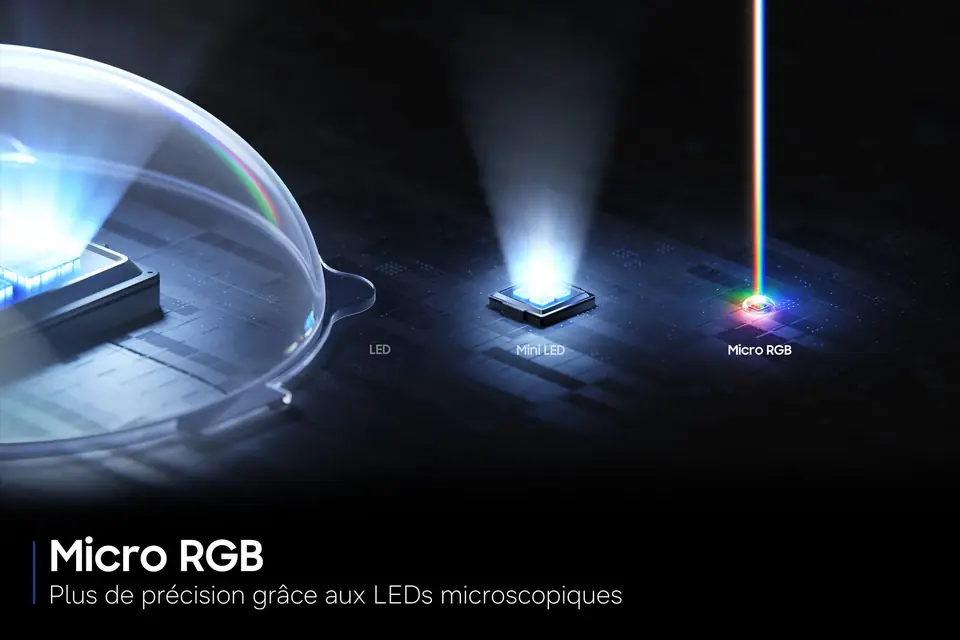 TechnologyRGB Mini LED, Micro RGB, True RGB: the big new thing for 2026It's THE trend of the year: all the major brands are launching TVs with RGB backlighting. Samsung talks about Micro RGB, Sony about True RGB, and Hisense and TCL about RGB Mini LED. Behind the names is a simple idea that delivers spectacular colours.2 min read
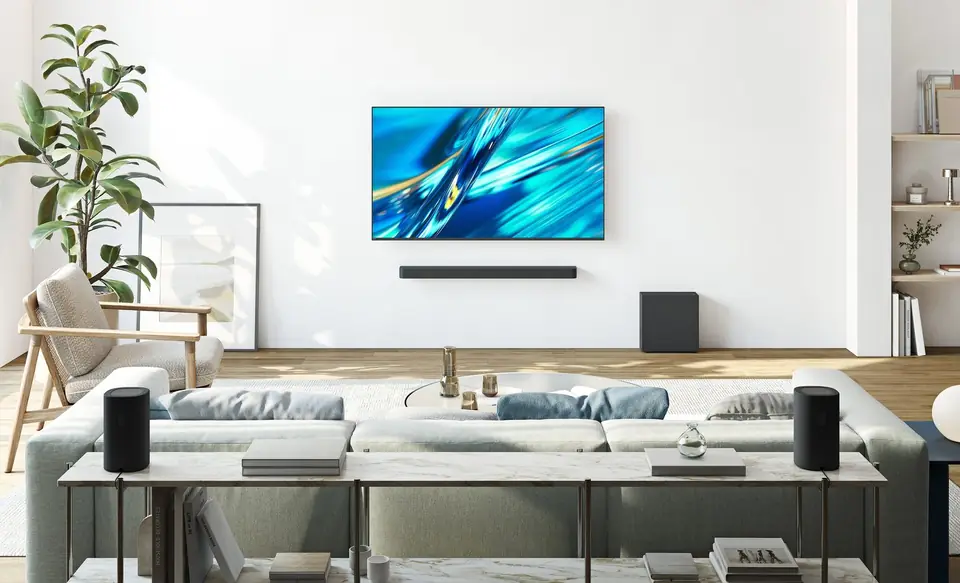 Buying guideWhich Sony TV to choose in 2026? Our guide by profileSix series, sizes from 43 to 100 inches and prices from €699.99 to €4,999.99: choosing a Sony takes a bit of method. Here are our recommendations based on your budget, your room and how you use it, with the real models we sell and the pitfalls to avoid.6 min read
 TechnologySony Bravia technologies: True RGB, XR and Acoustic Surface explainedSony gives its technologies very marketing-driven names: XR Triluminos Pro, Acoustic Multi-Audio+, Immersive Black Screen Pro. Behind them, there are real ideas. Here, without jargon, is what each one really changes in front of your screen, and which models you'll find it on.7 min read