
A Christmas menu with just one oven: an hour-by-hour plan to serve everything hot
A turkey taking up the whole oven, a gratin waiting its turn, toasts to warm and a Yule log to keep cool: on Christmas Eve, the oven becomes the weak link. With a good plan, though, one oven is enough to serve everything hot, without spending the evening in the kitchen. Here is the method, from three days before right through to dessert.
- Everything that can be done ahead is done ahead: J-3 to J-1
- On the day, the oven follows a precise order
- The meat rests for 30 min : the oven is freed up for the rest
- Probe and keeping warm : your best allies
The problem: one oven, five dishes
A classic Christmas Eve menu is often a hot starter, poultry or game, one or two oven-baked side dishes, and a dessert. If each dish waits its turn, the first is cold by the time the last comes out. The solution comes down to three ideas: prepare in advance everything that can be, plan the cooking order on the day, and use the resting time of the meat to cook the rest.
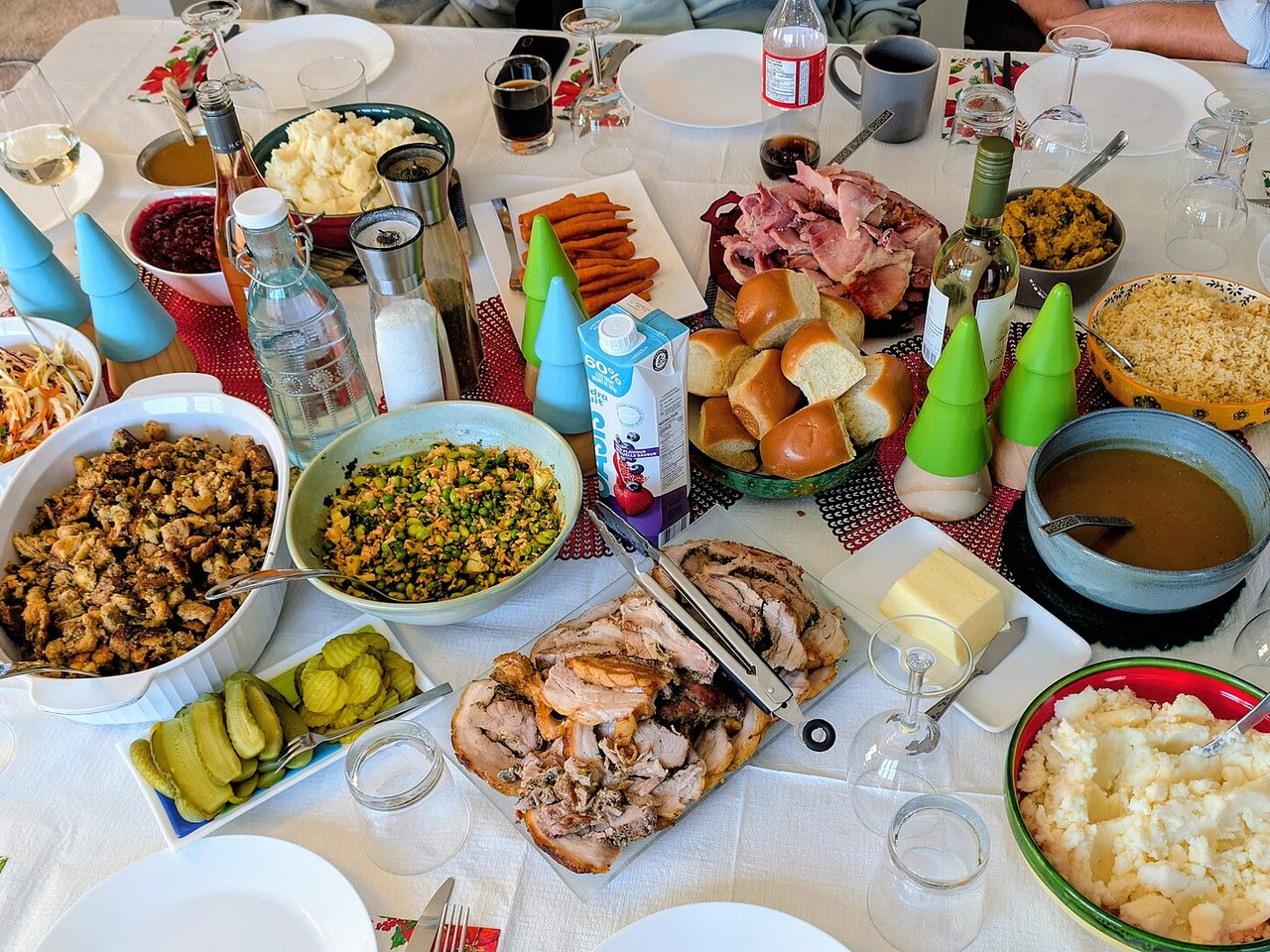
Our example menu
For this timetable, we take a Belgian festive menu for 8 people, with our recipes:
- As an aperitif : brown shrimp croquettes and toasts of semi-cooked foie gras on gingerbread.
- Starter : chestnut velouté, or au gratin scallops.
- Main : stuffed turkey with chestnuts (or roast capon), with a gratin dauphinois or potato croquettes.
- Dessert : chocolate Yule log or Baked Alaska, and truffles with coffee.
The principle also works with a fillet of roe deer, a Orloff roast or a salmon en croûte : only the timings change.
The backward timetable, from J-3 to serving
J-3 and J-2: what keeps
- Mi-cooked foie gras : it needs to rest at least 48 hours in the cold to be at its best.
- The gingerbread and the truffles : they improve while they wait (they can even be made a week ahead).
- The prawn croquettes : prepare, bread and freeze them. They can be cooked straight from frozen on the day.
- The sauce base : a poultry stock or a reduced jus keeps for 3 days in the fridge.
- Last-minute shopping : check that the turkey has been ordered from the butcher, and that it fits in your oven (measure the cavity!).
D-1: the big prep day
- The Yule log or the Baked Alaska dome: assembled and kept in the fridge or freezer.
- The velouté : cooked, blended, in the fridge.
- The stuffing for the turkey: prepared and kept chilled separately (only stuff the bird on the day itself).
- The gratin dauphinois : three-quarters cooked (45 minutes instead of an hour), cooled, covered. It will finish cooking and brown on the day.
- The table : laid the day before. That's an hour saved on the 24th.
The big day: the oven, hour by hour
Example for serving the main course at 8.30 pm, with a 4 kg turkey:
| Time | In the oven | On the side |
|---|---|---|
| 3.30 pm | Take the turkey out of the fridge (it should be at room temperature) | Stuff it, prepare the dish |
| 4.30 pm | Turkey in the oven, probe inserted, 160 °C fan | Prepare the trimmings, peel the chestnuts |
| 6.00 pm to 7.30 pm | The turkey cooks, baste it every 30 min | Shower, aperitifs ready, velouté taken out of the fridge |
| around 7.45 pm | Probe at 75 °C in the breast: take the turkey out, wrap it in foil | Reheat the velouté on the hob, setting 4 |
| 7.50 pm | Oven at 200 °C: frozen prawn croquettes, 15 to 20 min | Aperitifs served |
| 8.10 pm | Par-cooked gratin in the oven, 180 °C, 25 min, then 3 min under the grill | Starter served, sauce reheated on the hob |
| 8.30 pm | Oven on keep-warm at 70 °C: plates and side dishes | Carve the turkey, serve the main course |
| 9.45 pm | Grill on full power for the Baked Alaska, 2 to 3 min | Or Yule log taken out of the fridge 15 min before |
Allow roughly 30 to 35 minutes of cooking per kilo for a stuffed turkey at 160 °C fan, but trust the probe rather than the timer: every bird and every oven is different.
The golden rules for the oven
1. The meat first, and resting works for you
A large cut of meat should rest for 20 to 30 minutes after cooking, wrapped in foil. It's not wasted time: the juices redistribute, the flesh becomes more tender, and above all the oven is free for the side dishes. It's the moment to cook the gratin, the croquettes or the toasts.
2. The probe, so you no longer have to guess
A cooking probe is inserted into the heart of the meat and the oven stops (or alerts you) at the right temperature. No more opening the door every 20 minutes. Guide: 75 °C for poultry breast, 55 to 58 °C for a rare-to-pink roast beef or venison fillet, 65 °C for a roast veal or pork. Take the meat out 2 or 3 degrees early: the temperature keeps rising during resting.
3. One common temperature for cooking on two levels
In fan-assisted, the heat circulates everywhere: you can cook two dishes on two shelves. Choose an intermediate temperature (160 to 180 °C) and adjust the times. Avoid mixing a dish that gives off a lot of steam (vegetables, gratin) with one that needs to stay crisp (puff pastry, croquettes).
4. Keeping warm without drying out
Between 60 and 80 °C, door closed, cooked dishes wait without continuing to cook. Cover them with a sheet of foil. Many ovens have a dedicated function (keep-warm or warming drawer setting), and ovens with assisted steam have a reheat mode that keeps dishes moist, as if freshly cooked.
5. Reheat rather than cook at the last minute
A gratin par-cooked the day before, a sauce made in advance, frozen croquettes: anything that reheats frees up oven time on the day. To reheat: 170 to 180 °C fan, covered for the first 10 minutes, then uncovered to restore the crispness.
The settings table for the whole menu
| Main | Fashion | Temperature | Time or guide |
|---|---|---|---|
| Stuffed turkey (4 kg) | Fan oven | 160 °C, lower shelf | 2 h 30 to 3 h, probe at 75 °C |
| Capon (3 kg) | Fan oven | 170 °C | 2 h to 2 h 30, probe at 75 °C |
| Venison fillet | Fan oven, after searing in a pan | 180 °C | 12 to 15 min, probe at 56 °C |
| Salmon en croûte | Conventional mode, with bottom heat | 200 °C | 30 to 35 min |
| Par-cooked gratin dauphinois | Fan oven, then grill | 180 °C | 25 min, then 3 min under the grill |
| Frozen croquettes | Fan oven or air fry | 200 °C | 15 to 20 min |
| Scallops | Grill | Maximum power | 4 to 5 min |
| Semi-cooked foie gras (terrine) | Conventional heat, bain-marie, or steam | 90 to 100 °C | 40 to 45 min, core at 55 °C |
| Baked Alaska | Grill | Maximum power | 2 to 3 min |
| Keep warm | Keeping warm | 60 to 80 °C | 1 hour maximum |
And if you have two ovens?
It's the ultimate festive luxury: one oven for the meat, long and gentle, the other for everything else, at a higher temperature. If you're renovating your kitchen, consider a combi oven a tall unit (a multifunction oven and a compact steam or microwave oven stacked one above the other), or an oven with a cavity divider, which lets you cook two dishes at two different temperatures in the same oven. A range cooker with two cavities offers the same flexibility.
Do a dry run: a fortnight before Christmas, roast a chicken with the probe and a gratin straight after, at the time you'll serve Christmas dinner. You'll see how your oven behaves, how long it takes to go from 160 to 200 °C, and whether your dishes fit together in the cavity. On the 24th, no more surprises. And remember to run a pyrolytic clean a few days before: a clean oven doesn't smoke when you heat it up.
Which oven for the festive season?
For a stress-free festive dinner, three functions really matter: the meat probe, the keep-warm function and a large cavity for the turkey. Pyrolytic cleaning, meanwhile, removes splatters after the feast.
An oven with a cooking probe
Siemens HB774G2B1 (iQ700, cooking probe, CookControl Pro, Home Connect), Samsung NV7B45502AB (probe included, Dual Cook Flex to cook two dishes at two temperatures, steam), Hisense BSA66334PX and BSA66334PBDG (probe, assisted steam and AirFry).
From 599,99 € to 1 229,99 €
A pyrolytic fan oven
Roast poultry means grease splatters: pyrolytic cleaning gets rid of them. Examples: Bosch HBA274BB3F (Series 4, Hotair 3D), Whirlpool WOI68PT1SXAF (6th Sense and AirFry).
809,99 € and 1 049,99 €
Public prices recorded on 15 October 2026: the product page is the reference, and Nimesclub members often get a reduced price. Check on the product page whether the probe is supplied with the oven.
Ovens with probe and pyrolytic cleaning in store
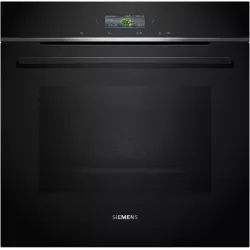 SIEMENS HB774G2B1 Built-in Oven€1,229.00
 Built-in Oven SAMSUNG NV7B45502AB€1,079.00
 Built-in oven HISENSE BSA66334PX€599.00
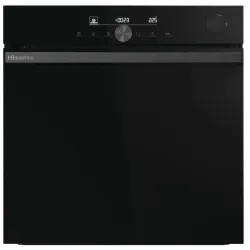 Built-in Oven HISENSE BSA66334PBDG€849.00
 Built-in Oven BOSCH HBA274BB3F€809.00
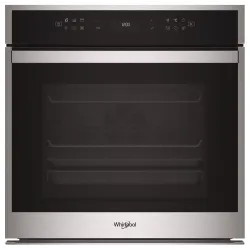 Built-in oven WHIRLPOOL WOI68PT1SXAF€1,049.00
To fully understand each mode (fan oven, bottom heat, grill, steam), read our guide to oven functions. And for starters and sauces, see cooking with induction.
Frequently asked questions
Can you cook the turkey and the gratin at the same time?
Yes, on fan oven, across two shelves, at a shared temperature of 160 to 170 °C. The gratin then takes a little longer than expected. But the simplest option is to cook the gratin while the meat rests under foil: 30 minutes' rest is enough for a gratin that's already partly cooked.
How long can the meat rest without going cold?
A large bird or a roast, wrapped well in foil and a tea towel, stays warm for 30 to 45 minutes. The core temperature even keeps rising by a few degrees during the first few minutes: that's why you take the meat out a little before it reaches the desired doneness.
Does keeping food warm dry out dishes?
Not if you set it low (60 to 80 °C) and cover the dishes. Avoid leaving them for more than an hour, especially meat and sauces. Ovens with assisted steam often have a reheat mode that keeps dishes moist.
Do you need to preheat between two cooking sessions?
If the temperature changes by more than 30 °C, yes: leave the oven for 5 to 10 minutes to reach the new temperature. For a change from 180 to 200 °C, put the dish straight in, adding 2 or 3 minutes of cooking time.
The right oven makes all the difference
Steam ovens, pyrolytic ovens, induction hobs: come and see them at our Temploux store, or ask our expert salesperson for advice.
Read next
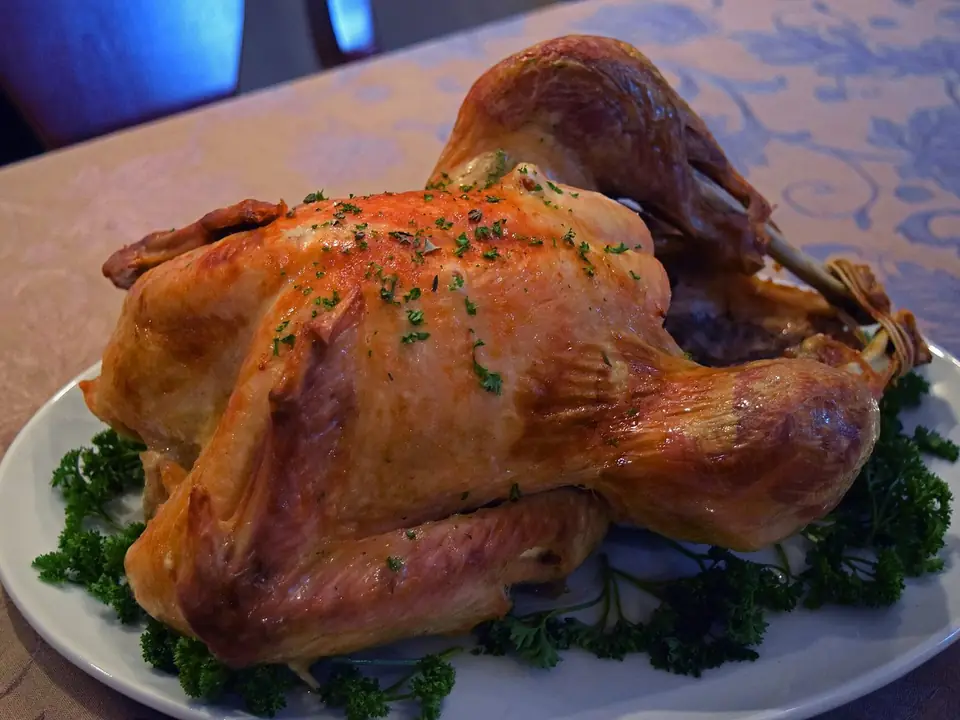 RecipeStuffed Christmas turkey with chestnuts: the Christmas recipe, juicy thanks to the probeThe stuffed turkey is the queen of the Christmas Eve feast. It's daunting because people fear it will be dry or undercooked in the middle. With a simple chestnut stuffing, gentle cooking and a probe inserted into the thigh, it comes out of the oven golden and juicy. Here is the method, step by step.4 h · Medium · 10 pers.
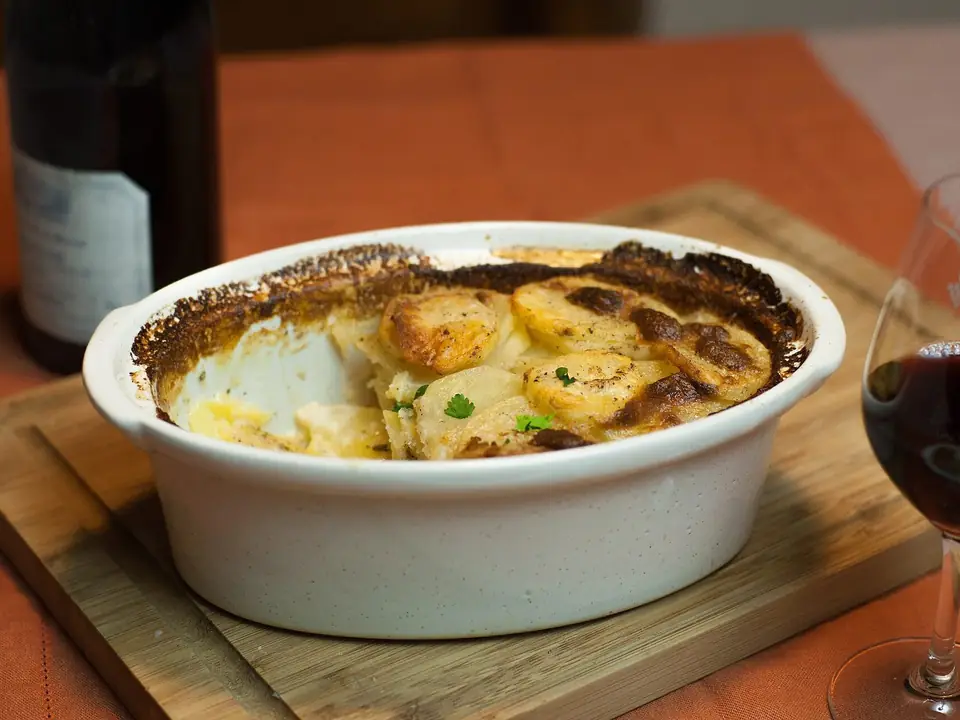 RecipeDauphinoise gratin: melting, golden, and ready before the guests arriveThis is the side dish that pleases everyone, alongside a turkey, a capon or game. A good dauphinoise gratin means melting potatoes in a cream that thickened on its own, and a golden crust. The secret: parboil them in milk before baking. And as a bonus, it can be prepared the day before.1 h 40 · Easy · 6 servings
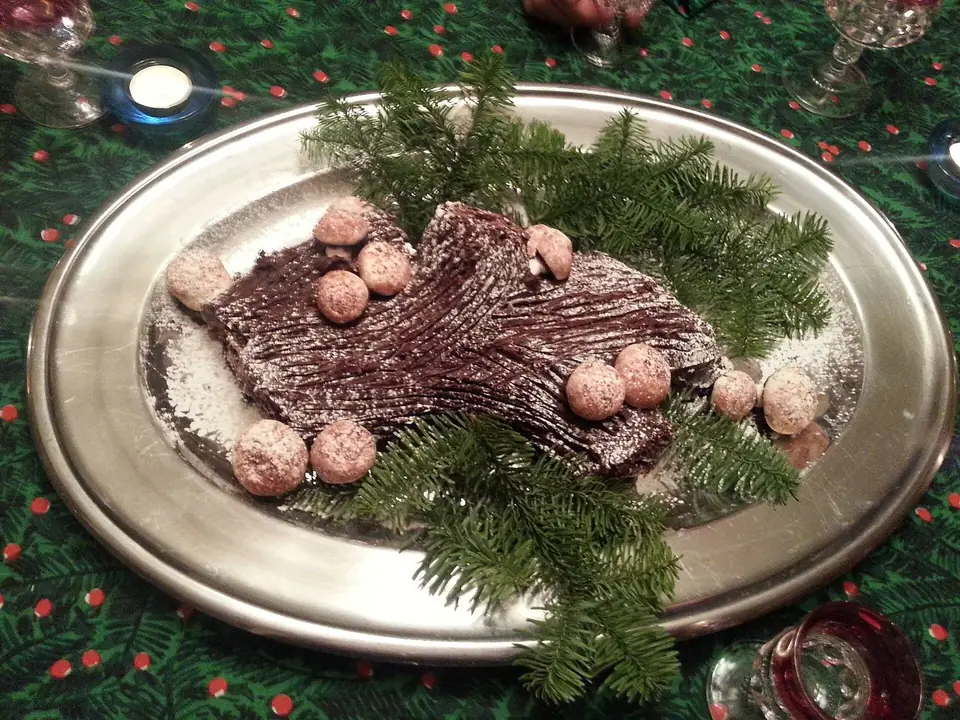 RecipeChocolate Yule log: the sponge roll that doesn't crackThe homemade Yule log is the dessert that makes the biggest impression at the end of the Christmas Eve dinner. It looks complicated, but it rests on three simple things: a sponge that bakes for 8 minutes, a chocolate ganache and rolling while still warm. Here is the method for a soft sponge that won't crack.50 min · Medium · 8 pers.